
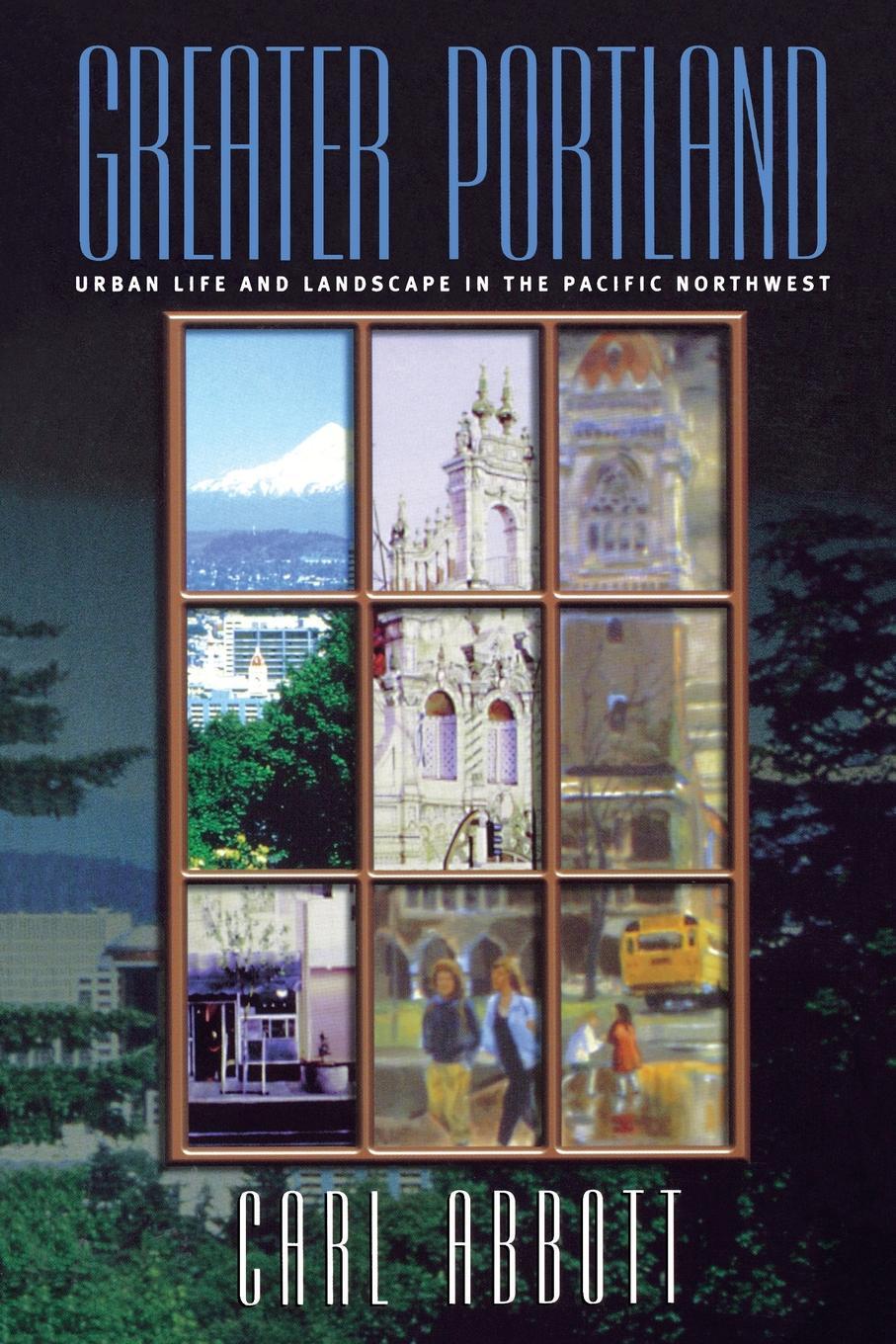
Selected by Choice magazine as an Outstanding Academic Title
It has been called one of the nation's most livable regions, ranked among the best managed cities in America, hailed as a top spot to work, and favored as a great place to do business, enjoy the arts, pursue outdoor recreation, and make one's home. Indeed, years of cooperative urban planning between developers and those interested in ecology and habitability have transformed Portland from a provincial western city into an exemplary American metropolis. Its thriving downtown, its strong neighborhoods, and its pioneering efforts at local management have brought a steady procession of journalists, scholars, and civic leaders to investigate the "Portland style" that values dialogue and consensus, treats politics as a civic duty, and assumes that it is possible to work toward public good.
Probing behind the press clippings, acclaimed urban historian Carl Abbott examines the character of contemporary Portland—its people, politics, and public life—and the region's history and geography in order to discover how Portland has achieved its reputation as one of the most progressive and livable cities in the United States and to determine whether typical pressures of urban growth are pushing Portland back toward the national norm.
In Greater Portland, Abbott argues that the city cannot be understood without reference to its place. Its rivers, hills, and broader regional setting have shaped the economy and the cityscape. Portlanders are Oregonians, Northwesteners, Cascadians; they value their city as much for where it is as for what it is, and this powerful sense of place nurtures a distinctive civic culture. Tracing the ways in which Portlanders have talked and thought about their city, Abbott reveals the tensions between their diverse visions of the future and plans for development.
Most citizens of Portland desire a balance between continuity and change, one that supports urban progress but actively monitors its effects on the region's expansive green space and on the community's culture. This strong civic participation in city planning and politics is what gives greater Portland its unique character, a positive setting for class integration, neighborhood revitalization, and civic values. The result, Abbott confirms, is a region whose unique initiatives remain a model of American urban planning.
Betal nemt med kort, Klarna, Apple Pay eller Google Pay. Ikke tilfreds? Du har altid 14 dages fortrydelsesret. Læs mere i vores vilkår. Har du spørgsmål, så send os en mail på hello@memmo.org.
Memmo gør det nemmere at studere – uanset hvor du er i verden. Hos os samler du dine kursusbøger og smarte studieværktøjer ét sted: resuméer, quizzer, podcasts og flashcards. Og så er der Ted, din studieven, der svarer på alt, du undrer dig over. Over 50 000 studerende studerer allerede her – bygget til at hjælpe dig med at lære hurtigere og stresse mindre.