
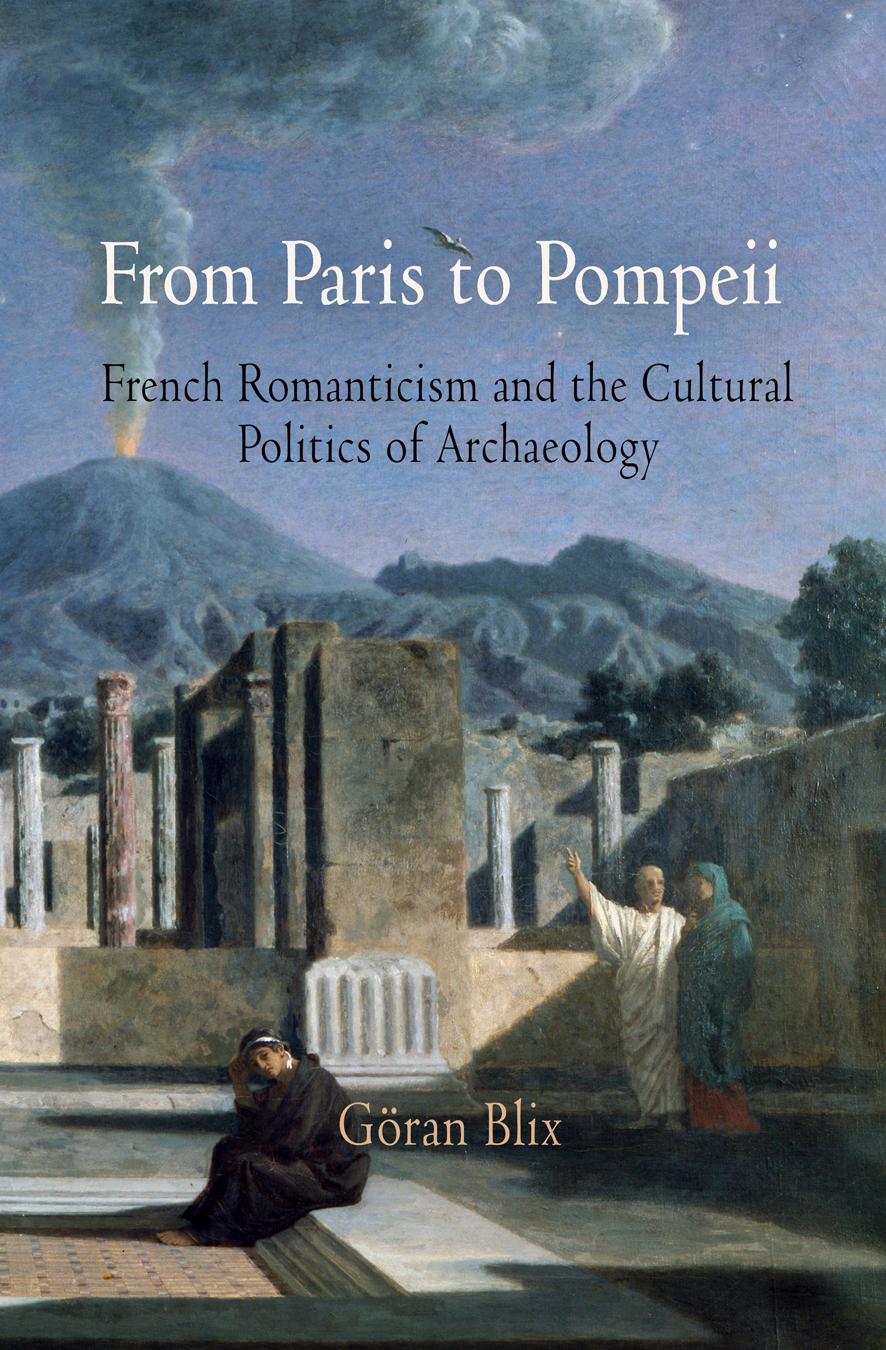
In the early nineteenth century, as amateur archaeologists excavated Pompeii, Egypt, Assyria, and the first prehistoric sites, a myth arose of archaeology as a magical science capable of unearthing and reconstructing worlds thought to be irretrievably lost. This timely myth provided an urgent antidote to the French anxiety of amnesia that undermined faith in progress, and it armed writers from Chateaubriand and Hugo to Michelet and Renan with the intellectual tools needed to affirm the indestructible character of the past.
From Paris to Pompeii reveals how the nascent science of archaeology lay at the core of the romantic experience of history and shaped the way historians, novelists, artists, and the public at large sought to cope with the relentless change that relegated every new present to history.
In postrevolutionary France, the widespread desire to claim that no being, city, culture, or language was ever definitively erased ran much deeper than mere nostalgic and reactionary impulses. Göran Blix contends that this desire was the cornerstone of the substitution of a weak secular form of immortality for the lost certainties of the Christian afterlife. Taking the iconic city of Pompeii as its central example, and ranging widely across French romantic culture, this book examines the formation of a modern archaeological gaze and analyzes its historical ontology, rhetoric of retrieval, and secular theology of memory, before turning to its broader political implications.
Betal nemt med kort, Klarna, Apple Pay eller Google Pay. Ikke tilfreds? Du har altid 14 dages fortrydelsesret. Læs mere i vores vilkår. Har du spørgsmål, så send os en mail på hello@memmo.org.
Memmo gør det nemmere at studere – uanset hvor du er i verden. Hos os samler du dine kursusbøger og smarte studieværktøjer ét sted: resuméer, quizzer, podcasts og flashcards. Og så er der Ted, din studieven, der svarer på alt, du undrer dig over. Over 50 000 studerende studerer allerede her – bygget til at hjælpe dig med at lære hurtigere og stresse mindre.