
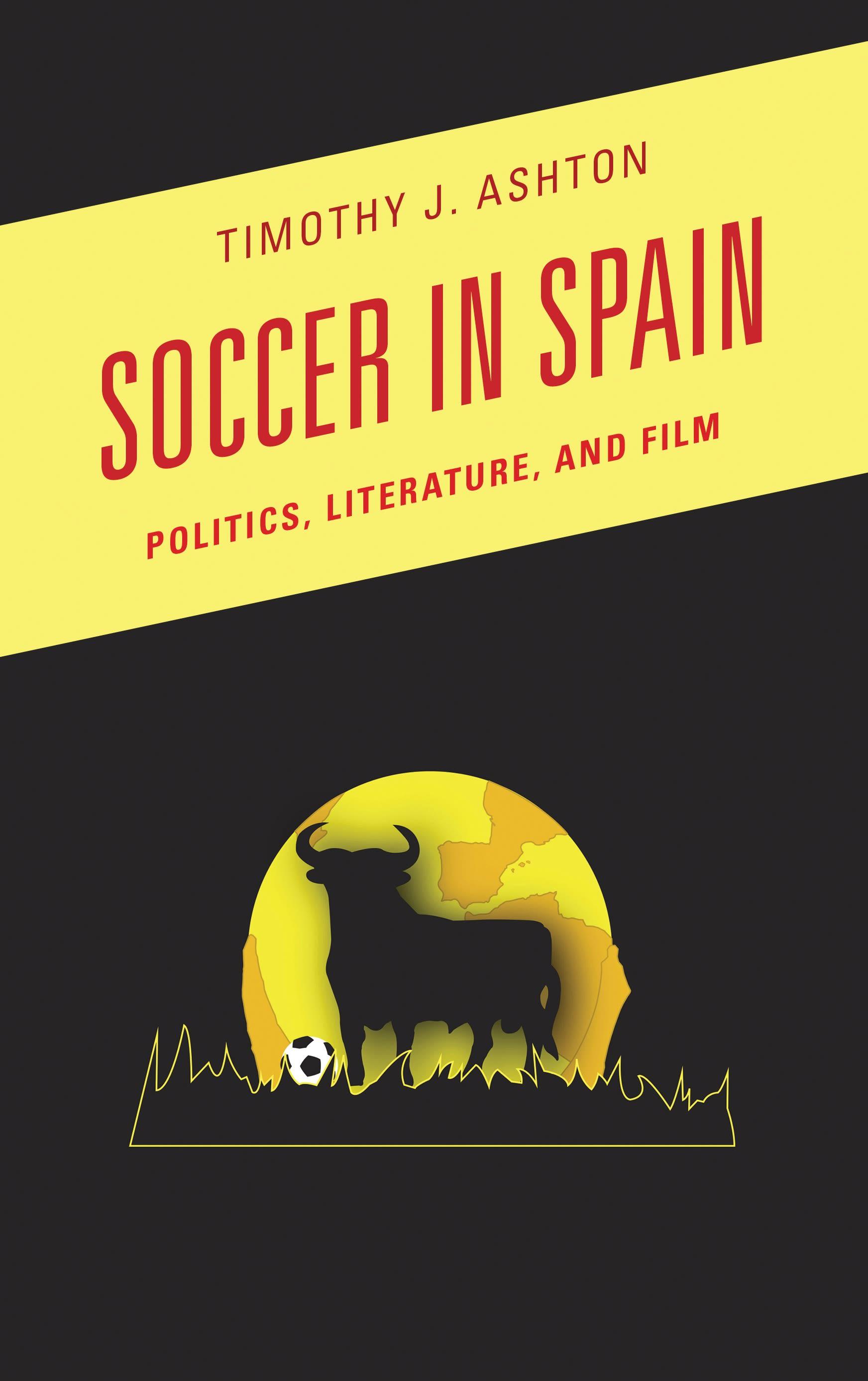
Soccer has the unique ability to represent and strengthen different cultural identities and ideologies throughout the world. Perhaps nowhere can this be seen more prominently than in Spain, which has surged to the forefront of the world’s most popular sport. The national team has won the last two European Championships and the 2010 World Cup, while the two preeminent club teams in Spain, Real Madrid and FC Barcelona, have reached the semifinals of the UEFA Champions League in 2011, 2012, and 2013. Even before the sport became a global phenomenon, soccer had established a strong connection with Spanish identity and culture.
In Soccer in Spain: Politics, Literature, and Film, Timothy J. Ashton examines the sport’s association with Spanish culture and society. In this volume, Ashton demonstrates how Spain’s soccer clubs reflected the politics of the region they represented and continue to reflect them today. The author also explores the often-tenuous relationship between the intellectual classes and the soccer community in Spain. Although some of the country’s most highly-praised literary figures had a passion for soccer—which was often reflected in their work—many intellectuals deemed the topic unsuitable for critical study. Ashton also discusses how soccer films faced a similar rebuff from Spanish intellectuals, though the popularity of these films has grown in recent years.
As soccer continues to be one of the modern world’s most significant representations of globalization, its importance as a cultural touchpoint cannot be ignored. For anyone wanting to learn more about the relationship between soccer, politics, and popular culture, this volume offers critical insights. Soccer in Spain is a valuable read for students and scholars of Spanish political history, literature, film, and sport.
In Soccer in Spain: Politics, Literature, and Film, Timothy J. Ashton examines the sport’s association with Spanish culture and society. In this volume, Ashton demonstrates how Spain’s soccer clubs reflected the politics of the region they represented and continue to reflect them today. The author also explores the often-tenuous relationship between the intellectual classes and the soccer community in Spain. Although some of the country’s most highly-praised literary figures had a passion for soccer—which was often reflected in their work—many intellectuals deemed the topic unsuitable for critical study. Ashton also discusses how soccer films faced a similar rebuff from Spanish intellectuals, though the popularity of these films has grown in recent years.
As soccer continues to be one of the modern world’s most significant representations of globalization, its importance as a cultural touchpoint cannot be ignored. For anyone wanting to learn more about the relationship between soccer, politics, and popular culture, this volume offers critical insights. Soccer in Spain is a valuable read for students and scholars of Spanish political history, literature, film, and sport.
Betal nemt med kort, Klarna, Apple Pay eller Google Pay. Ikke tilfreds? Du har altid 14 dages fortrydelsesret. Læs mere i vores vilkår. Har du spørgsmål, så send os en mail på hello@memmo.org.
Memmo gør det nemmere at studere – uanset hvor du er i verden. Hos os samler du dine kursusbøger og smarte studieværktøjer ét sted: resuméer, quizzer, podcasts og flashcards. Og så er der Ted, din studieven, der svarer på alt, du undrer dig over. Over 50 000 studerende studerer allerede her – bygget til at hjælpe dig med at lære hurtigere og stresse mindre.