
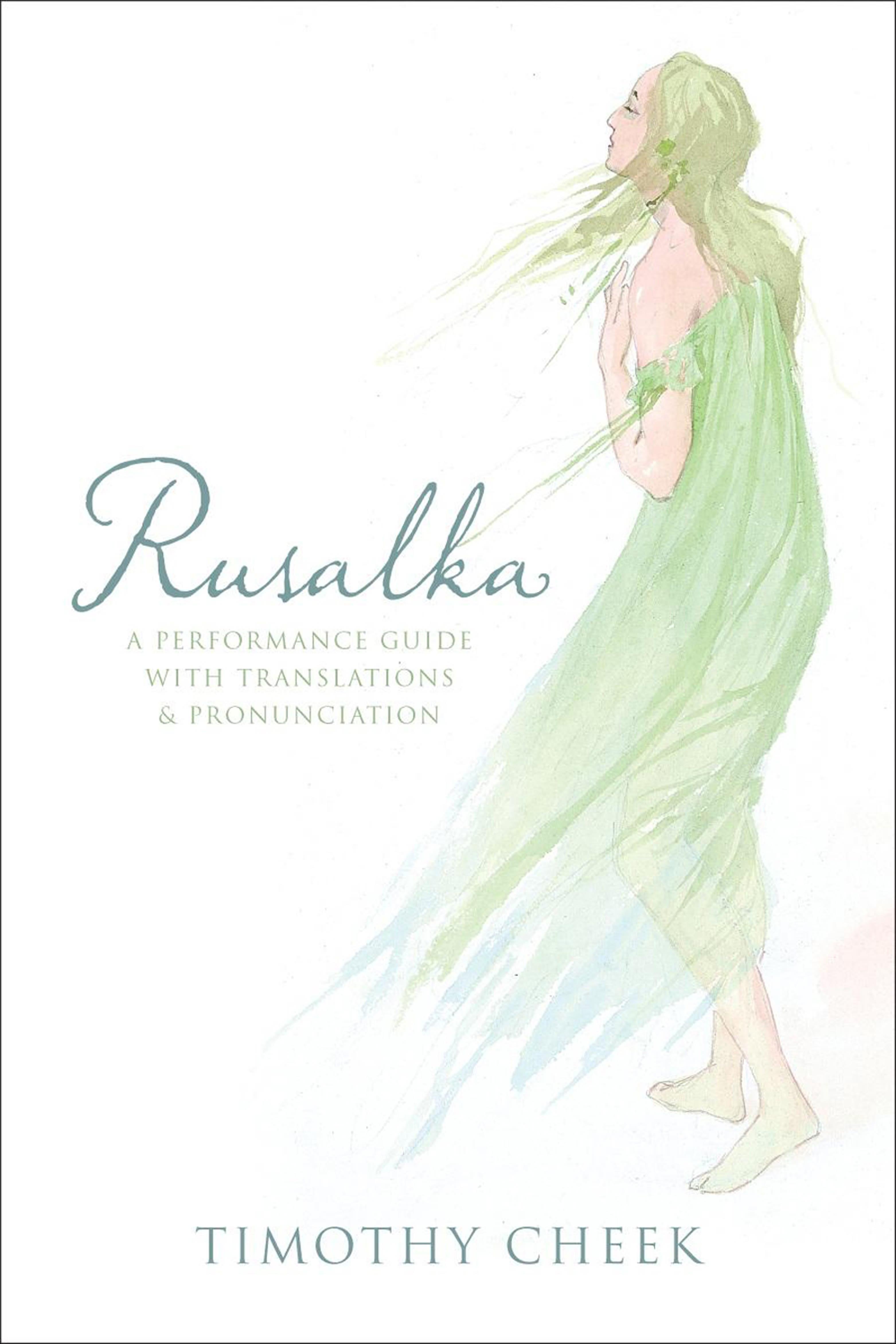
Known worldwide as a composer of symphonies and chamber music, Czech composer Antonín Dvorák declared toward the end of his life that his main love was writing operas. Written in 1900 at the height of Dvorák’s creative powers, his fairy tale opera Rusalka is a masterpiece firmly established in the international repertory—from 2010 to 2012 alone, over 200 performances of 27 productions of the opera played in 21 European cities alone! Worldwide, music schools and summer programs have mounted the work, as well, reflecting not only the power of Dvorák’s music but the lyricism and depth of Jaroslav Kvapil’s Czech libretto, one of the greatest of all opera libretti, regardless of language. This book serves as an aid to anyone seeking to perform and gain a deeper understanding of this multi-layered opera, which so trenchantly asks what it means to be human, to love, and to be loved in return.
In the first part, Czech music scholar Timothy Cheek offers a thorough review of Czech lyric diction and inflection, describes the characters and their vocal requirements, and supplies a synopsis of the plot, an elucidation of the layers of meaning in Kvapil’s libretto, a section on musical style and dance elements, and a fascinating explanation of why such a remarkable work took so long to be embraced by Western audiences. In the second half, Cheek gives word-for-word and idiomatic English translations of the Czech libretto, including stage directions, along with the International Phonetic Alphabet for pronunciation. Rounding out the book are illustrations from the Prague National Theatre, New York Metropolitan Opera, and elsewhere, as well as an appendix listing recordings and videos.
Rusalka: A Performance Guide with Translations and Pronunciation is written for singers, pianists, vocal coaches, conductors, stage directors, translators, and opera enthusiasts—anyone who wishes to perform the work, or who is simply moved and intrigued by this stunning opera.
In the first part, Czech music scholar Timothy Cheek offers a thorough review of Czech lyric diction and inflection, describes the characters and their vocal requirements, and supplies a synopsis of the plot, an elucidation of the layers of meaning in Kvapil’s libretto, a section on musical style and dance elements, and a fascinating explanation of why such a remarkable work took so long to be embraced by Western audiences. In the second half, Cheek gives word-for-word and idiomatic English translations of the Czech libretto, including stage directions, along with the International Phonetic Alphabet for pronunciation. Rounding out the book are illustrations from the Prague National Theatre, New York Metropolitan Opera, and elsewhere, as well as an appendix listing recordings and videos.
Rusalka: A Performance Guide with Translations and Pronunciation is written for singers, pianists, vocal coaches, conductors, stage directors, translators, and opera enthusiasts—anyone who wishes to perform the work, or who is simply moved and intrigued by this stunning opera.
Betal nemt med kort, Klarna, Apple Pay eller Google Pay. Ikke tilfreds? Du har altid 14 dages fortrydelsesret. Læs mere i vores vilkår. Har du spørgsmål, så send os en mail på hello@memmo.org.
Memmo gør det nemmere at studere – uanset hvor du er i verden. Hos os samler du dine kursusbøger og smarte studieværktøjer ét sted: resuméer, quizzer, podcasts og flashcards. Og så er der Ted, din studieven, der svarer på alt, du undrer dig over. Over 50 000 studerende studerer allerede her – bygget til at hjælpe dig med at lære hurtigere og stresse mindre.