
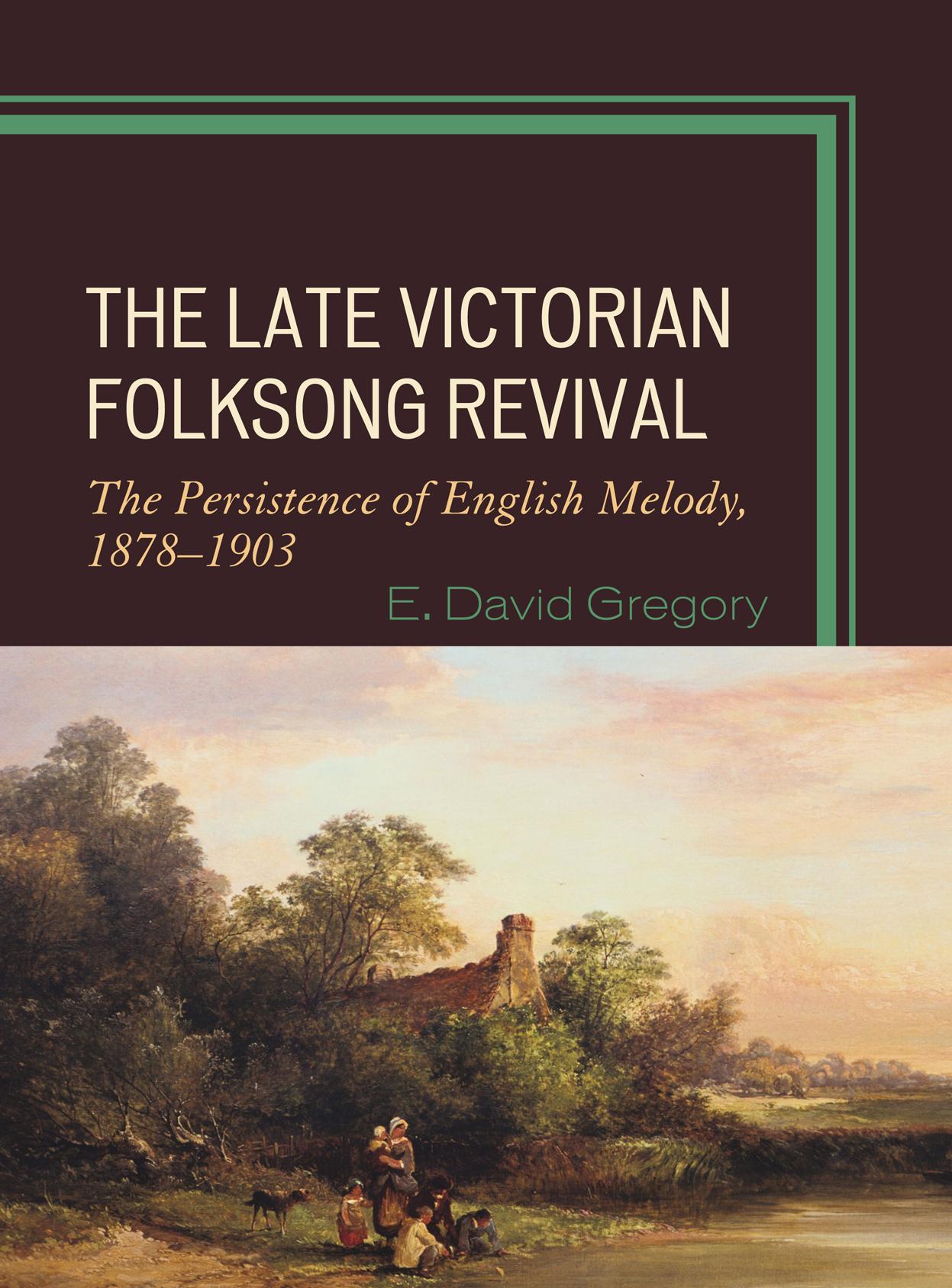
In The Late Victorian Folksong Revival: The Persistence of English Melody, 1878-1903, E. David Gregory provides a reliable and comprehensive history of the birth and early development of the first English folksong revival. Continuing where Victorian Songhunters, his first book, left off, Gregory systematically explores what the Late Victorian folksong collectors discovered in the field and what they published for posterity, identifying differences between the songs noted from oral tradition and those published in print. In doing so, he determines the extent to which the collectors distorted what they found when publishing the results of their research in an era when some folksong texts were deemed unsuitable for "polite ears."
The book provides a reliable overall survey of the birth of a movement, tracing the genesis and development of the first English folksong revival. It discusses the work of more than a dozen song-collectors, focusing in particular on three key figures: the pioneer folklorist in the English west country, Reverend Sabine Baring-Gould; Frank Kidson, who greatly increased the known corpus of Yorkshire song; and Lucy Broadwood, who collected mainly in the counties of Sussex and Surrey, and with Kidson and others, was instrumental in founding the Folk Song Society in the late 1890s. The book includes copious examples of the song tunes and texts collected, including transcriptions of nearly 300 traditional ballads, broadside ballads, folk lyrics, occupational songs, carols, shanties, and "national songs," demonstrating the abundance and high quality of the songs recovered by these early collectors.
The book provides a reliable overall survey of the birth of a movement, tracing the genesis and development of the first English folksong revival. It discusses the work of more than a dozen song-collectors, focusing in particular on three key figures: the pioneer folklorist in the English west country, Reverend Sabine Baring-Gould; Frank Kidson, who greatly increased the known corpus of Yorkshire song; and Lucy Broadwood, who collected mainly in the counties of Sussex and Surrey, and with Kidson and others, was instrumental in founding the Folk Song Society in the late 1890s. The book includes copious examples of the song tunes and texts collected, including transcriptions of nearly 300 traditional ballads, broadside ballads, folk lyrics, occupational songs, carols, shanties, and "national songs," demonstrating the abundance and high quality of the songs recovered by these early collectors.
Betal nemt med kort, Klarna, Apple Pay eller Google Pay. Ikke tilfreds? Du har altid 14 dages fortrydelsesret. Læs mere i vores vilkår. Har du spørgsmål, så send os en mail på hello@memmo.org.
Memmo gør det nemmere at studere – uanset hvor du er i verden. Hos os samler du dine kursusbøger og smarte studieværktøjer ét sted: resuméer, quizzer, podcasts og flashcards. Og så er der Ted, din studieven, der svarer på alt, du undrer dig over. Over 50 000 studerende studerer allerede her – bygget til at hjælpe dig med at lære hurtigere og stresse mindre.