
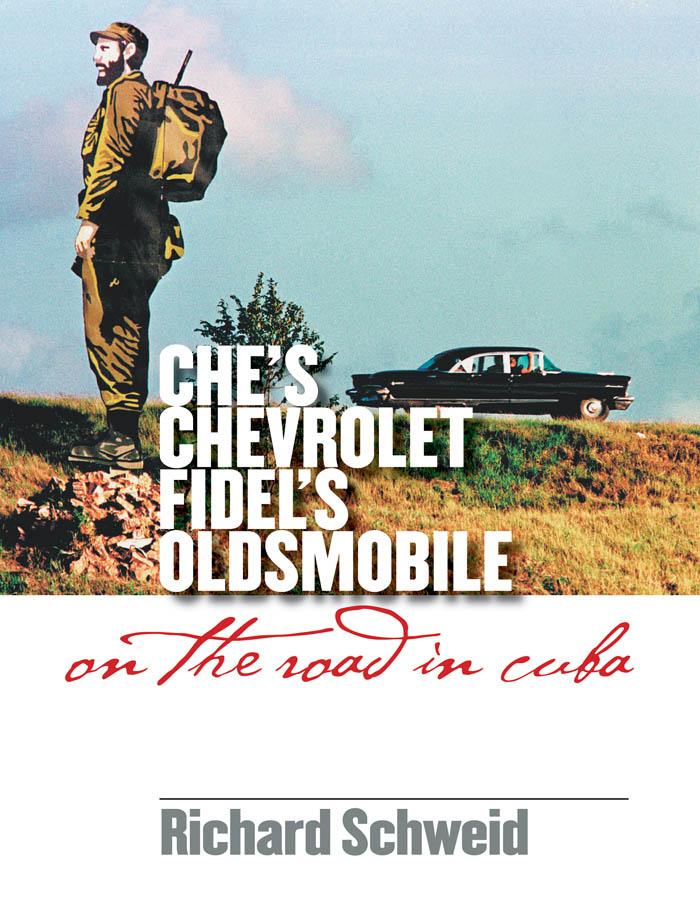
Vintage U.S.-made cars on the streets of Havana provide a common representation of Cuba. Journalist Richard Schweid, who traveled throughout the island to research the story of motor vehicles in Cuba today and yesterday, gets behind the wheel and behind the stereotype in this colorful chronicle of cars, buses, and trucks. In his captivating, sometimes gritty, voice, Schweid blends previously untapped historical sources with his personal experiences, spinning a car-centered history of life on the island over the past century.
Packard, Studebaker, Edsel, De Soto: cars long extinct in the United States can be seen at work every day on Cuba’s streets. Havana and Santiago de Cuba today are home to some 60,000 North American cars, all dating back to at least 1959, the year the Cuban Revolution prevailed. Though hardly a new part has arrived in Cuba since 1960, the cars are still on the road, held together with mechanical ingenuity and willpower.
Visiting car mechanics, tracking down records in dusty archives, and talking with car-crazy Cubans of all types, Schweid juxtaposes historic moments (Fidel Castro riding to the Bay of Pigs in an Oldsmobile) with the quotidian (a weary mother’s two-cent bus ride home after a long day) and composes a rich, engaging picture of the Cuban people and their history. The narrative is complemented by fifty-two historic black-and-white photographs and eight color photographs by contemporary Cuban photographer Adalberto Roque.
Packard, Studebaker, Edsel, De Soto: cars long extinct in the United States can be seen at work every day on Cuba’s streets. Havana and Santiago de Cuba today are home to some 60,000 North American cars, all dating back to at least 1959, the year the Cuban Revolution prevailed. Though hardly a new part has arrived in Cuba since 1960, the cars are still on the road, held together with mechanical ingenuity and willpower.
Visiting car mechanics, tracking down records in dusty archives, and talking with car-crazy Cubans of all types, Schweid juxtaposes historic moments (Fidel Castro riding to the Bay of Pigs in an Oldsmobile) with the quotidian (a weary mother’s two-cent bus ride home after a long day) and composes a rich, engaging picture of the Cuban people and their history. The narrative is complemented by fifty-two historic black-and-white photographs and eight color photographs by contemporary Cuban photographer Adalberto Roque.
Betal nemt med kort, Klarna, Apple Pay eller Google Pay. Ikke tilfreds? Du har altid 14 dages fortrydelsesret. Læs mere i vores vilkår. Har du spørgsmål, så send os en mail på hello@memmo.org.
Memmo gør det nemmere at studere – uanset hvor du er i verden. Hos os samler du dine kursusbøger og smarte studieværktøjer ét sted: resuméer, quizzer, podcasts og flashcards. Og så er der Ted, din studieven, der svarer på alt, du undrer dig over. Over 50 000 studerende studerer allerede her – bygget til at hjælpe dig med at lære hurtigere og stresse mindre.
Du kan måske også lide
Køb bogen0