
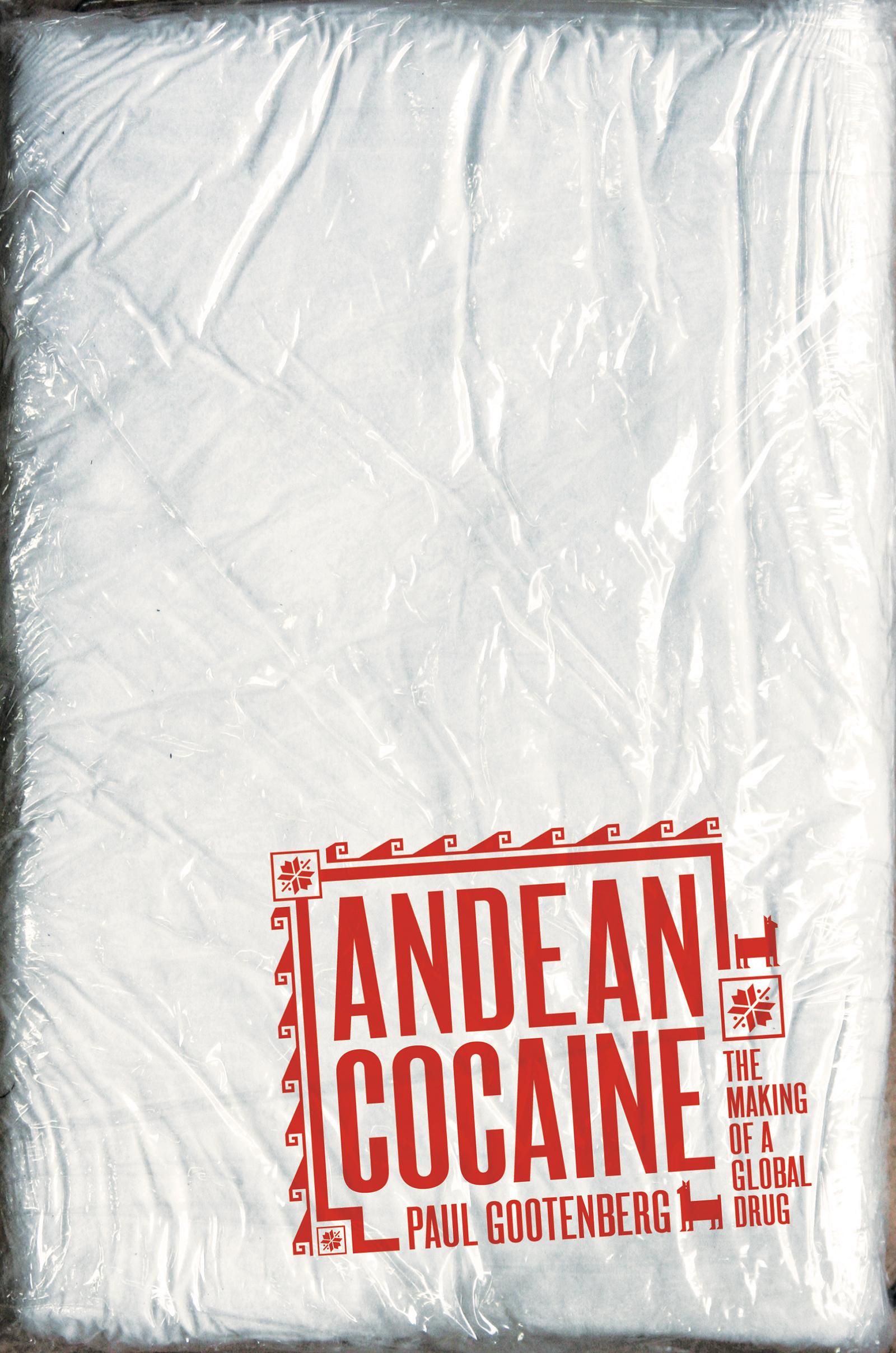
Illuminating a hidden and fascinating chapter in the history of globalization, Paul Gootenberg chronicles the rise of one of the most spectacular and now illegal Latin American exports: cocaine.
Gootenberg traces cocaine’s history from its origins as a medical commodity in the nineteenth century to its repression during the early twentieth century and its dramatic reemergence as an illicit good after World War II. Connecting the story of the drug’s transformations is a host of people, products, and processes: Sigmund Freud, Coca-Cola, and Pablo Escobar all make appearances, exemplifying the global influences that have shaped the history of cocaine. But Gootenberg decenters the familiar story to uncover the roles played by hitherto obscure but vital Andean actors as well — for example, the Peruvian pharmacist who developed the techniques for refining cocaine on an industrial scale and the creators of the original drug-smuggling networks that decades later would be taken over by Colombian traffickers.
Andean Cocaine proves indispensable to understanding one of the most vexing social dilemmas of the late twentieth-century Americas: the American cocaine epidemic of the 1980s and, in its wake, the seemingly endless U.S. drug war in the Andes.
Betal nemt med kort, Klarna, Apple Pay eller Google Pay. Ikke tilfreds? Du har altid 14 dages fortrydelsesret. Læs mere i vores vilkår. Har du spørgsmål, så send os en mail på hello@memmo.org.
Memmo gør det nemmere at studere – uanset hvor du er i verden. Hos os samler du dine kursusbøger og smarte studieværktøjer ét sted: resuméer, quizzer, podcasts og flashcards. Og så er der Ted, din studieven, der svarer på alt, du undrer dig over. Over 50 000 studerende studerer allerede her – bygget til at hjælpe dig med at lære hurtigere og stresse mindre.