
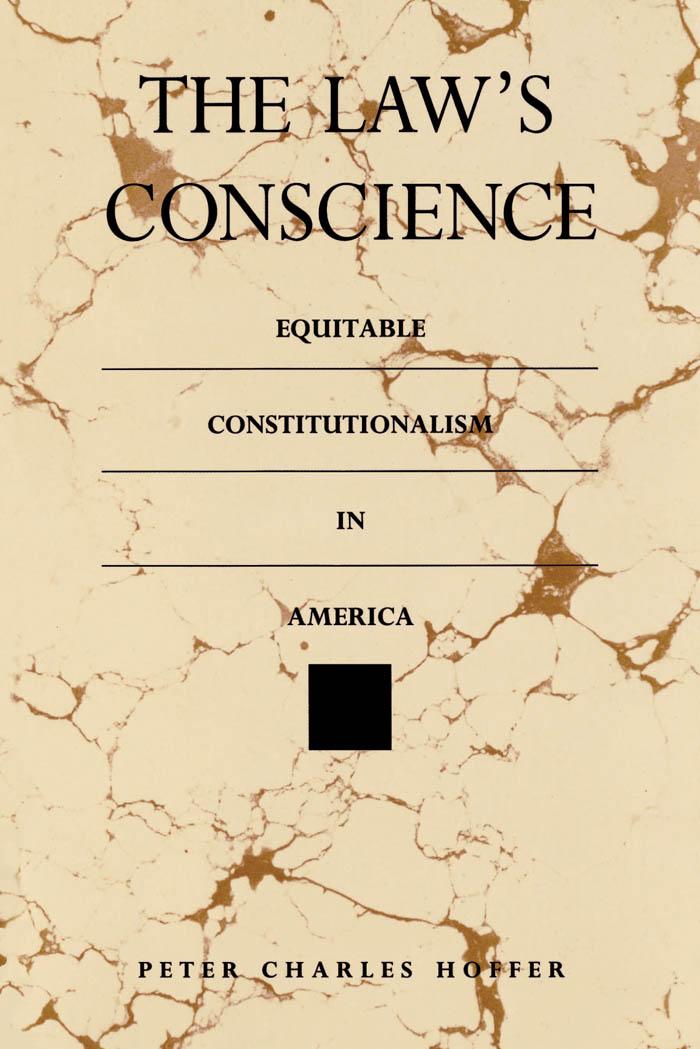
The Law’s Conscience is a history of equity in Anglo-American juris-prudence from the inception of the chancellor’s court in medieval England to the recent civil rights and affirmative action decisions of the United States Supreme Court. Peter Hoffer argues that equity embodies a way of looking at law, including constitutions, based on ideas of mutual fairness, public trusteeship, and equal protection. His central theme is the tension between the ideal of equity and the actual availability of equitable remedies.
Hoffer examines this tension in the trusteeship constitutionalism of John Locke and Thomas Jefferson; the incorporation of equity in the first American constitutions; the antebellum controversy over slavery; the fortunes of the Freedmen’s Bureau after the Civil War; the emergence of the doctrine of “Balance of Equity” in twentieth-century public-interest law; and the desegregation and reverse discrimination cases of the past thirty-five years. Brown v. Board of Education (1954) was the most important equity suit in American history, and Hoffer begins and ends his book with a new interpretation of its lessons.
Betal nemt med kort, Klarna, Apple Pay eller Google Pay. Ikke tilfreds? Du har altid 14 dages fortrydelsesret. Læs mere i vores vilkår. Har du spørgsmål, så send os en mail på hello@memmo.org.
Memmo gør det nemmere at studere – uanset hvor du er i verden. Hos os samler du dine kursusbøger og smarte studieværktøjer ét sted: resuméer, quizzer, podcasts og flashcards. Og så er der Ted, din studieven, der svarer på alt, du undrer dig over. Over 50 000 studerende studerer allerede her – bygget til at hjælpe dig med at lære hurtigere og stresse mindre.