
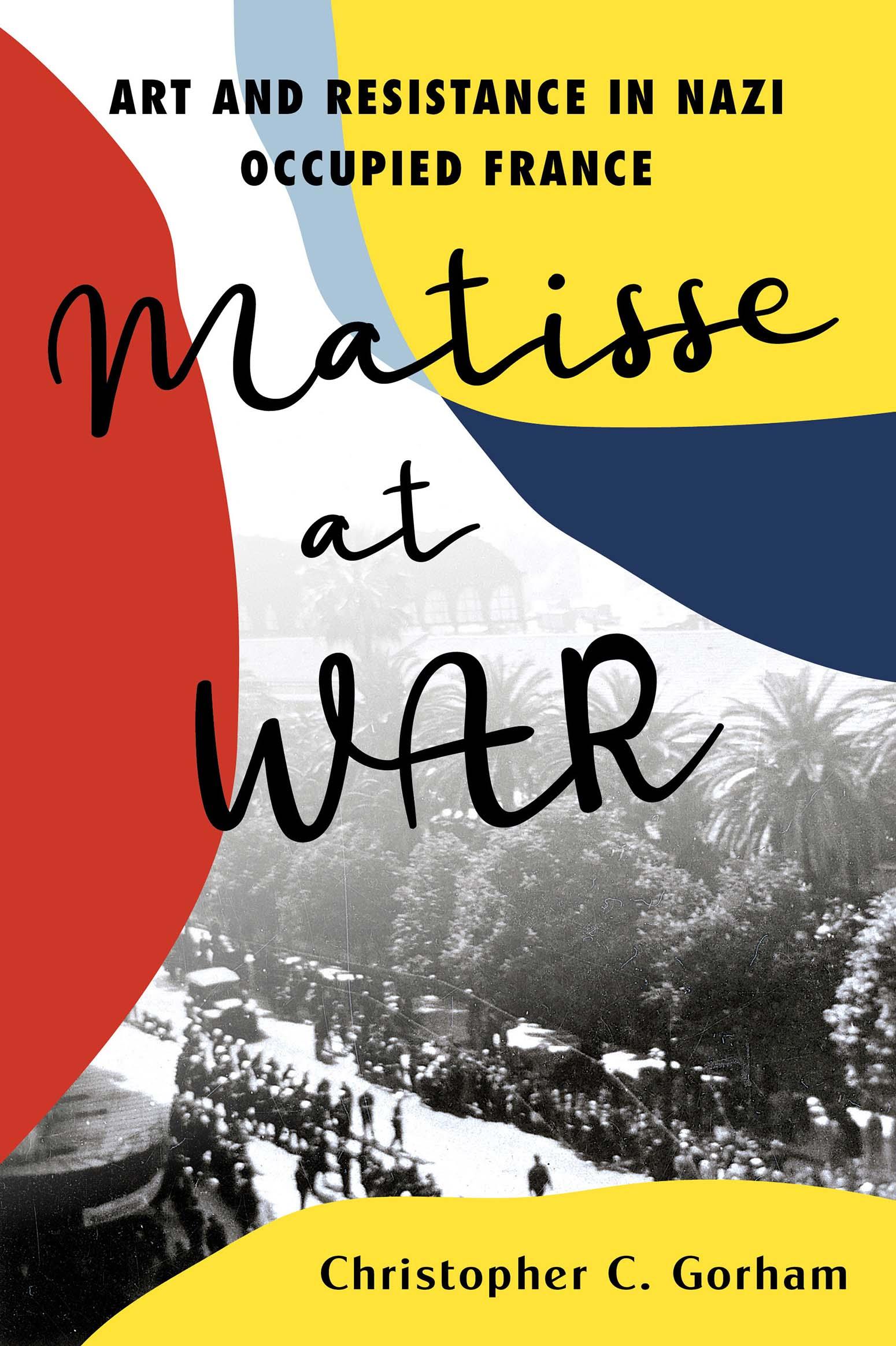
Spotlighting the years during WWII when Henri Matisse and his family defiantly refused to evacuate Nazi-occupied France, this groundbreaking book illuminates the previously untold history of their passionate roles in the Resistance and the prodigious, revolutionary work the artist produced in the face of fascism, violence, and hate.
For readers of Jeffrey H. Jackson’s Paper Bullets, Martin Dugard’s Taking Paris, Julie Orringer’s The Flight Portfolio, and Picasso’s War by Hugh Eakin – from the acclaimed author of The Confidante.
In 1940, with the Nazis sweeping through France, Henri Matisse found himself at a personal and artistic crossroads. His 42-year marriage had ended, he was gravely ill, and after decades at the forefront of modern art, he was beset by doubt. As scores of famous figures escaped the country, Matisse took refuge in Nice, with his companion, Lydia Delectorskaya. By defiantly remaining, Matisse was a source of inspiration for his nation.
While enemy agents and Resistance fighters played cat-and-mouse in the alleyways of Nice, Matisse’s son, Jean, engaged in sabotage efforts with the Allies. In Paris, under the swastika, Matisse’s estranged wife, Amélie, worked for the Communist underground. His beloved daughter, Marguerite, active in the French Resistance, was arrested and tortured by the Gestapo, sentenced to Ravensbruck concentration camp—and miraculously escaped when her train was halted by Allied bombs. His younger, son, Pierre helped Jewish artists escape to New York; even his teenaged grandson risked his life by defying the Germans and their Vichy collaborators.
Amidst this chaos, Matisse responded to the dark days of war by inventing a dazzling new paper technique that led to some of his most iconic pieces, including The Fall of Icarus, his profile of Charles De Gaulle, Monsieur Loyal, and his groundbreaking cut-out book, Jazz. His wartime works were acts of resistance, subtly patriotic and daringly new.
Drawing on intimate letters and a multitude of other sources, Christopher C. Gorham illuminates this momentous stage of Matisse’s life as never before, revealing an artist on a journey of reinvention, wrenching meaning from the suffering of war, and holding up the light of human imagination against the torch of fascism to create some of the most exciting work of his career, of the 20th century, and in the history of art.
Betal nemt med kort, Klarna, Apple Pay eller Google Pay. Ikke tilfreds? Du har altid 14 dages fortrydelsesret. Læs mere i vores vilkår. Har du spørgsmål, så send os en mail på hello@memmo.org.
Memmo gør det nemmere at studere – uanset hvor du er i verden. Hos os samler du dine kursusbøger og smarte studieværktøjer ét sted: resuméer, quizzer, podcasts og flashcards. Og så er der Ted, din studieven, der svarer på alt, du undrer dig over. Over 50 000 studerende studerer allerede her – bygget til at hjælpe dig med at lære hurtigere og stresse mindre.