
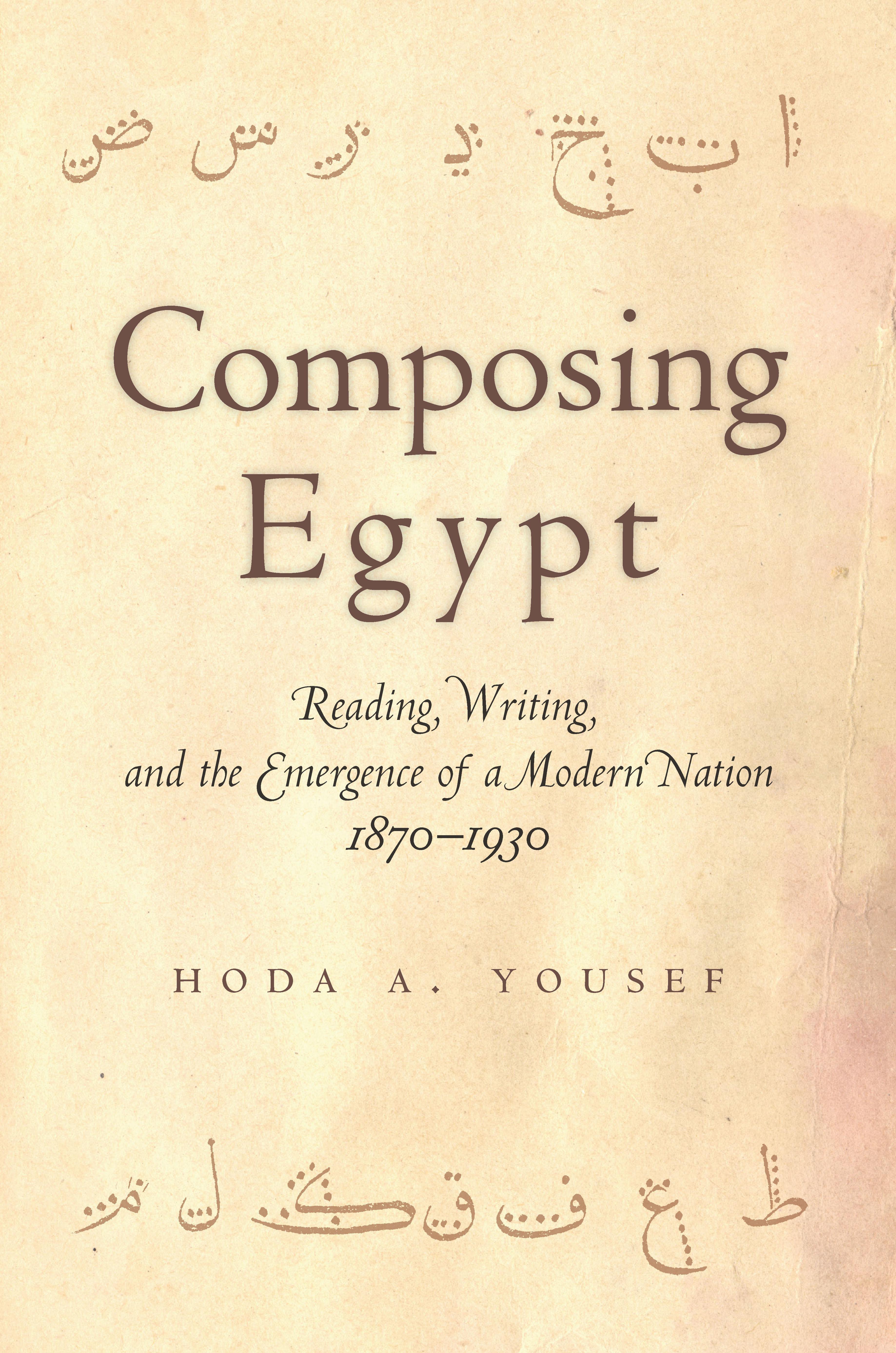
In this innovative history of reading and writing, Hoda Yousef explores how the idea of literacy and its practices fundamentally altered the social fabric of Egypt at the turn of the twentieth century. She traces how nationalists, Islamic modernists, bureaucrats, journalists, and early feminists sought to reform reading habits, writing styles, and the Arabic language itself in their hopes that the right kind of literacy practices would create the right kind of Egyptians.
The impact of new reading and writing practices went well beyond the elites and the newly literate of Egyptian society, and this book reveals the increasingly ubiquitous reading and writing practices of literate, illiterate, and semi-literate Egyptians alike. Students who wrote petitions, women who frequented scribes, and communities who gathered to hear a newspaper read aloud all used various literacies to participate in social exchanges and civic negotiations regarding the most important issues of their day. Composing Egypt illustrates how reading and writing practices became not only an object of social reform, but also a central medium for public exchange. Wide segments of society could engage with new ideas about nationalism, education, gender, and, ultimately, what it meant to be part of "modern Egypt."
Betal nemt med kort, Klarna, Apple Pay eller Google Pay. Ikke tilfreds? Du har altid 14 dages fortrydelsesret. Læs mere i vores vilkår. Har du spørgsmål, så send os en mail på hello@memmo.org.
Memmo gør det nemmere at studere – uanset hvor du er i verden. Hos os samler du dine kursusbøger og smarte studieværktøjer ét sted: resuméer, quizzer, podcasts og flashcards. Og så er der Ted, din studieven, der svarer på alt, du undrer dig over. Over 50 000 studerende studerer allerede her – bygget til at hjælpe dig med at lære hurtigere og stresse mindre.