
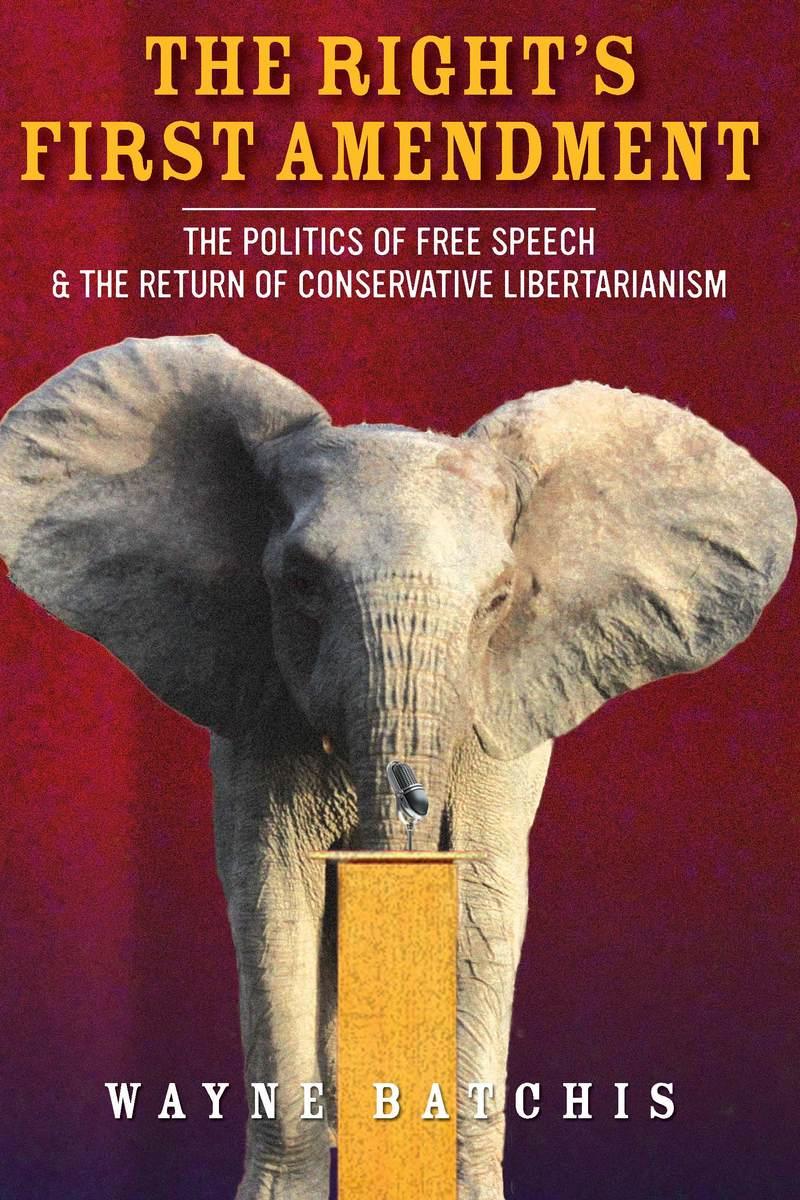
Not so long ago, being aggressively "pro–free speech" was as closely associated with American political liberalism as being pro-choice, pro–affirmative action, or pro–gun control. With little notice, this political dynamic has been shaken to the core. The Right's First Amendment examines how conservatives came to adopt and co-opt constitutional free speech rights.
In the 1960s, free speech on college campuses was seen as a guarantee for social agitators, hippies, and peaceniks. Today, for many conservatives, it represents instead a crucial shield that protects traditionalists from a perceived scourge of political correctness and liberal oversensitivity. Over a similar period, free market conservatives have risen up to embrace a once unknown, but now cherished, liberty: freedom of commercial expression. What do these changes mean for the future of First Amendment interpretation?
Wayne Batchis offers a fresh entry point into these issues by grounding his study in both political and legal scholarship. Surveying six decades of writings from the preeminent conservative publication National Review alongside the evolving constitutional law and ideological predispositions of Supreme Court justices deciding these issues, Batchis asks the conservative political movement to answer to its judicial logic, revealing how this keystone of our civic American beliefs now carries a much more complex and nuanced political identity.
Betal nemt med kort, Klarna, Apple Pay eller Google Pay. Ikke tilfreds? Du har altid 14 dages fortrydelsesret. Læs mere i vores vilkår. Har du spørgsmål, så send os en mail på hello@memmo.org.
Memmo gør det nemmere at studere – uanset hvor du er i verden. Hos os samler du dine kursusbøger og smarte studieværktøjer ét sted: resuméer, quizzer, podcasts og flashcards. Og så er der Ted, din studieven, der svarer på alt, du undrer dig over. Over 50 000 studerende studerer allerede her – bygget til at hjælpe dig med at lære hurtigere og stresse mindre.