
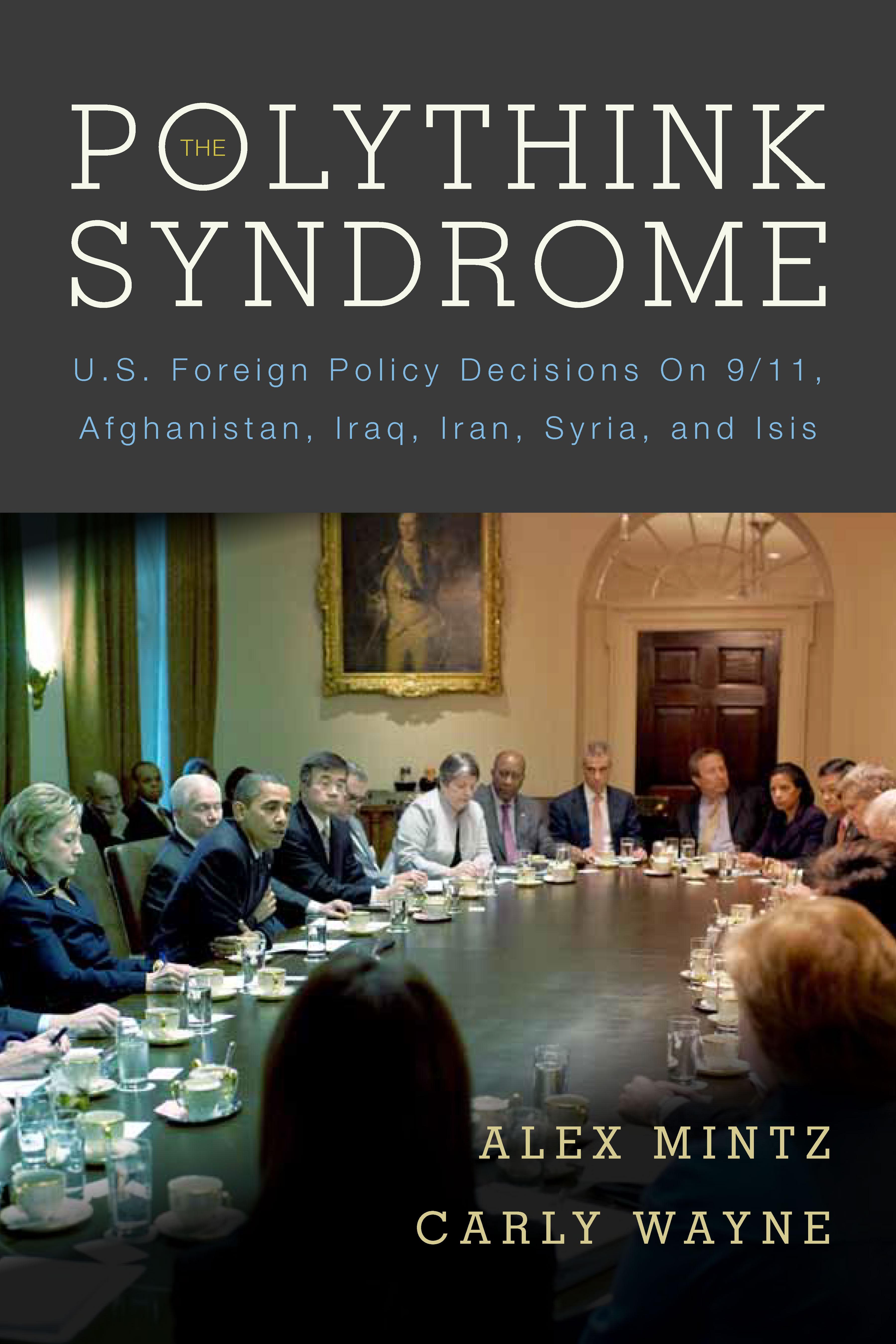
Why do presidents and their advisors often make sub-optimal decisions on military intervention, escalation, de-escalation, and termination of conflicts?
The leading concept of group dynamics, groupthink, offers one explanation: policy-making groups make sub-optimal decisions due to their desire for conformity and uniformity over dissent, leading to a failure to consider other relevant possibilities. But presidential advisory groups are often fragmented and divisive. This book therefore scrutinizes polythink, a group decision-making dynamic whereby different members in a decision-making unit espouse a plurality of opinions and divergent policy prescriptions, resulting in a disjointed decision-making process or even decision paralysis.
The book analyzes eleven national security decisions, including the national security policy designed prior to the terrorist attacks of 9/11, the decisions to enter into and withdraw from Afghanistan and Iraq, the 2007 "surge" decision, the crisis over the Iranian nuclear program, the UN Security Council decision on the Syrian Civil War, the faltering Kerry Peace Process in the Middle East, and the U.S. decision on military operations against ISIS.
Based on the analysis of these case studies, the authors address implications of the polythink phenomenon, including prescriptions for avoiding and/or overcoming it, and develop strategies and tools for what they call Productive Polythink. The authors also show the applicability of polythink to business, industry, and everyday decisions.
Betal nemt med kort, Klarna, Apple Pay eller Google Pay. Ikke tilfreds? Du har altid 14 dages fortrydelsesret. Læs mere i vores vilkår. Har du spørgsmål, så send os en mail på hello@memmo.org.
Memmo gør det nemmere at studere – uanset hvor du er i verden. Hos os samler du dine kursusbøger og smarte studieværktøjer ét sted: resuméer, quizzer, podcasts og flashcards. Og så er der Ted, din studieven, der svarer på alt, du undrer dig over. Over 50 000 studerende studerer allerede her – bygget til at hjælpe dig med at lære hurtigere og stresse mindre.