
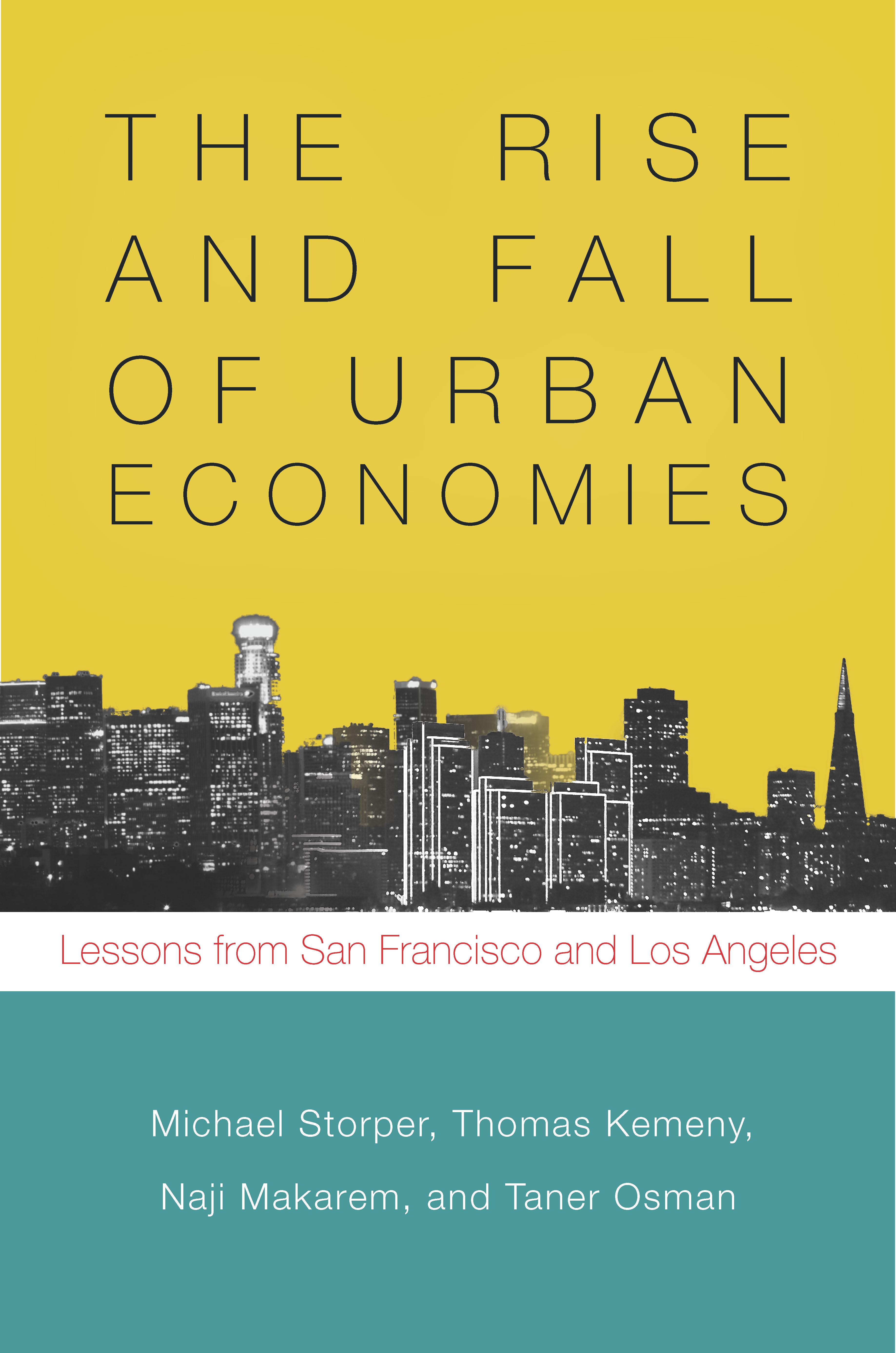
Today, the Bay Area is home to the most successful knowledge economy in America, while Los Angeles has fallen progressively further behind its neighbor to the north and a number of other American metropolises. Yet, in 1970, experts would have predicted that L.A. would outpace San Francisco in population, income, economic power, and influence. The usual factors used to explain urban growth—luck, immigration, local economic policies, and the pool of skilled labor—do not account for the contrast between the two cities and their fates. So what does?
The Rise and Fall of Urban Economies challenges many of the conventional notions about economic development and sheds new light on its workings. The authors argue that it is essential to understand the interactions of three major components—economic specialization, human capital formation, and institutional factors—to determine how well a regional economy will cope with new opportunities and challenges. Drawing on economics, sociology, political science, and geography, they argue that the economic development of metropolitan regions hinges on previously underexplored capacities for organizational change in firms, networks of people, and networks of leaders. By studying San Francisco and Los Angeles in unprecedented levels of depth, this book extracts lessons for the field of economic development studies and urban regions around the world.
Betal nemt med kort, Klarna, Apple Pay eller Google Pay. Ikke tilfreds? Du har altid 14 dages fortrydelsesret. Læs mere i vores vilkår. Har du spørgsmål, så send os en mail på hello@memmo.org.
Memmo gør det nemmere at studere – uanset hvor du er i verden. Hos os samler du dine kursusbøger og smarte studieværktøjer ét sted: resuméer, quizzer, podcasts og flashcards. Og så er der Ted, din studieven, der svarer på alt, du undrer dig over. Over 50 000 studerende studerer allerede her – bygget til at hjælpe dig med at lære hurtigere og stresse mindre.