
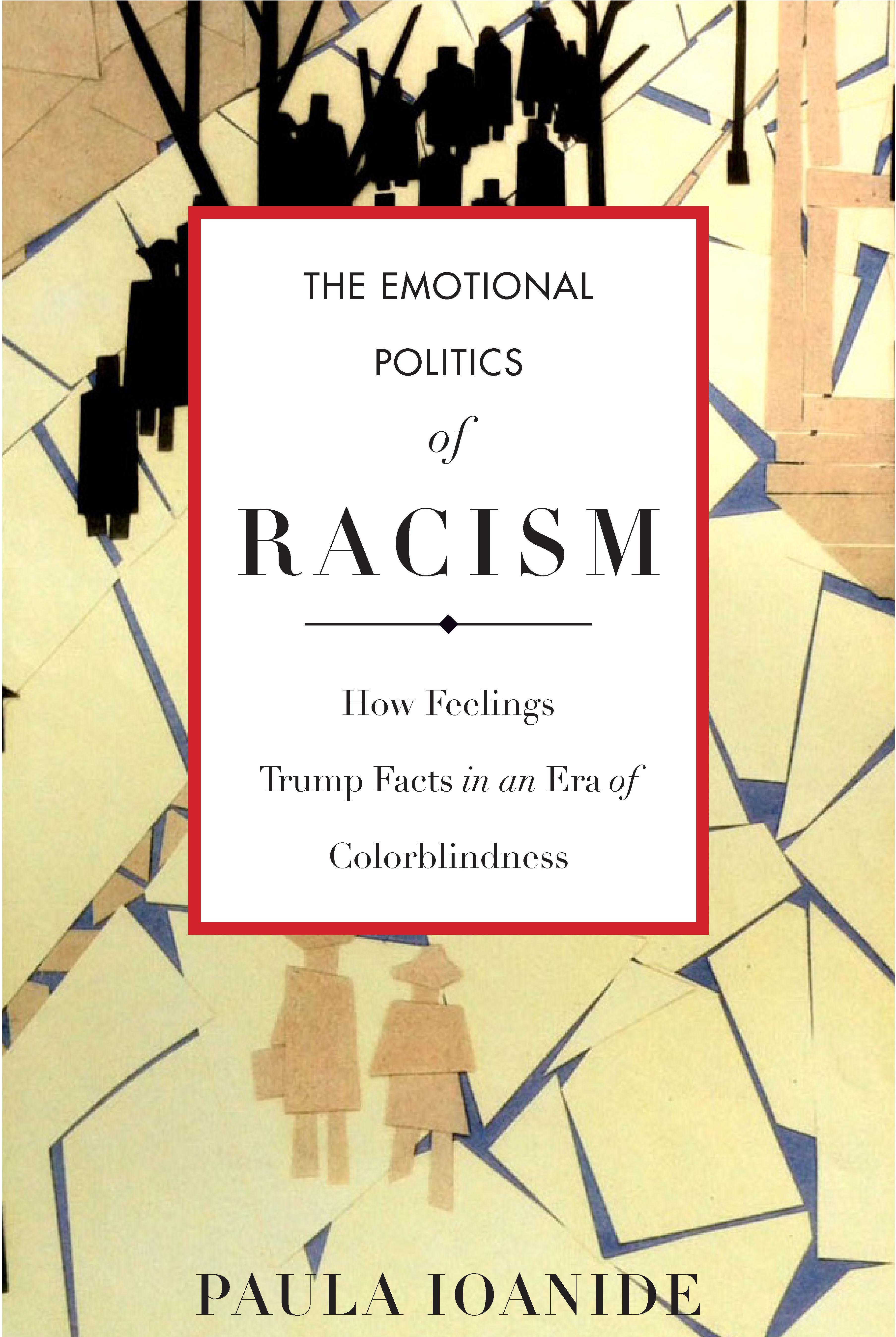
With stop-and-frisk laws, new immigration policies, and cuts to social welfare programs, majorities in the United States have increasingly supported intensified forms of punishment and marginalization against Black, Latino, Arab and Muslim people in the United States, even as a majority of citizens claim to support "colorblindness" and racial equality. With this book, Paula Ioanide examines how emotion has prominently figured into these contemporary expressions of racial discrimination and violence. How U.S. publics dominantly feel about crime, terrorism, welfare, and immigration often seems to trump whatever facts and evidence say about these politicized matters.
Though four case studies—the police brutality case of Abner Louima; the exposure of torture at Abu Ghraib; the demolition of New Orleans public housing units following Hurricane Katrina; and a proposed municipal ordinance to deny housing to undocumented immigrants in Escondido, CA—Ioanide shows how racial fears are perpetuated, and how these widespread fears have played a central role in justifying the expansion of our military and prison system and the ongoing divestment from social welfare. But Ioanide also argues that within each of these cases there is opportunity for new mobilizations, for ethical witnessing: we must also popularize desires for justice and increase people's receptivity to the testimonies of the oppressed by reorganizing embodied and unconscious structures of feeling.
Betal nemt med kort, Klarna, Apple Pay eller Google Pay. Ikke tilfreds? Du har altid 14 dages fortrydelsesret. Læs mere i vores vilkår. Har du spørgsmål, så send os en mail på hello@memmo.org.
Memmo gør det nemmere at studere – uanset hvor du er i verden. Hos os samler du dine kursusbøger og smarte studieværktøjer ét sted: resuméer, quizzer, podcasts og flashcards. Og så er der Ted, din studieven, der svarer på alt, du undrer dig over. Over 50 000 studerende studerer allerede her – bygget til at hjælpe dig med at lære hurtigere og stresse mindre.