
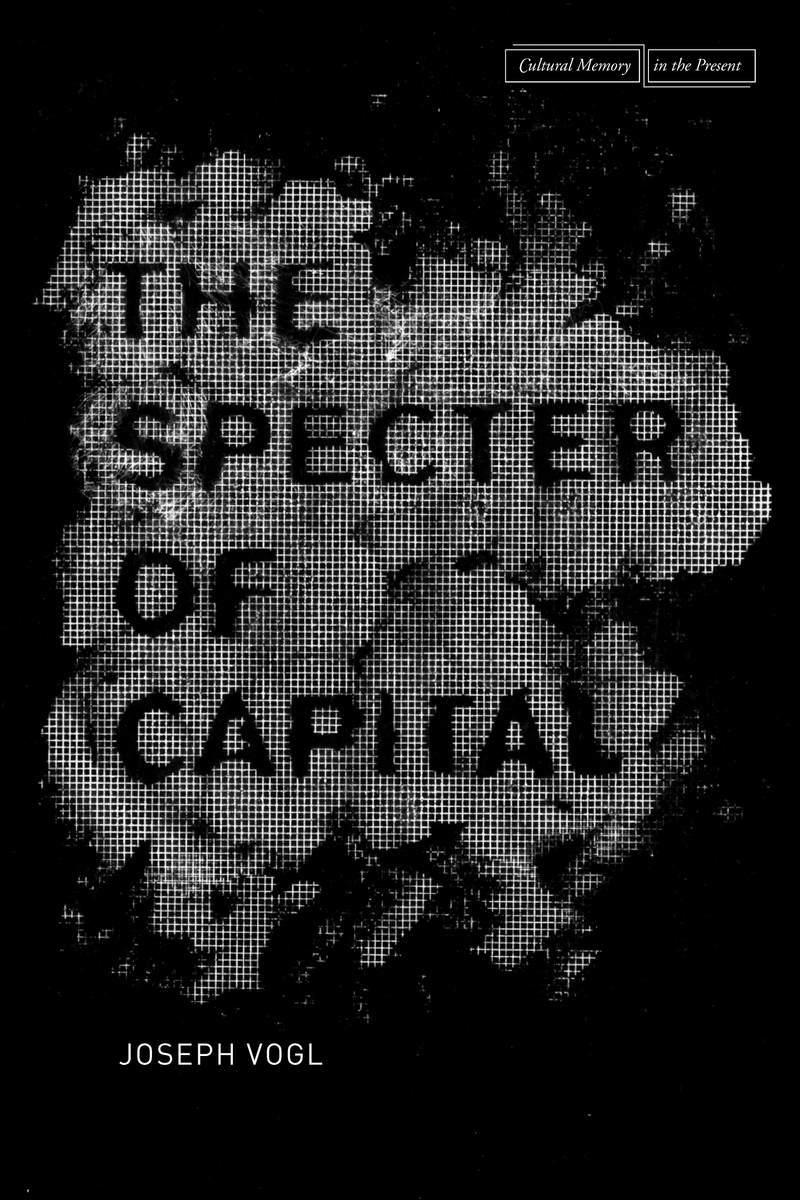
In his brilliant interdisciplinary analysis of the global financial crisis, Joseph Vogl aims to demystify finance capitalism—with its bewildering array of new instruments—by tracing the historical stages through which the financial market achieved its current autonomy. Classical and neoclassical economic theorists have played a decisive role here. Ignoring early warnings about the instability of speculative finance markets, they have persisted in their belief in the inherent equilibrium of the market, describing even major crises as mere aberrations or adjustments and rationalizing dubious financial practices that escalate risk while seeking to manage it.
"The market knows best": this is a secular version of Adam Smith's faith in the market's "invisible hand," his economic interpretation of eighteenth-century providentialist theodicy, which subsequently hardened into an "oikodicy," an unquestioning belief in the self-regulating beneficence of market forces. Vogl shows that financial theory, assisted by mathematical modeling and digital technology, itself operates as a "hidden hand," pushing economic reality into unknown territory. He challenges economic theorists to move beyond the neoclassical paradigm to discern the true contours of the current epoch of financial convulsions.
Betal nemt med kort, Klarna, Apple Pay eller Google Pay. Ikke tilfreds? Du har altid 14 dages fortrydelsesret. Læs mere i vores vilkår. Har du spørgsmål, så send os en mail på hello@memmo.org.
Memmo gør det nemmere at studere – uanset hvor du er i verden. Hos os samler du dine kursusbøger og smarte studieværktøjer ét sted: resuméer, quizzer, podcasts og flashcards. Og så er der Ted, din studieven, der svarer på alt, du undrer dig over. Over 50 000 studerende studerer allerede her – bygget til at hjælpe dig med at lære hurtigere og stresse mindre.