
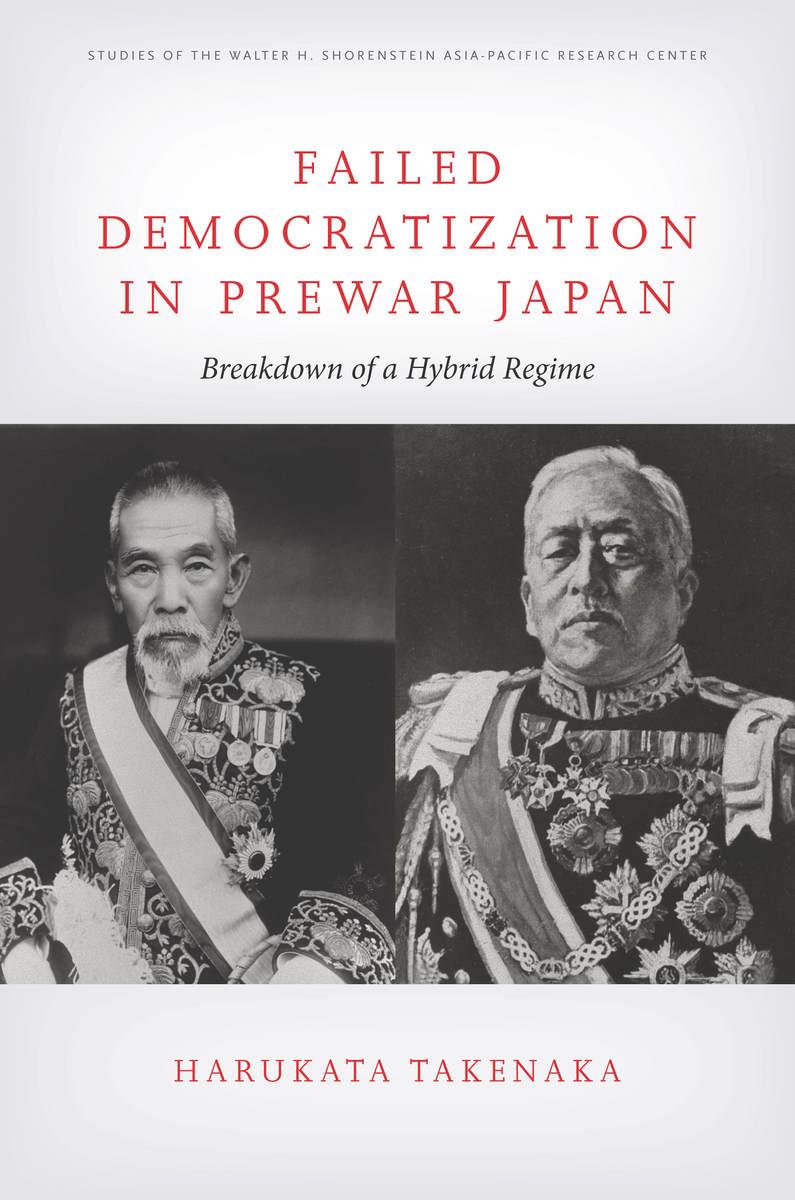
Failed Democratization in Prewar Japan presents a compelling case study on change in political regimes through its exploration of Japan's transition to democracy. Within a broad-ranging examination of Japan's "semi-democratic" political system from 1918 to 1932, when political parties tended to dominate the government, the book analyzes in detail why this system collapsed in 1932 and discusses the implications of the failure.
By reference to comparable cases—prewar Argentina, prewar Germany, postwar Brazil, and 1980s Thailand—Harukata Takenaka reveals that the factors responsible for the breakdown of the Taisho democracy in Japan replicated those that precipitated the collapse of democracy in Europe, Latin America, and elsewhere in Asia.
While most literature on these transitions focuses on successful cases, Takenaka explores democratic failure to answer questions about how and why political parties and their leaders can behave in ways that undermine the democratic institutions that serve as the basis for their formal authority.
Betal nemt med kort, Klarna, Apple Pay eller Google Pay. Ikke tilfreds? Du har altid 14 dages fortrydelsesret. Læs mere i vores vilkår. Har du spørgsmål, så send os en mail på hello@memmo.org.
Memmo gør det nemmere at studere – uanset hvor du er i verden. Hos os samler du dine kursusbøger og smarte studieværktøjer ét sted: resuméer, quizzer, podcasts og flashcards. Og så er der Ted, din studieven, der svarer på alt, du undrer dig over. Over 50 000 studerende studerer allerede her – bygget til at hjælpe dig med at lære hurtigere og stresse mindre.