
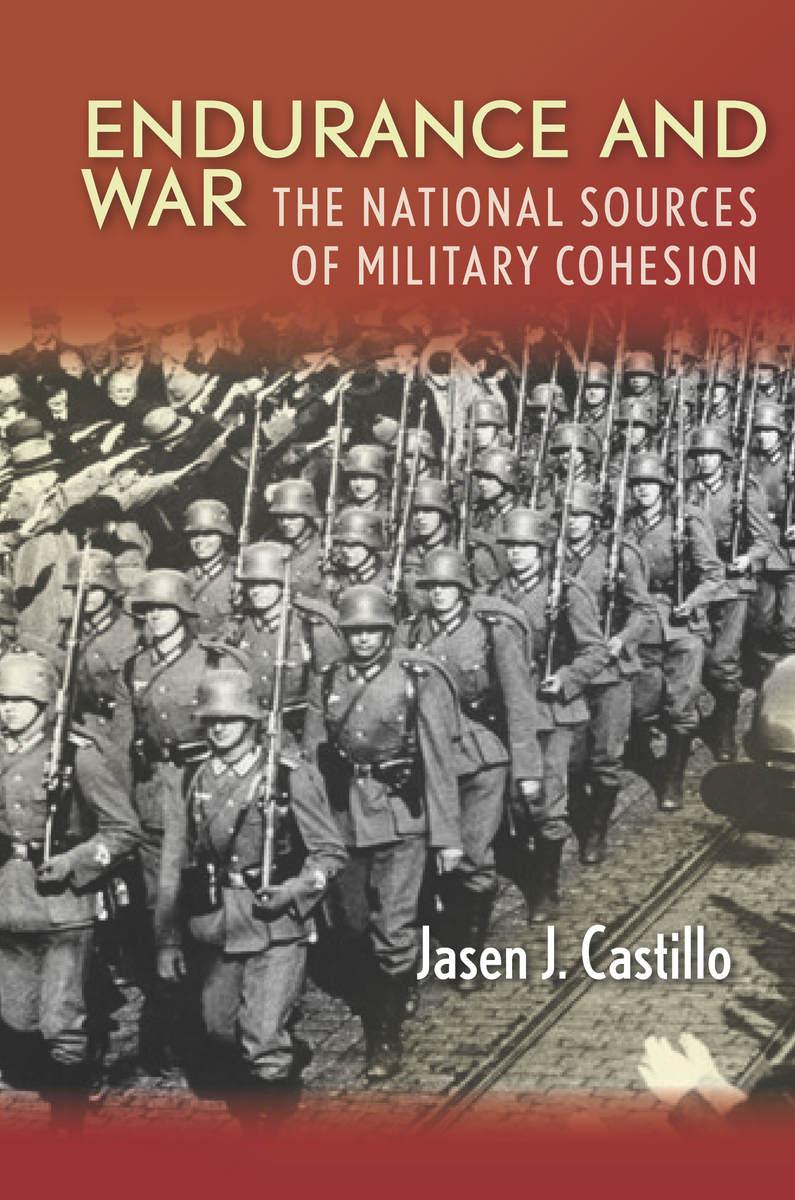
Scholars and military practitioners alike have long sought to understand why some country's militaries fight hard when facing defeat while others collapse. In Endurance and War, Jasen Castillo presents a new unifying theory—cohesion theory—to explain why national militaries differ in their staying power. His argument builds on insights from the literatures on group solidarity in general and military effectiveness in particular, which argue that the stronger the ties binding together individuals in a group of any kind, the higher the degree of cohesion that a group will exhibit when taking collective action, including fighting in war. Specifically, he argues that two types of ties determine the cohesion, and therefore the resilience, of a nation's armed forces during war: the degree of control a regime holds over its citizens and the amount of autonomy the armed forces possess to focus on training for warfighting.
Understanding why armed forces differ in their cohesion should help U.S. military planners better assess the military capabilities of potential adversaries, like Iran and North Korea. For scholars of international politics, cohesion theory can help provide insights into how countries create military power and how they win wars.
Betal nemt med kort, Klarna, Apple Pay eller Google Pay. Ikke tilfreds? Du har altid 14 dages fortrydelsesret. Læs mere i vores vilkår. Har du spørgsmål, så send os en mail på hello@memmo.org.
Memmo gør det nemmere at studere – uanset hvor du er i verden. Hos os samler du dine kursusbøger og smarte studieværktøjer ét sted: resuméer, quizzer, podcasts og flashcards. Og så er der Ted, din studieven, der svarer på alt, du undrer dig over. Over 50 000 studerende studerer allerede her – bygget til at hjælpe dig med at lære hurtigere og stresse mindre.