
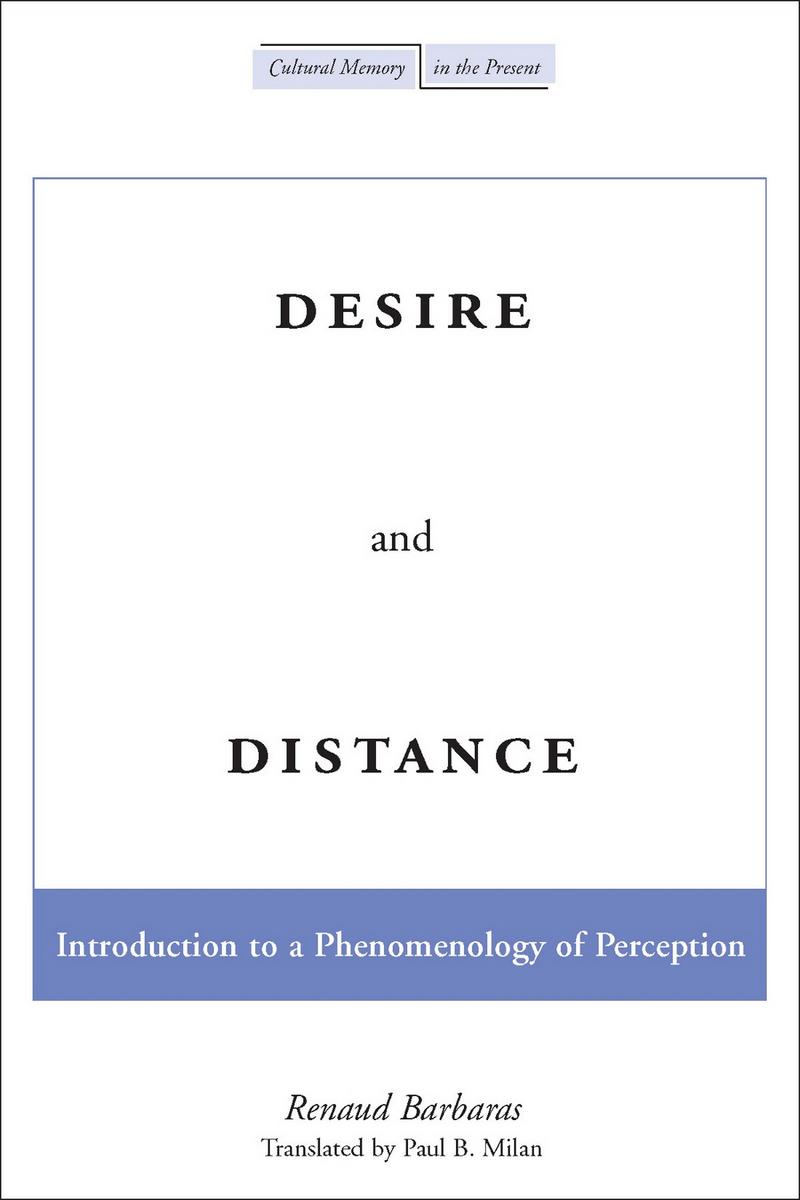
Desire and Distance constitutes an important new departure in contemporary phenomenological thought, a rethinking and critique of basic philosophical positions concerning the concept of perception presented by Husserl and Merleau-Ponty, though it departs in significant and original ways from their work. Barbaras's overall goal is to develop a philosophy of what "life" is—one that would do justice to the question of embodiment and its role in perception and the formation of the human subject. Barbaras posits that desire and distance inform the concept of "life." Levinas identified a similar structure in Descartes's notion of the infinite. For Barbaras, desire and distance are anchored not in meaning, but in a rethinking of the philosophy of biology and, in consequence, cosmology.
Barbaras elaborates and extends the formal structure of desire and distance by drawing on motifs as yet unexplored in the French phenomenological tradition, especially the notions of "life" and the "life-world," which are prominent in the later Husserl but also appear in non-phenomenological thinkers such as Bergson. Barbaras then filters these notions (especially "life") through Merleau-Ponty.
Betal nemt med kort, Klarna, Apple Pay eller Google Pay. Ikke tilfreds? Du har altid 14 dages fortrydelsesret. Læs mere i vores vilkår. Har du spørgsmål, så send os en mail på hello@memmo.org.
Memmo gør det nemmere at studere – uanset hvor du er i verden. Hos os samler du dine kursusbøger og smarte studieværktøjer ét sted: resuméer, quizzer, podcasts og flashcards. Og så er der Ted, din studieven, der svarer på alt, du undrer dig over. Over 50 000 studerende studerer allerede her – bygget til at hjælpe dig med at lære hurtigere og stresse mindre.