
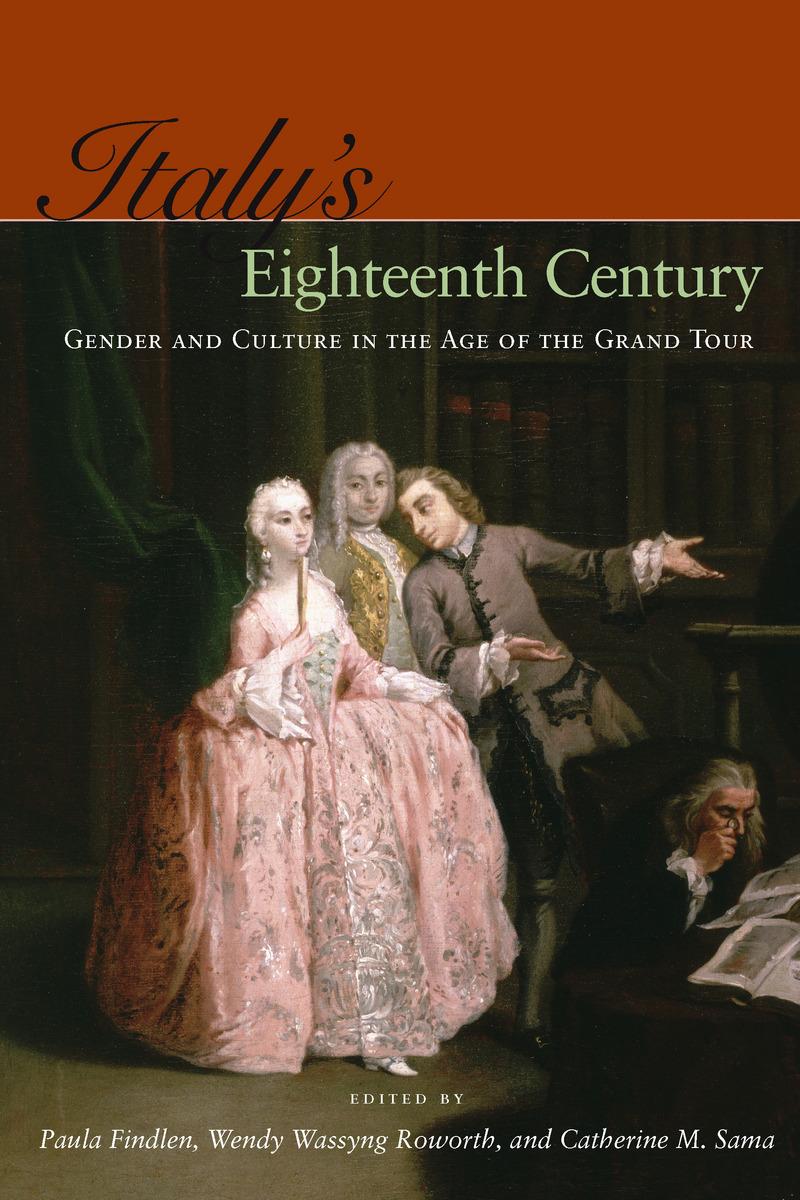
In the age of the Grand Tour, foreigners flocked to Italy to gawk at its ruins and paintings, enjoy its salons and cafés, attend the opera, and revel in their own discovery of its past. But they also marveled at the people they saw, both male and female. In an era in which castrati were "rock stars," men served women as cicisbei, and dandified Englishmen became macaroni, Italy was perceived to be a place where men became women. The great publicity surrounding female poets, journalists, artists, anatomists, and scientists, and the visible roles for such women in salons, academies, and universities in many Italian cities also made visitors wonder whether women had become men. Such images, of course, were stereotypes, but they were nonetheless grounded in a reality that was unique to the Italian peninsula. This volume illuminates the social and cultural landscape of eighteenth-century Italy by exploring how questions of gender in music, art, literature, science, and medicine shaped perceptions of Italy in the age of the Grand Tour.
Betal nemt med kort, Klarna, Apple Pay eller Google Pay. Ikke tilfreds? Du har altid 14 dages fortrydelsesret. Læs mere i vores vilkår. Har du spørgsmål, så send os en mail på hello@memmo.org.
Memmo gør det nemmere at studere – uanset hvor du er i verden. Hos os samler du dine kursusbøger og smarte studieværktøjer ét sted: resuméer, quizzer, podcasts og flashcards. Og så er der Ted, din studieven, der svarer på alt, du undrer dig over. Over 50 000 studerende studerer allerede her – bygget til at hjælpe dig med at lære hurtigere og stresse mindre.