
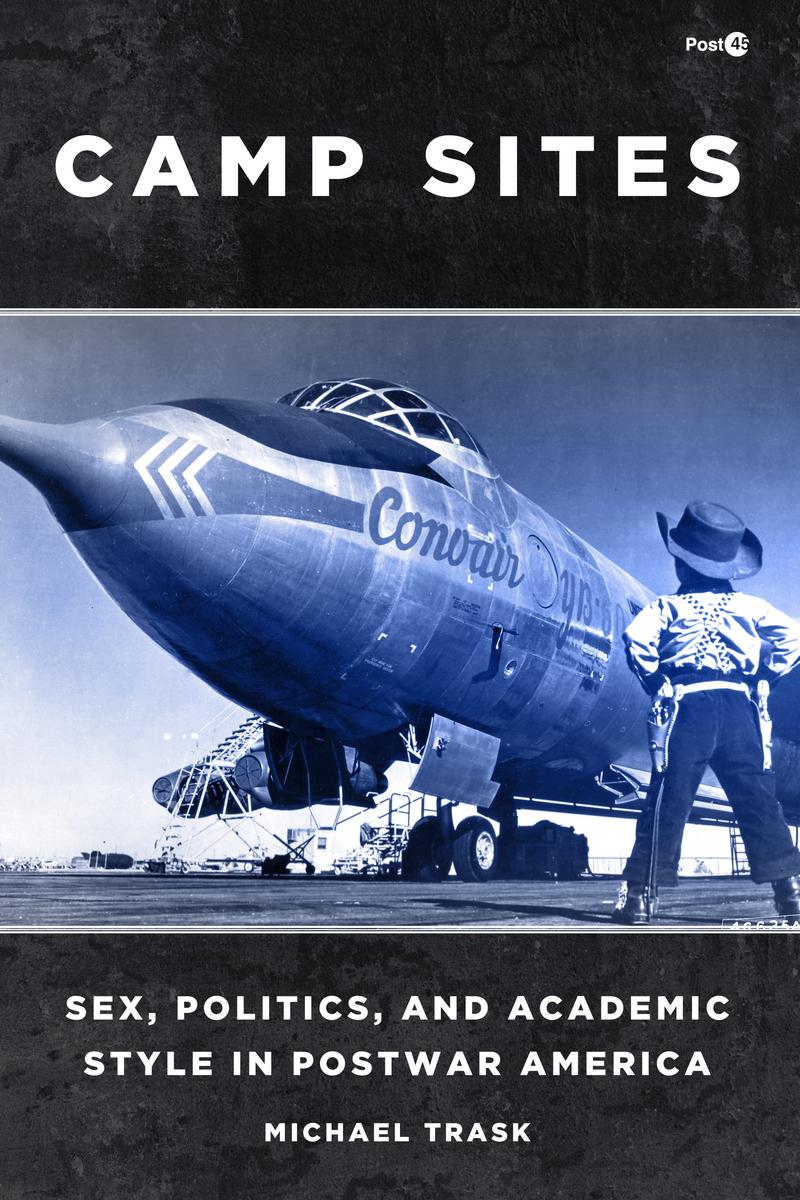
Reading across the disciplines of the mid-century university, this book argues that the political shift in postwar America from consensus liberalism to New Left radicalism entailed as many continuities as ruptures. Both Cold War liberals and radicals understood the university as a privileged site for "doing politics," and both exiled homosexuality from the political ideals each group favored. Liberals, who advanced a politics of style over substance, saw gay people as unable to separate the two, as incapable of maintaining the opportunistic suspension of disbelief on which a tough-minded liberalism depended. Radicals, committed to a politics of authenticity, saw gay people as hopelessly beholden to the role-playing and duplicity that the radicals condemned in their liberal forebears.
Camp Sites considers key themes of postwar culture, from the conflict between performance and authenticity to the rise of the meritocracy, through the lens of camp, the underground sensibility of pre-Stonewall gay life. In so doing, it argues that our basic assumptions about the social style of the postwar milieu are deeply informed by certain presuppositions about homosexual experience and identity, and that these presuppositions remain stubbornly entrenched despite our post-Stonewall consciousness-raising.
Betal nemt med kort, Klarna, Apple Pay eller Google Pay. Ikke tilfreds? Du har altid 14 dages fortrydelsesret. Læs mere i vores vilkår. Har du spørgsmål, så send os en mail på hello@memmo.org.
Memmo gør det nemmere at studere – uanset hvor du er i verden. Hos os samler du dine kursusbøger og smarte studieværktøjer ét sted: resuméer, quizzer, podcasts og flashcards. Og så er der Ted, din studieven, der svarer på alt, du undrer dig over. Over 50 000 studerende studerer allerede her – bygget til at hjælpe dig med at lære hurtigere og stresse mindre.