
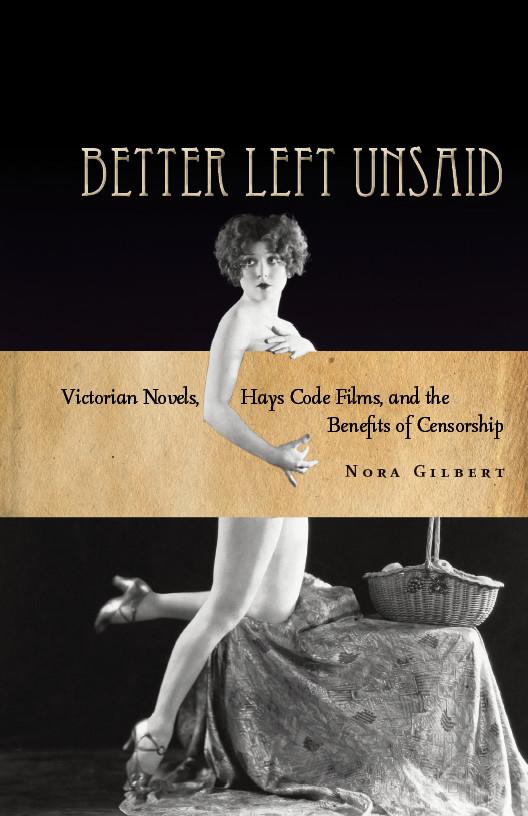
Better Left Unsaid is in the unseemly position of defending censorship from the central allegations that are traditionally leveled against it. Taking two genres generally presumed to have been stymied by the censor's knife—the Victorian novel and classical Hollywood film—this book reveals the varied ways in which censorship, for all its blustery self-righteousness, can actually be good for sex, politics, feminism, and art.
As much as Victorianism is equated with such cultural impulses as repression and prudery, few scholars have explored the Victorian novel as a "censored" commodity—thanks, in large part, to the indirectness and intangibility of England's literary censorship process. This indirection stands in sharp contrast to the explicit, detailed formality of Hollywood's infamous Production Code of 1930. In comparing these two versions of censorship, Nora Gilbert explores the paradoxical effects of prohibitive practices. Rather than being ruined by censorship, Victorian novels and Hays Code films were stirred and stimulated by the very forces meant to restrain them.
Betal nemt med kort, Klarna, Apple Pay eller Google Pay. Ikke tilfreds? Du har altid 14 dages fortrydelsesret. Læs mere i vores vilkår. Har du spørgsmål, så send os en mail på hello@memmo.org.
Memmo gør det nemmere at studere – uanset hvor du er i verden. Hos os samler du dine kursusbøger og smarte studieværktøjer ét sted: resuméer, quizzer, podcasts og flashcards. Og så er der Ted, din studieven, der svarer på alt, du undrer dig over. Over 50 000 studerende studerer allerede her – bygget til at hjælpe dig med at lære hurtigere og stresse mindre.