
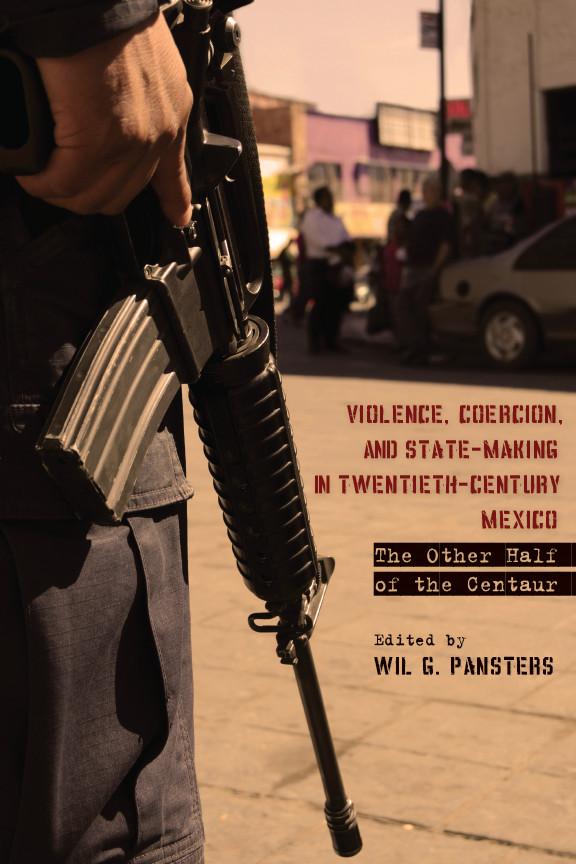
Mexico is currently undergoing a crisis of violence and insecurity that poses serious threats to democratic transition and rule of law. This is the first book to put these developments in the context of post-revolutionary state-making in Mexico and to show that violence in Mexico is not the result of state failure, but of state-making. While most accounts of politics and the state in recent decades have emphasized processes of transition, institutional conflict resolution, and neo-liberal reform, this volume lays out the increasingly important role of violence and coercion by a range of state and non-state armed actors. Moreover, by going beyond the immediate concerns of contemporary Mexico, this volume pushes us to rethink longterm processes of state-making and recast influential interpretations of the so-called golden years of PRI rule. Violence, Coercion, and State-Making in Twentieth-Century Mexico demonstrates that received wisdom has long prevented the concerted and systematic study of violence and coercion in state-making, not only during the last decades, but throughout the post-revolutionary period. The Mexican state was built much more on violence and coercion than has been acknowledged—until now.
Betal nemt med kort, Klarna, Apple Pay eller Google Pay. Ikke tilfreds? Du har altid 14 dages fortrydelsesret. Læs mere i vores vilkår. Har du spørgsmål, så send os en mail på hello@memmo.org.
Memmo gør det nemmere at studere – uanset hvor du er i verden. Hos os samler du dine kursusbøger og smarte studieværktøjer ét sted: resuméer, quizzer, podcasts og flashcards. Og så er der Ted, din studieven, der svarer på alt, du undrer dig over. Over 50 000 studerende studerer allerede her – bygget til at hjælpe dig med at lære hurtigere og stresse mindre.