
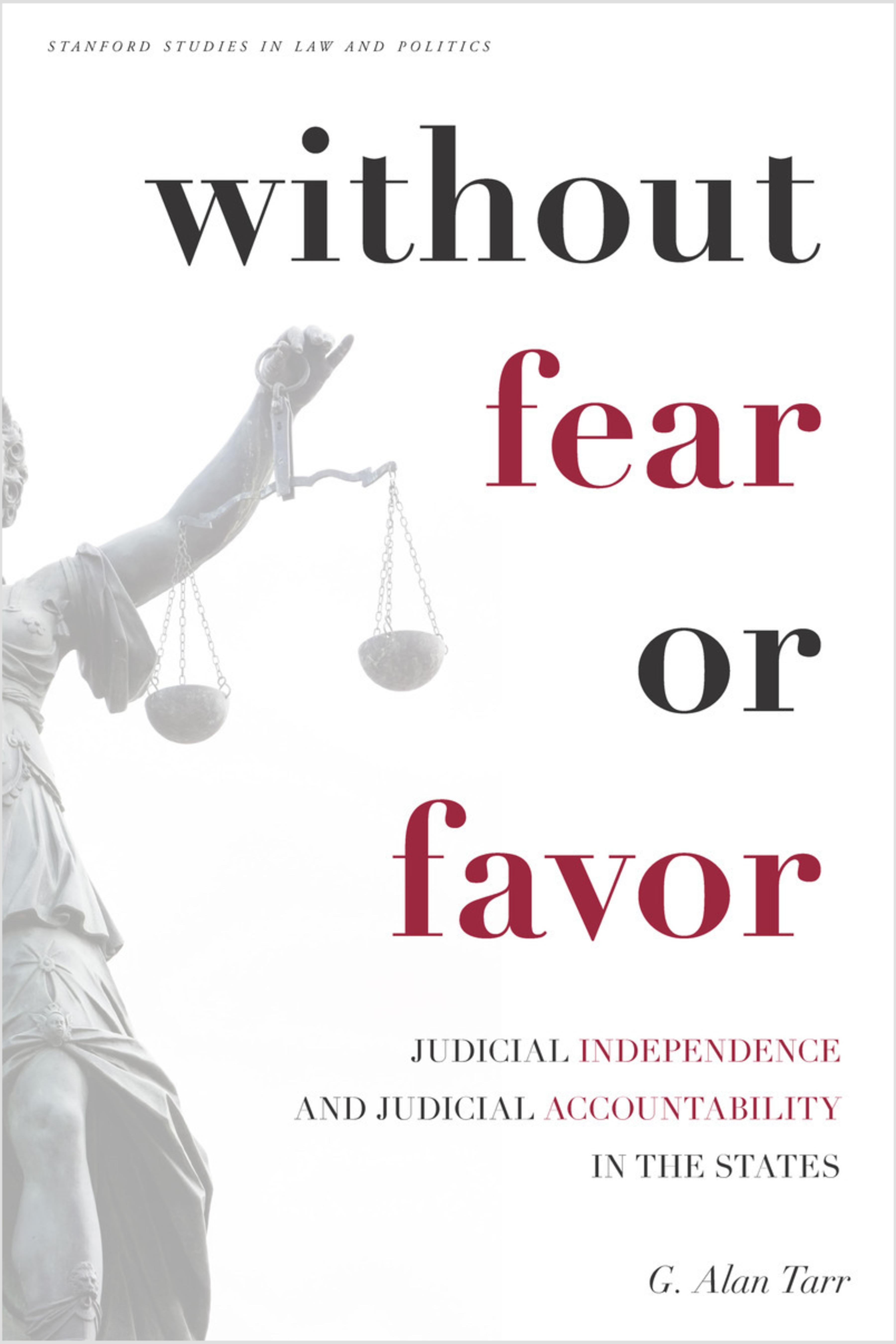
The impartial administration of justice and the accountability of government officials are two of the most strongly held American values. Yet these values are often in direct conflict with one another.
At the national level, the U.S. Constitution resolves this tension in favor of judicial independence, insulating judges from the undue influence of other political institutions, interest groups, and the general public. But at the state level, debate has continued as to the proper balance between judicial independence and judicial accountability. In this volume, constitutional scholar G. Alan Tarr focuses squarely on that debate. In part, the analysis is historical: how have the reigning conceptions of judicial independence and accountability emerged, and when and how did conflict over them develop? In part, the analysis is theoretical: what is the proper understanding of judicial independence and accountability?
Tarr concludes the book by identifying the challenges to state-level judicial independence and accountability that have emerged in recent decades, assessing the solutions offered by the competing sides, and offering proposals for how to strike the appropriate balance between independence and accountability.
Betal nemt med kort, Klarna, Apple Pay eller Google Pay. Ikke tilfreds? Du har altid 14 dages fortrydelsesret. Læs mere i vores vilkår. Har du spørgsmål, så send os en mail på hello@memmo.org.
Memmo gør det nemmere at studere – uanset hvor du er i verden. Hos os samler du dine kursusbøger og smarte studieværktøjer ét sted: resuméer, quizzer, podcasts og flashcards. Og så er der Ted, din studieven, der svarer på alt, du undrer dig over. Over 50 000 studerende studerer allerede her – bygget til at hjælpe dig med at lære hurtigere og stresse mindre.