
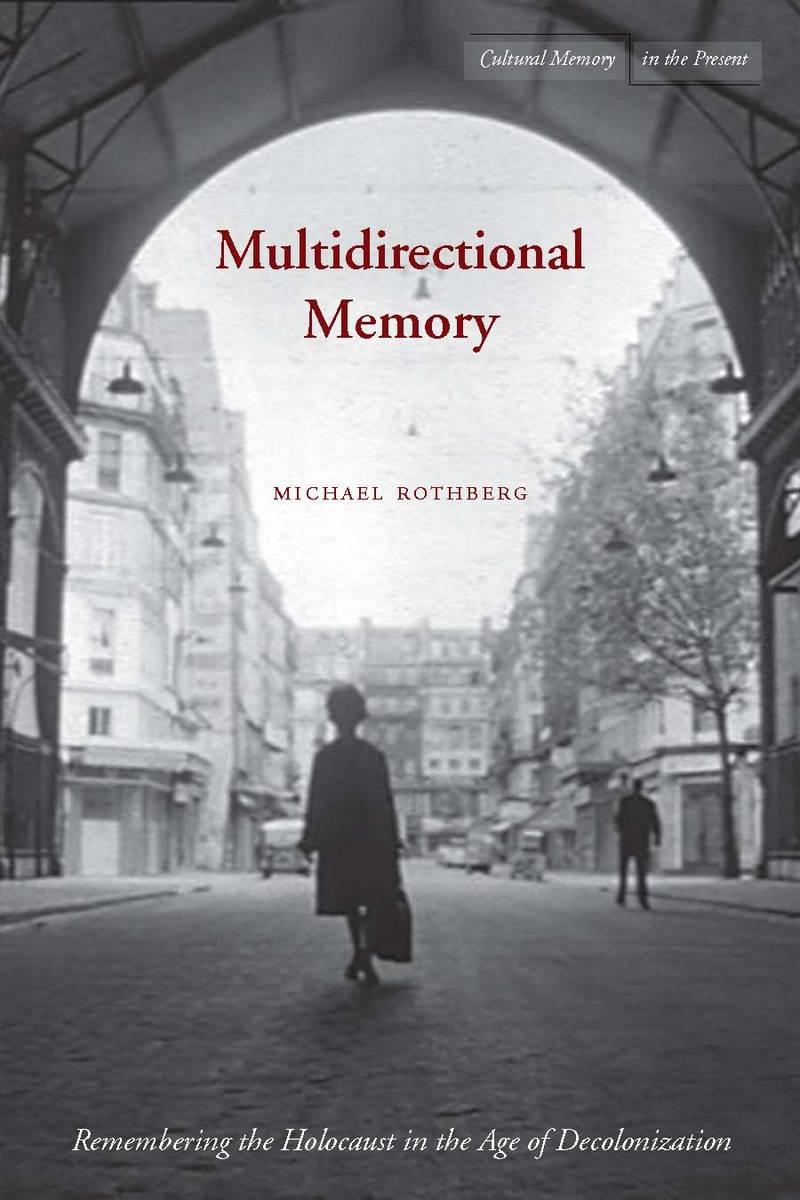
Multidirectional Memory brings together Holocaust studies and postcolonial studies for the first time. Employing a comparative and interdisciplinary approach, the book makes a twofold argument about Holocaust memory in a global age by situating it in the unexpected context of decolonization. On the one hand, it demonstrates how the Holocaust has enabled the articulation of other histories of victimization at the same time that it has been declared "unique" among human-perpetrated horrors. On the other, it uncovers the more surprising and seldom acknowledged fact that public memory of the Holocaust emerged in part thanks to postwar events that seem at first to have little to do with it. In particular, Multidirectional Memory highlights how ongoing processes of decolonization and movements for civil rights in the Caribbean, Africa, Europe, the United States, and elsewhere unexpectedly galvanized memory of the Holocaust.
Rothberg engages with both well-known and non-canonical intellectuals, writers, and filmmakers, including Hannah Arendt, Aimé Césaire, Charlotte Delbo, W.E.B. Du Bois, Marguerite Duras, Michael Haneke, Jean Rouch, and William Gardner Smith.
Betal nemt med kort, Klarna, Apple Pay eller Google Pay. Ikke tilfreds? Du har altid 14 dages fortrydelsesret. Læs mere i vores vilkår. Har du spørgsmål, så send os en mail på hello@memmo.org.
Memmo gør det nemmere at studere – uanset hvor du er i verden. Hos os samler du dine kursusbøger og smarte studieværktøjer ét sted: resuméer, quizzer, podcasts og flashcards. Og så er der Ted, din studieven, der svarer på alt, du undrer dig over. Over 50 000 studerende studerer allerede her – bygget til at hjælpe dig med at lære hurtigere og stresse mindre.