
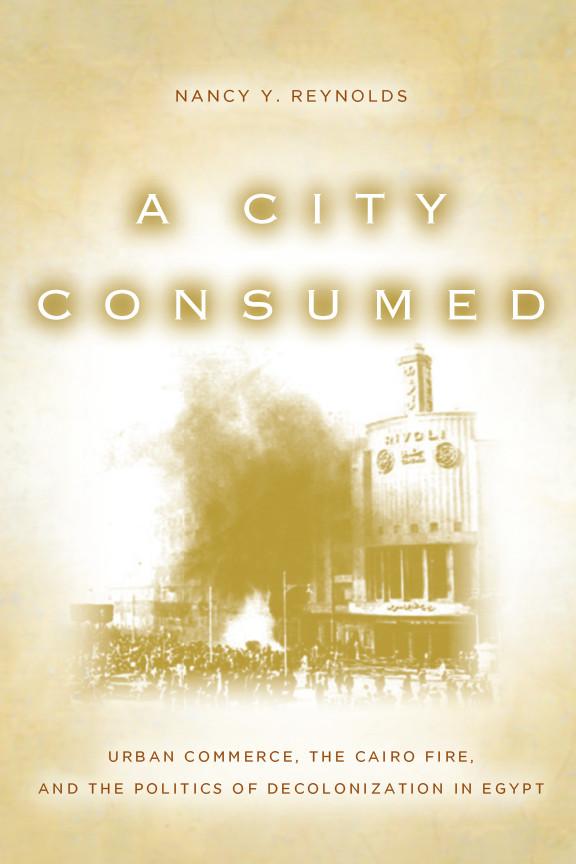
Though now remembered as an act of anti-colonial protest leading to the Egyptian military coup of 1952, the Cairo Fire that burned through downtown stores and businesses appeared to many at the time as an act of urban self-destruction and national suicide. The logic behind this latter view has now been largely lost. Offering a revised history, Nancy Reynolds looks to the decades leading up to the fire to show that the lines between foreign and native in city space and commercial merchandise were never so starkly drawn.
Consumer goods occupied an uneasy place on anti-colonial agendas for decades in Egypt before the great Cairo Fire. Nationalist leaders frequently railed against commerce as a form of colonial captivity, yet simultaneously expanded local production and consumption to anchor a newly independent economy. Close examination of struggles over dress and shopping reveals that nationhood coalesced informally from the conflicts and collaboration of consumers "from below" as well as more institutional and prescriptive mandates.
Betal nemt med kort, Klarna, Apple Pay eller Google Pay. Ikke tilfreds? Du har altid 14 dages fortrydelsesret. Læs mere i vores vilkår. Har du spørgsmål, så send os en mail på hello@memmo.org.
Memmo gør det nemmere at studere – uanset hvor du er i verden. Hos os samler du dine kursusbøger og smarte studieværktøjer ét sted: resuméer, quizzer, podcasts og flashcards. Og så er der Ted, din studieven, der svarer på alt, du undrer dig over. Over 50 000 studerende studerer allerede her – bygget til at hjælpe dig med at lære hurtigere og stresse mindre.