
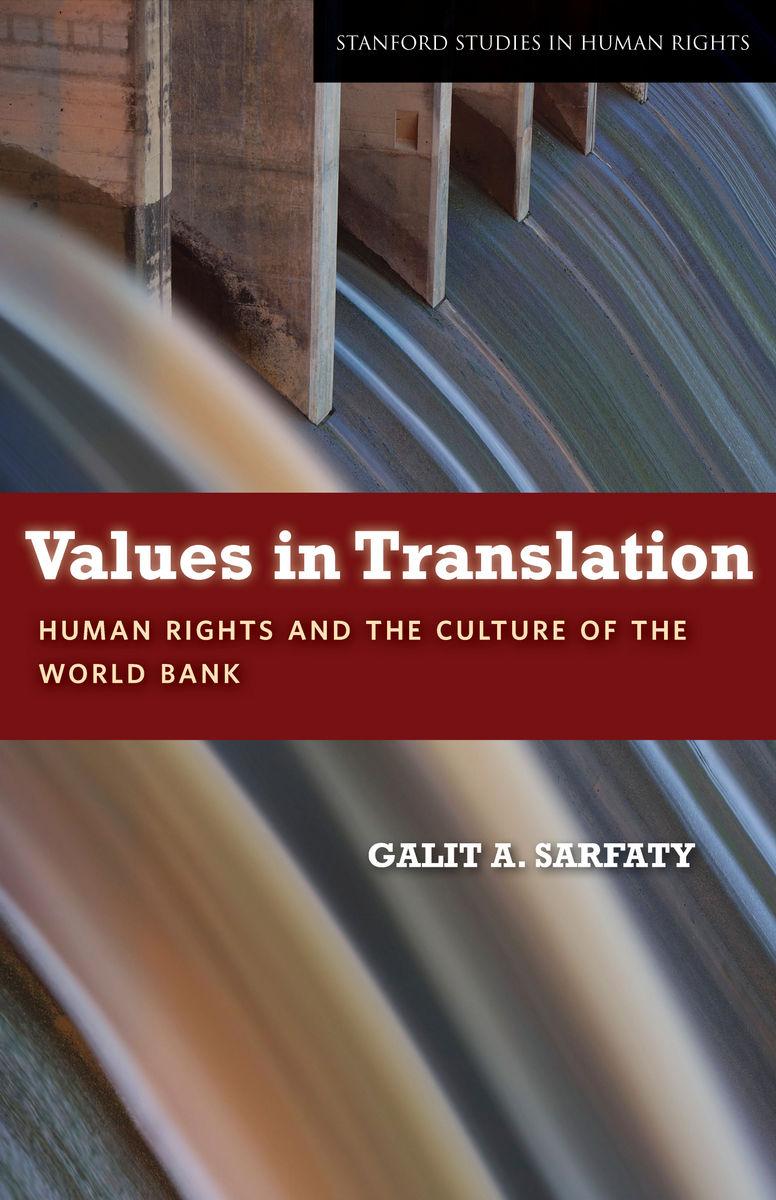
The World Bank is the largest lender to developing countries, making loans worth over $20 billion per year to finance development projects around the globe. To guide its investments, the Bank has adopted a number of social and environmental policies, yet it has never instituted any overarching policy on human rights. Despite the potential human rights impact of Bank projects—the forced displacement of indigenous peoples resulting from a Bank-financed dam project, for example—the issue of human rights remains marginal in the Bank's operational practices.
Values in Translation analyzes the organizational culture of the World Bank and addresses the question of why it has not adopted a human rights framework. Academics and social advocates have typically focused on legal restrictions in the Bank's Articles of Agreement. This work's anthropological analysis sheds light on internal obstacles including the employee incentive system and a clash of expertise between lawyers and economists over how to define human rights and justify their relevance to the Bank's mission.
Betal nemt med kort, Klarna, Apple Pay eller Google Pay. Ikke tilfreds? Du har altid 14 dages fortrydelsesret. Læs mere i vores vilkår. Har du spørgsmål, så send os en mail på hello@memmo.org.
Memmo gør det nemmere at studere – uanset hvor du er i verden. Hos os samler du dine kursusbøger og smarte studieværktøjer ét sted: resuméer, quizzer, podcasts og flashcards. Og så er der Ted, din studieven, der svarer på alt, du undrer dig over. Over 50 000 studerende studerer allerede her – bygget til at hjælpe dig med at lære hurtigere og stresse mindre.