
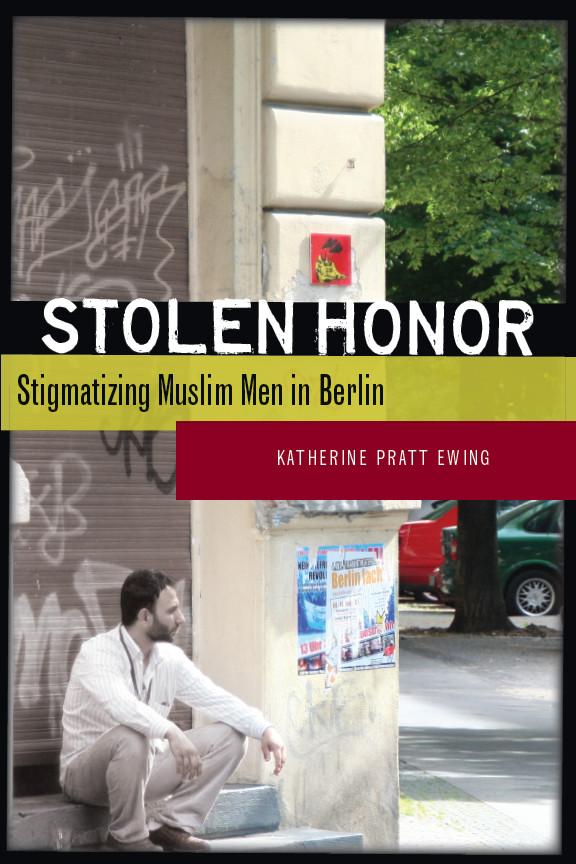
The covered Muslim woman is a common spectacle in Western media—a victim of male brutality, the oppressed and suffering wife or daughter. And the resulting negative stereotypes of Muslim men, stereotypes reinforced by the post-9/11 climate in which he is seen as a potential terrorist, have become so prominent that they influence and shape public policy, citizenship legislation, and the course of elections across Europe and throughout the Western world. In this book, Katherine Pratt Ewing asks why and how these stereotypes—what she terms "stigmatized masculinity"—largely go unrecognized, and examines how Muslim men manage their masculine identities in the face of such discrimination.
The author focuses her analysis and develops an ethnographic portrait of the Turkish Muslim immigrant community in Germany, a population increasingly framed in the media and public discourse as in crisis because of a perceived refusal of Muslim men to assimilate. Interrogating this sense of crisis, Ewing examines a series of controversies—including honor killings, headscarf debates, and Muslim stereotypes in cinema and the media—to reveal how the Muslim man is ultimately depicted as the "abjected other" in German society.
Betal nemt med kort, Klarna, Apple Pay eller Google Pay. Ikke tilfreds? Du har altid 14 dages fortrydelsesret. Læs mere i vores vilkår. Har du spørgsmål, så send os en mail på hello@memmo.org.
Memmo gør det nemmere at studere – uanset hvor du er i verden. Hos os samler du dine kursusbøger og smarte studieværktøjer ét sted: resuméer, quizzer, podcasts og flashcards. Og så er der Ted, din studieven, der svarer på alt, du undrer dig over. Over 50 000 studerende studerer allerede her – bygget til at hjælpe dig med at lære hurtigere og stresse mindre.