
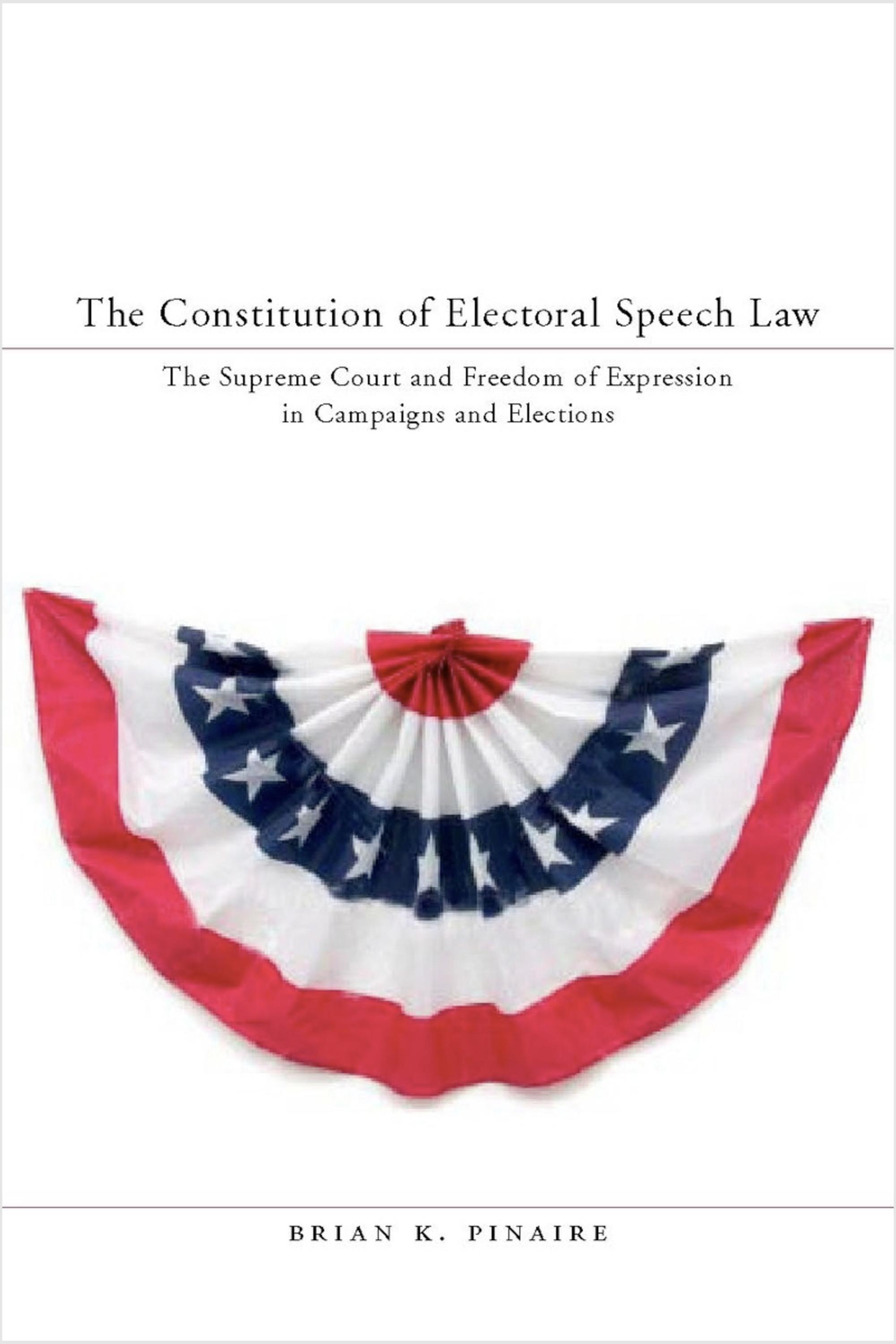
Bush v. Gore brought to the public's attention the significance of election law and the United States Supreme Court's role in structuring the rules that govern how campaigns and elections function in America. In this book, Brian K. Pinaire examines one expanding domain within this larger legal context: freedom of speech in the political process, or, what he terms, electoral speech law.
Specifically, Pinaire examines the Court's evolving conceptions of free speech in the electoral process and then traces the consequences of various debates and determinations from the post-World War II era to the present. In his analysis of the broad range of cases from this period, supplemented by four recent case study investigations, Pinaire explores competing visions of electoral expression in the marketplace of ideas, various methods for analyzing speech dilemmas, the multiple influences that shape the justices' notions of both the potential for and privileged status of electoral communication, and the ultimate implications of these Court rulings for American democracy.
Betal nemt med kort, Klarna, Apple Pay eller Google Pay. Ikke tilfreds? Du har altid 14 dages fortrydelsesret. Læs mere i vores vilkår. Har du spørgsmål, så send os en mail på hello@memmo.org.
Memmo gør det nemmere at studere – uanset hvor du er i verden. Hos os samler du dine kursusbøger og smarte studieværktøjer ét sted: resuméer, quizzer, podcasts og flashcards. Og så er der Ted, din studieven, der svarer på alt, du undrer dig over. Over 50 000 studerende studerer allerede her – bygget til at hjælpe dig med at lære hurtigere og stresse mindre.