
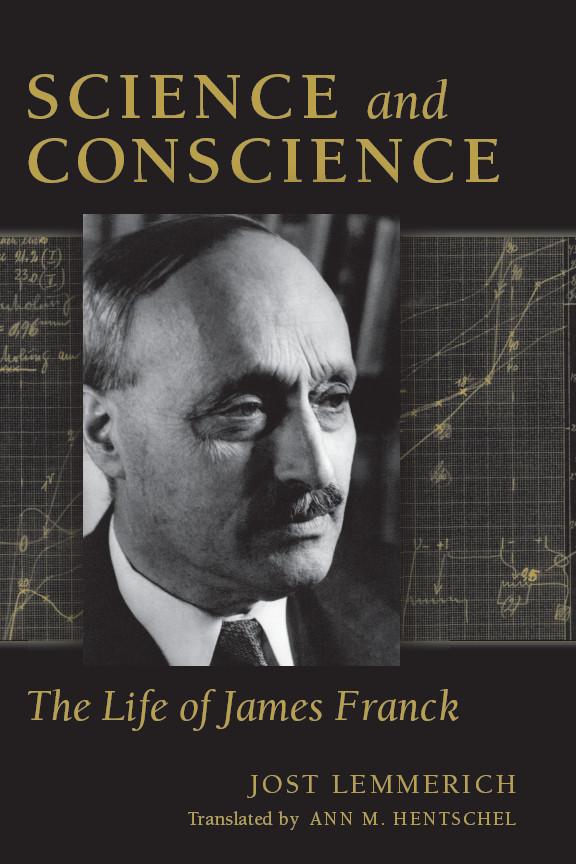
James Franck (1882–1964) was one of the twentieth century's most respected scientists, known both for his contributions to physics and for his moral courage. During the 1920s, Franck was a prominent figure in the German physics community. His research into the structure of the atom earned him the Nobel Prize in Physics in 1925. After the Nazis seized power in 1933, Franck resigned his professorship at Gottingen in protest against anti-Jewish policies. He soon emigrated to the United States, where, at the University of Chicago, he began innovative research into photosynthesis.
When the Second World War began, Franck was recruited for the Manhattan Project. With Enrico Fermi and Leo Szilard, he created a controlled nuclear chain reaction which led to the creation of a nuclear weapon. During the final months of the war, however, Franck grew concerned about the consequences of using such a weapon. He became the principal author of the celebrated "Franck Report," which urged Truman not to use the atomic bomb and warned that a nuclear arms race against the Soviet Union would be an inevitable result. After the War, Franck turned his attention back to photosynthesis; his discoveries influenced chemistry as well as physics.
Betal nemt med kort, Klarna, Apple Pay eller Google Pay. Ikke tilfreds? Du har altid 14 dages fortrydelsesret. Læs mere i vores vilkår. Har du spørgsmål, så send os en mail på hello@memmo.org.
Memmo gør det nemmere at studere – uanset hvor du er i verden. Hos os samler du dine kursusbøger og smarte studieværktøjer ét sted: resuméer, quizzer, podcasts og flashcards. Og så er der Ted, din studieven, der svarer på alt, du undrer dig over. Over 50 000 studerende studerer allerede her – bygget til at hjælpe dig med at lære hurtigere og stresse mindre.