
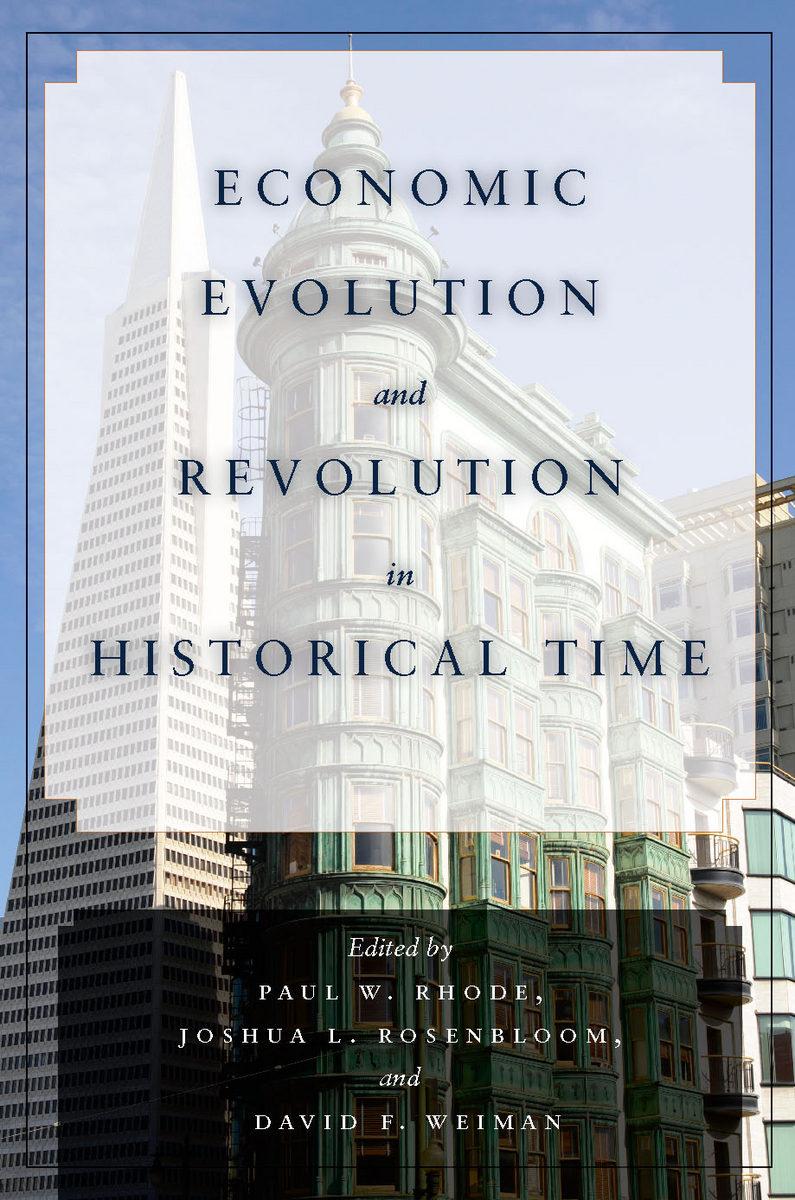
This book challenges the static, ahistorical models on which Economics continues to rely. These models presume that markets operate on a "frictionless" plane where abstract forces play out independent of their institutional and spatial contexts, and of the influences of the past. In reality, at any point in time exogenous factors are themselves outcomes of complex historical processes. They are shaped by institutional and spatial contexts, which are "carriers of history," including past economic dynamics and market outcomes.
To examine the connections between gradual, evolutionary change and more dramatic, revolutionary shifts the text takes on a wide array of historically salient economic questions—ranging from how formative, European encounters reconfigured the political economies of indigenous populations in Africa, the Americas, and Australia to how the rise and fall of the New Deal order reconfigured labor market institutions and outcomes in the twentieth century United States. These explorations are joined by a common focus on formative institutions, spatial structures, and market processes. Through historically informed economic analyses, contributors recognize the myriad interdependencies among these three frames, as well as their distinct logics and temporal rhythms.
Betal nemt med kort, Klarna, Apple Pay eller Google Pay. Ikke tilfreds? Du har altid 14 dages fortrydelsesret. Læs mere i vores vilkår. Har du spørgsmål, så send os en mail på hello@memmo.org.
Memmo gør det nemmere at studere – uanset hvor du er i verden. Hos os samler du dine kursusbøger og smarte studieværktøjer ét sted: resuméer, quizzer, podcasts og flashcards. Og så er der Ted, din studieven, der svarer på alt, du undrer dig over. Over 50 000 studerende studerer allerede her – bygget til at hjælpe dig med at lære hurtigere og stresse mindre.