
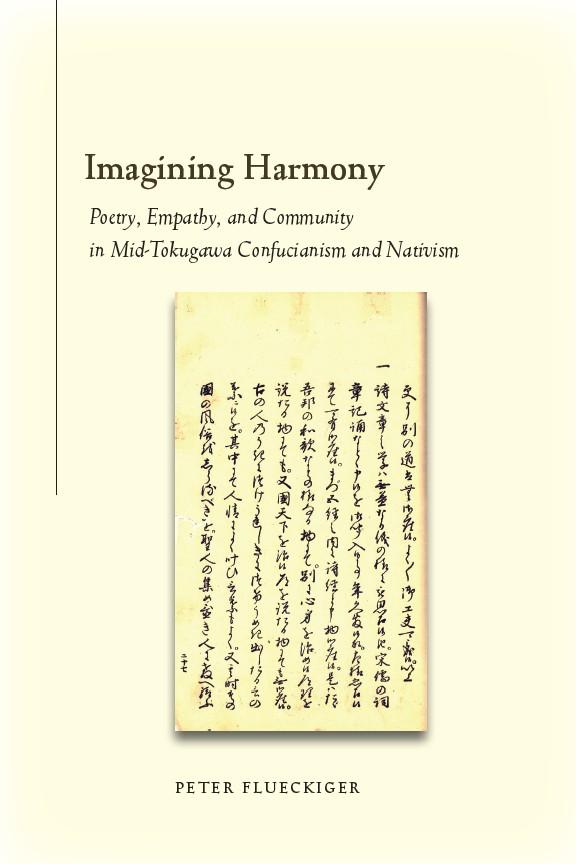
Many intellectuals in eighteenth-century Japan valued classical poetry in either Chinese or Japanese for its expression of unadulterated human sentiments. They also saw such poetry as a distillation of the language and aesthetic values of ancient China and Japan, which offered models of the good government and social harmony lacking in their time. By studying the poetry of the past and composing new poetry emulating its style, they believed it possible to reform their own society. Imagining Harmony focuses on the development of these ideas in the life and work of Ogyu Sorai, the most influential Confucian philosopher of the eighteenth century, and that of his key disciples and critics.
This study contends that the literary thought of these figures needs to be understood not just for what it has to say about the composition of poetry but as a form of political and philosophical discourse. Unlike other scholars of this literature, Peter Flueckiger argues that the increased valorization of human emotions in eighteenth-century literary thought went hand in hand with new demands for how emotions were to be regulated and socialized, and that literary and political thought of the time were thus not at odds but inextricably linked.
Betal nemt med kort, Klarna, Apple Pay eller Google Pay. Ikke tilfreds? Du har altid 14 dages fortrydelsesret. Læs mere i vores vilkår. Har du spørgsmål, så send os en mail på hello@memmo.org.
Memmo gør det nemmere at studere – uanset hvor du er i verden. Hos os samler du dine kursusbøger og smarte studieværktøjer ét sted: resuméer, quizzer, podcasts og flashcards. Og så er der Ted, din studieven, der svarer på alt, du undrer dig over. Over 50 000 studerende studerer allerede her – bygget til at hjælpe dig med at lære hurtigere og stresse mindre.