
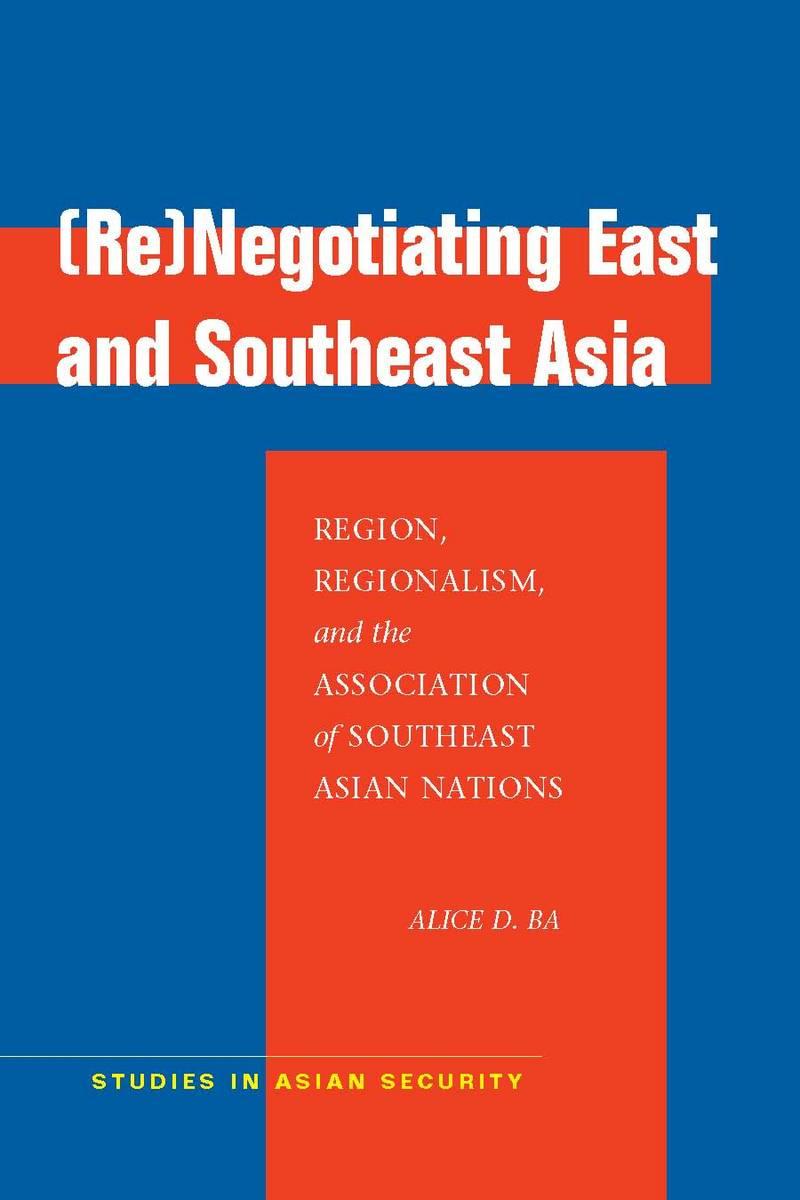
This book seeks to explain two core paradoxes associated with the Association of Southeast Asian Nations (ASEAN): How have diverse states hung together and stabilized relations in the face of competing interests, divergent preferences, and arguably weak cooperation? How has a group of lesser, self-identified Southeast Asian powers gone beyond its original regional purview to shape the form and content of Asian Pacific and East Asian regionalisms?
According to Alice Ba, the answers lie in ASEAN's founding arguments: arguments that were premised on an assumed regional disunity. She demonstrates how these arguments draw critical causal connections that make Southeast Asian regionalism a necessary response to problems, give rise to its defining informality and consensus-seeking process, and also constrain ASEAN's regionalism. Tracing debates about ASEAN's intra- and extra-regional relations over four decades, she argues for a process-driven view of cooperation, sheds light on intervening processes of argument and debate, and highlights interacting material, ideational, and social forces in the construction of regions and regionalisms.
Betal nemt med kort, Klarna, Apple Pay eller Google Pay. Ikke tilfreds? Du har altid 14 dages fortrydelsesret. Læs mere i vores vilkår. Har du spørgsmål, så send os en mail på hello@memmo.org.
Memmo gør det nemmere at studere – uanset hvor du er i verden. Hos os samler du dine kursusbøger og smarte studieværktøjer ét sted: resuméer, quizzer, podcasts og flashcards. Og så er der Ted, din studieven, der svarer på alt, du undrer dig over. Over 50 000 studerende studerer allerede her – bygget til at hjælpe dig med at lære hurtigere og stresse mindre.