
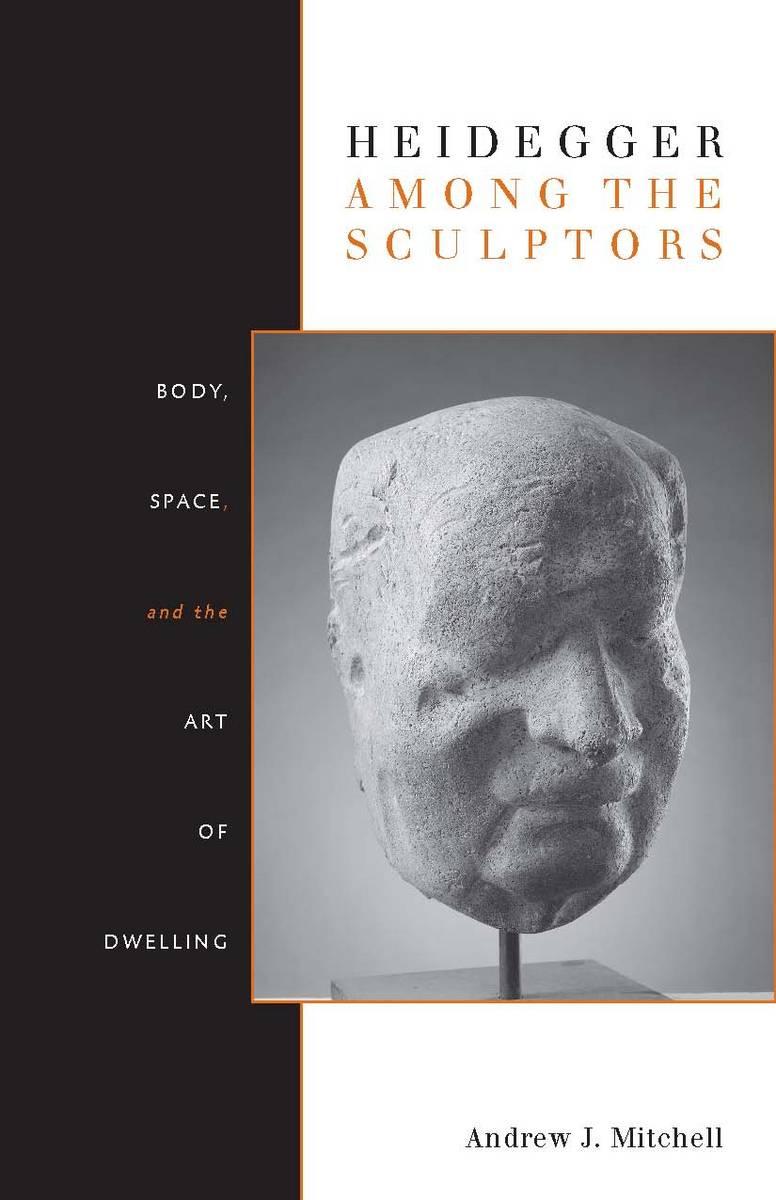
In the 1950s and 60s, Martin Heidegger turned to sculpture to rethink the relationship between bodies and space and the role of art in our lives. In his texts on the subject—a catalog contribution for an Ernst Barlach exhibition, a speech at a gallery opening for Bernhard Heiliger, a lecture on bas-relief depictions of Athena, and a collaboration with Eduardo Chillida—he formulates his later aesthetic theory, a thinking of relationality. Against a traditional view of space as an empty container for discrete bodies, these writings understand the body as already beyond itself in a world of relations and conceive of space as a material medium of relational contact. Sculpture shows us how we belong to the world, a world in the midst of a technological process of uprooting and homelessness. Heidegger suggests how we can still find room to dwell therein. Filled with illustrations of works that Heidegger encountered or considered, Heidegger Among the Sculptors makes a singular contribution to the philosophy of sculpture.
Betal nemt med kort, Klarna, Apple Pay eller Google Pay. Ikke tilfreds? Du har altid 14 dages fortrydelsesret. Læs mere i vores vilkår. Har du spørgsmål, så send os en mail på hello@memmo.org.
Memmo gør det nemmere at studere – uanset hvor du er i verden. Hos os samler du dine kursusbøger og smarte studieværktøjer ét sted: resuméer, quizzer, podcasts og flashcards. Og så er der Ted, din studieven, der svarer på alt, du undrer dig over. Over 50 000 studerende studerer allerede her – bygget til at hjælpe dig med at lære hurtigere og stresse mindre.