
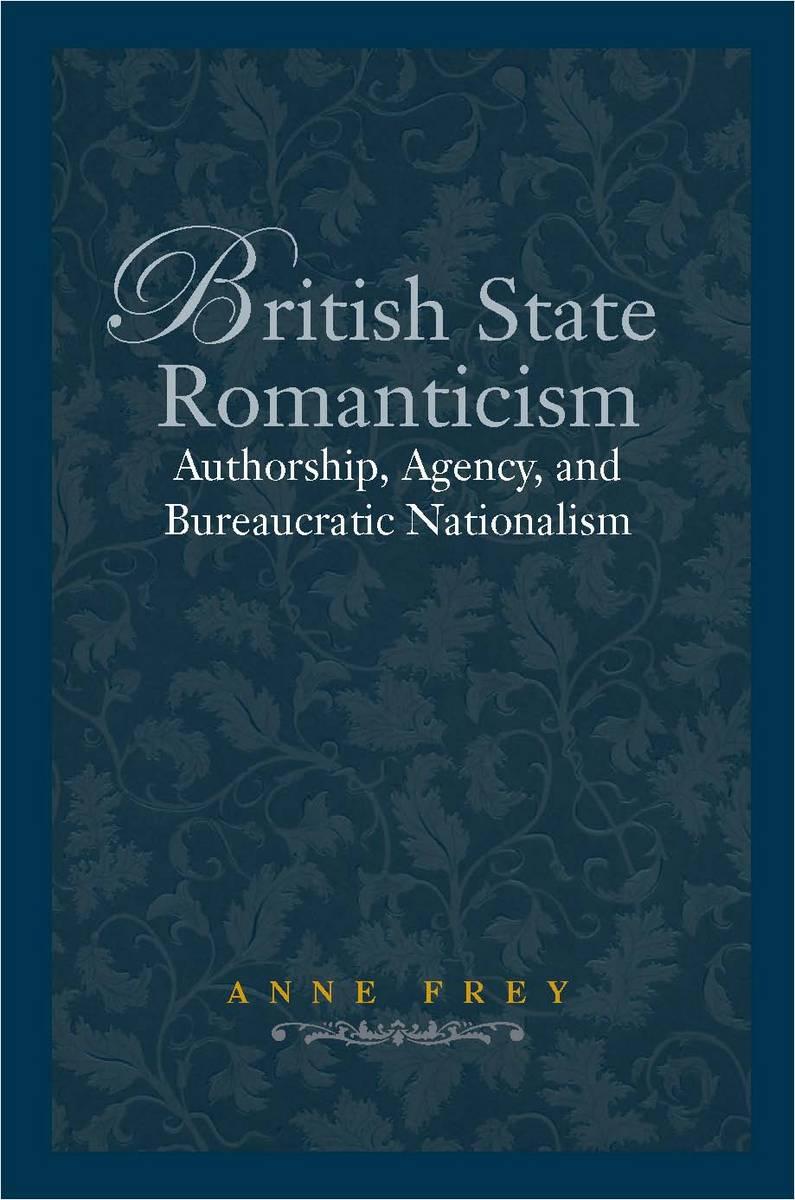
British State Romanticism contends that changing definitions of state power in the late Romantic period propelled authors to revisit the work of literature as well as the profession of authorship. Traditionally, critics have seen the Romantics as imaginative geniuses and viewed the supposedly less imaginative character of their late work as evidence of declining abilities. Frey argues, in contrast, that late Romanticism offers an alternative aesthetic model that adjusts authorship to work within an expanding and bureaucratizing state. She examines how Wordsworth, Coleridge, Austen, Scott, and De Quincey portray specific state and imperial agencies to debate what constituted government power, through what means government penetrated individual lives, and how non-governmental figures could assume government authority. Defining their work as part of an expanding state, these writers also reworked Romantic structures such as the imagination, organic form, and the literary sublime to operate through state agencies and to convey membership in a nation.
Betal nemt med kort, Klarna, Apple Pay eller Google Pay. Ikke tilfreds? Du har altid 14 dages fortrydelsesret. Læs mere i vores vilkår. Har du spørgsmål, så send os en mail på hello@memmo.org.
Memmo gør det nemmere at studere – uanset hvor du er i verden. Hos os samler du dine kursusbøger og smarte studieværktøjer ét sted: resuméer, quizzer, podcasts og flashcards. Og så er der Ted, din studieven, der svarer på alt, du undrer dig over. Over 50 000 studerende studerer allerede her – bygget til at hjælpe dig med at lære hurtigere og stresse mindre.