
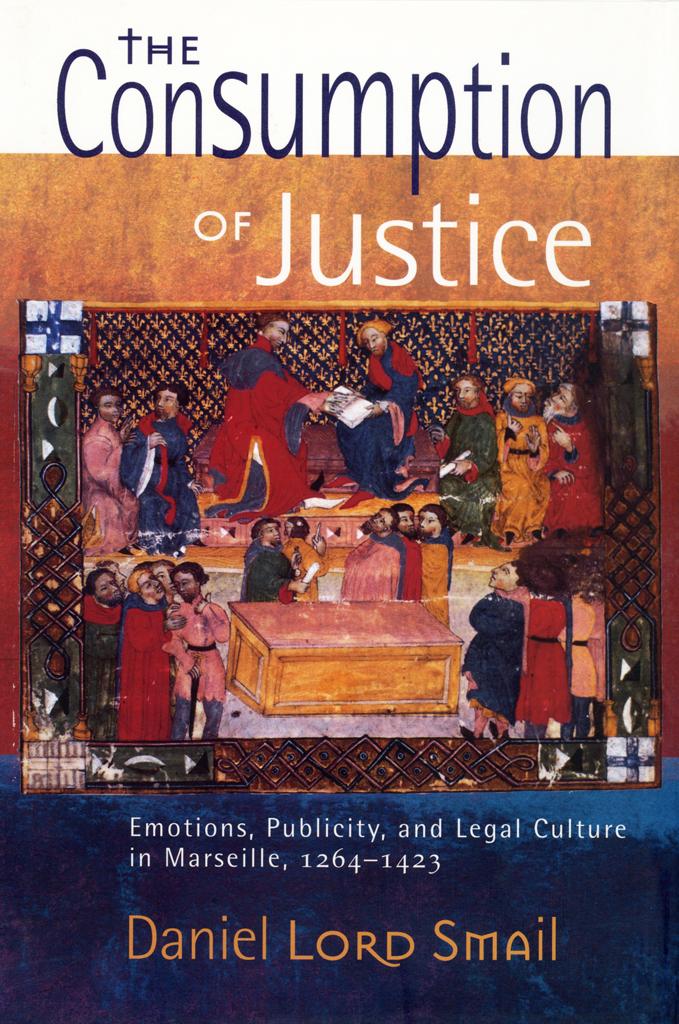
In the thirteenth and fourteenth centuries, the ideas and practices of justice in Europe underwent significant change as procedures were transformed and criminal and civil caseloads grew apace. Drawing on the rich judicial records of Marseille from the years 1264 to 1423, especially records of civil litigation, this book approaches the courts of law from the perspective of the users of the courts (the consumers of justice) and explains why men and women chose to invest resources in the law.
Smail shows that the courts were quickly adopted as a public stage on which litigants could take revenge on their enemies. Even as the new legal system served the interest of royal or communal authority, it also provided the consumers of justice with a way to broadcast their hatreds and social sanctions to a wider audience and negotiate their own community standing in the process. The emotions that had driven bloodfeuds and other forms of customary vengeance thus never went away, and instead were fully incorporated into the new procedures.
Betal nemt med kort, Klarna, Apple Pay eller Google Pay. Ikke tilfreds? Du har altid 14 dages fortrydelsesret. Læs mere i vores vilkår. Har du spørgsmål, så send os en mail på hello@memmo.org.
Memmo gør det nemmere at studere – uanset hvor du er i verden. Hos os samler du dine kursusbøger og smarte studieværktøjer ét sted: resuméer, quizzer, podcasts og flashcards. Og så er der Ted, din studieven, der svarer på alt, du undrer dig over. Over 50 000 studerende studerer allerede her – bygget til at hjælpe dig med at lære hurtigere og stresse mindre.