
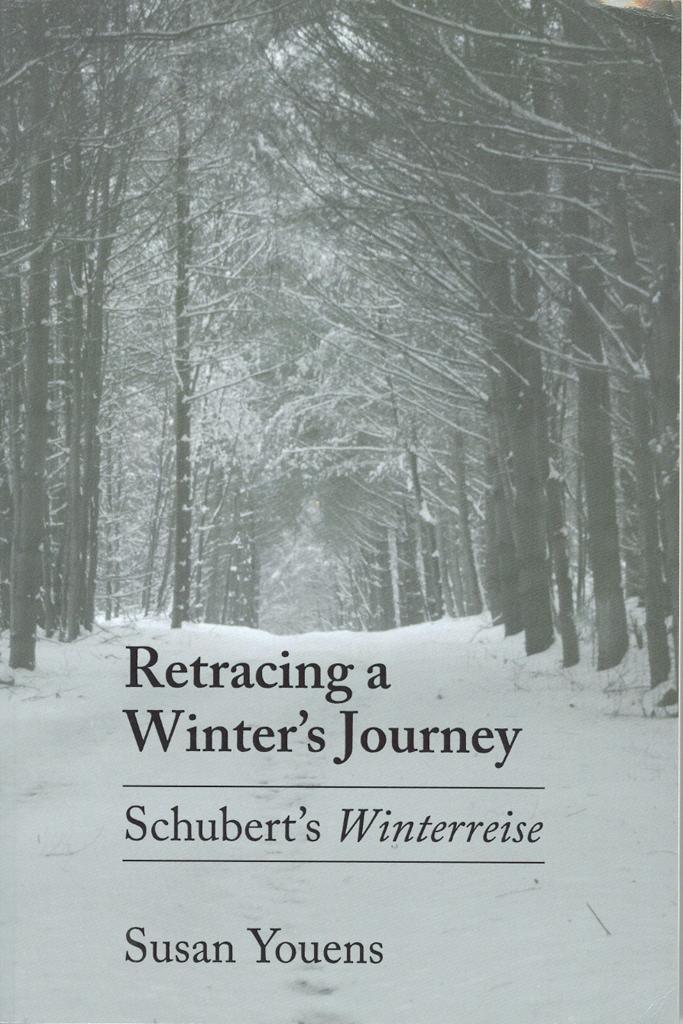
"I like these songs better than all the rest, and someday you will too," Franz Schubert told the friends who were the first to hear his song cycle Winterreise. These lieder have always found admiring audiences, but the poetry he chose to set them to has been widely regarded as weak and trivial. Susan Youens looks not only at Schubert's music but at the poetry, drawn from the works of Wilhelm Müller, who once wrote in his diary, "perhaps there is a kindred spirit somewhere who will hear the tunes behind the words and give them back to me!"
Youens maintains that Müller, in depicting the wanderings of the alienated lover, produced poetry that was simple but not simple-minded, poetry that embraced simplicity as part of its meaning. In her view, Müller used the ruder folk forms to give his verse greater immediacy, to convey more powerfully the wanderer's complex inner state. Youens addresses many different aspects of Winterreise: the cultural milieu to which it belonged, the genesis of both the poetry and the music, Schubert's transformation of poetic cycle into music, the philosophical dimension of the work, and its musical structure.
Betal nemt med kort, Klarna, Apple Pay eller Google Pay. Ikke tilfreds? Du har altid 14 dages fortrydelsesret. Læs mere i vores vilkår. Har du spørgsmål, så send os en mail på hello@memmo.org.
Memmo gør det nemmere at studere – uanset hvor du er i verden. Hos os samler du dine kursusbøger og smarte studieværktøjer ét sted: resuméer, quizzer, podcasts og flashcards. Og så er der Ted, din studieven, der svarer på alt, du undrer dig over. Over 50 000 studerende studerer allerede her – bygget til at hjælpe dig med at lære hurtigere og stresse mindre.