
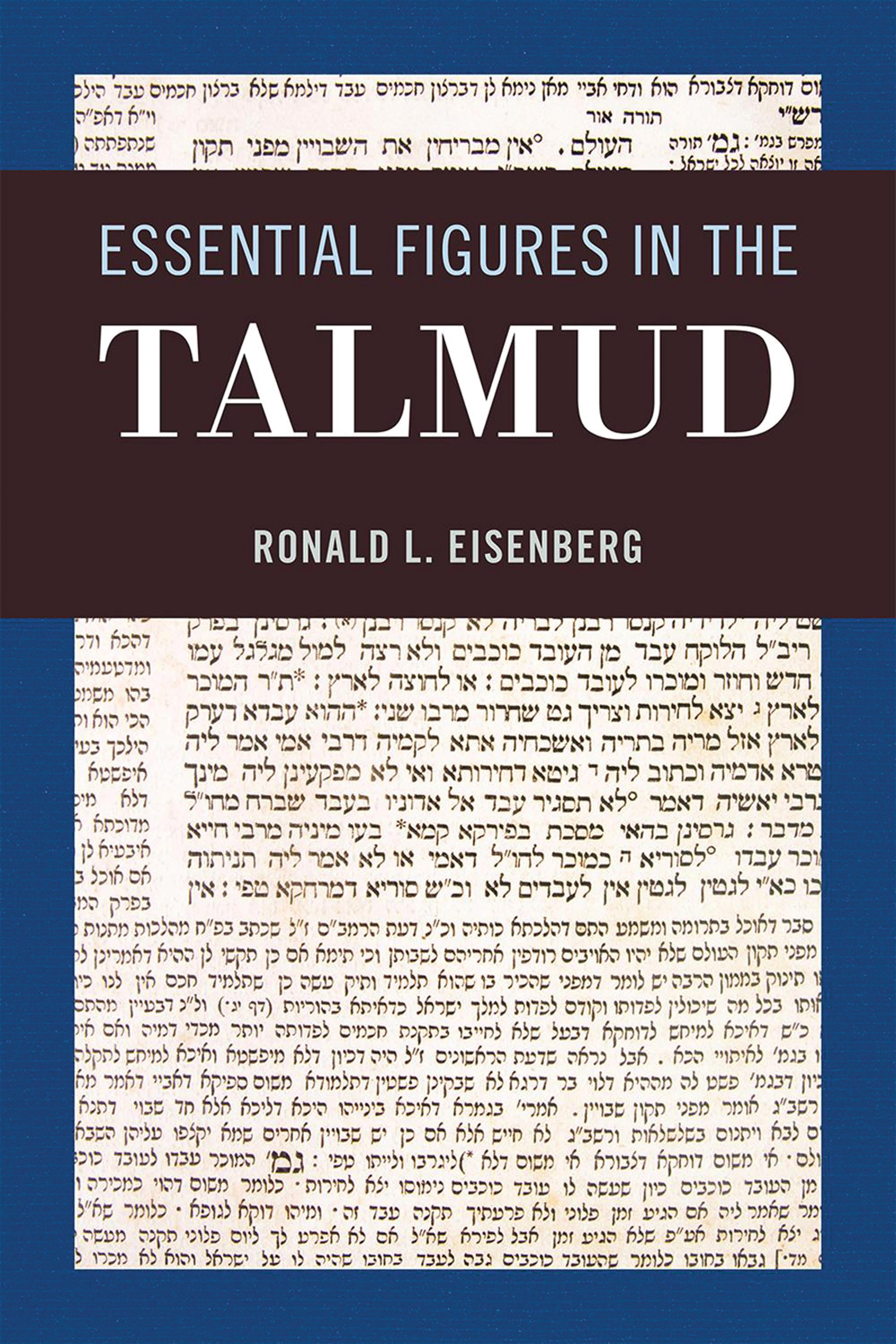
The Talmud chronicles the early development of rabbinic Judaism through the writings and commentaries of the rabbis whose teachings form its foundation. However, this key religious text is expansive, consisting of 63 books containing extensive discussions and interpretations of the Mishnah accumulated over several centuries. Sifting through the huge number of names mentioned in the Talmud to find information about one figure can be tedious and time-consuming, and most reference guides either provide only brief, unhelpful entries on every rabbi, including minor figures, or are so extensive that they can be more intimidating than the original text.
In Essential Figures in the Talmud, Dr. Ronald L. Eisenberg explains the importance of the more than 250 figures who are most vital to an understanding and appreciation of Talmudic texts. This valuable reference guide consists of short biographies illustrating the significance of these figures while explaining their points of view with numerous quotations from rabbinic literature. Taking material from the vast expanse of the Talmud and Midrash, this book demonstrates the broad interests of the rabbis whose writings are the foundation of rabbinic Judaism.
Both religious studies and rabbinical students and casual readers of the Talmud will benefit from the comprehensive entries on the most-frequently discussed rabbis and will gain valuable insights from this reader-friendly text. Complete in a single volume, this guide strikes a satisfying balance between the sparse, uninformative books and comprehensive but overly complex references that are currently the only places for inquisitive Talmud readers to turn. For any reader who wishes to gain a better understanding of Talmudic literature, Eisenberg’s text is just as “essential” as the figures listed within.
In Essential Figures in the Talmud, Dr. Ronald L. Eisenberg explains the importance of the more than 250 figures who are most vital to an understanding and appreciation of Talmudic texts. This valuable reference guide consists of short biographies illustrating the significance of these figures while explaining their points of view with numerous quotations from rabbinic literature. Taking material from the vast expanse of the Talmud and Midrash, this book demonstrates the broad interests of the rabbis whose writings are the foundation of rabbinic Judaism.
Both religious studies and rabbinical students and casual readers of the Talmud will benefit from the comprehensive entries on the most-frequently discussed rabbis and will gain valuable insights from this reader-friendly text. Complete in a single volume, this guide strikes a satisfying balance between the sparse, uninformative books and comprehensive but overly complex references that are currently the only places for inquisitive Talmud readers to turn. For any reader who wishes to gain a better understanding of Talmudic literature, Eisenberg’s text is just as “essential” as the figures listed within.
Betal nemt med kort, Klarna, Apple Pay eller Google Pay. Ikke tilfreds? Du har altid 14 dages fortrydelsesret. Læs mere i vores vilkår. Har du spørgsmål, så send os en mail på hello@memmo.org.
Memmo gør det nemmere at studere – uanset hvor du er i verden. Hos os samler du dine kursusbøger og smarte studieværktøjer ét sted: resuméer, quizzer, podcasts og flashcards. Og så er der Ted, din studieven, der svarer på alt, du undrer dig over. Over 50 000 studerende studerer allerede her – bygget til at hjælpe dig med at lære hurtigere og stresse mindre.