
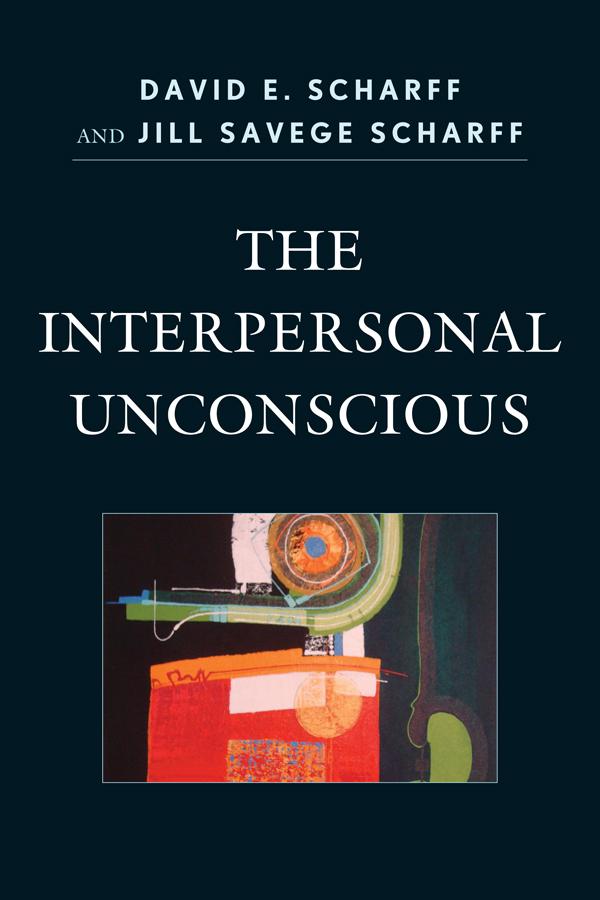
In The Interpersonal Unconscious, the Scharffs explore the construction and expression of the unconscious in interpersonal interaction. The authors draw from individual analysis, conjoint psychotherapy with families and couples, and from the use of group process in teaching. They introduce chaos theory applied to dynamical systems and South American theories of the link and the analytic field, now available in English. Advances in development, neuroscience, ethology, and attachment theory all contribute to their expanded view of the unconscious mind and its relationships. In turn, the Scharffs' view of the interpersonal unconscious revises current views of development, clinical theory, and unconscious psychic organization.
The unconscious is not individual as Freud thought: It is fundamentally interpersonal at the same time that it feels intensely our own. We live in an unconscious field. Each of us contributes to it, and each is structured and enriched by it. We are social creatures, not only in our behaviors and interactions, but in the deepest recesses of our minds.
We can no longer conceive of the unconscious as an individual property according to Freud's original topographic and structural theories. Even though the individual unconscious is unique, paradoxically it is also shared in reciprocal interactions with intimate partners, work groups, and social groups. In this state of mutual influence, our unconscious minds are constantly under construction across the life cycle.
The unconscious is not individual as Freud thought: It is fundamentally interpersonal at the same time that it feels intensely our own. We live in an unconscious field. Each of us contributes to it, and each is structured and enriched by it. We are social creatures, not only in our behaviors and interactions, but in the deepest recesses of our minds.
We can no longer conceive of the unconscious as an individual property according to Freud's original topographic and structural theories. Even though the individual unconscious is unique, paradoxically it is also shared in reciprocal interactions with intimate partners, work groups, and social groups. In this state of mutual influence, our unconscious minds are constantly under construction across the life cycle.
Betal nemt med kort, Klarna, Apple Pay eller Google Pay. Ikke tilfreds? Du har altid 14 dages fortrydelsesret. Læs mere i vores vilkår. Har du spørgsmål, så send os en mail på hello@memmo.org.
Memmo gør det nemmere at studere – uanset hvor du er i verden. Hos os samler du dine kursusbøger og smarte studieværktøjer ét sted: resuméer, quizzer, podcasts og flashcards. Og så er der Ted, din studieven, der svarer på alt, du undrer dig over. Over 50 000 studerende studerer allerede her – bygget til at hjælpe dig med at lære hurtigere og stresse mindre.