
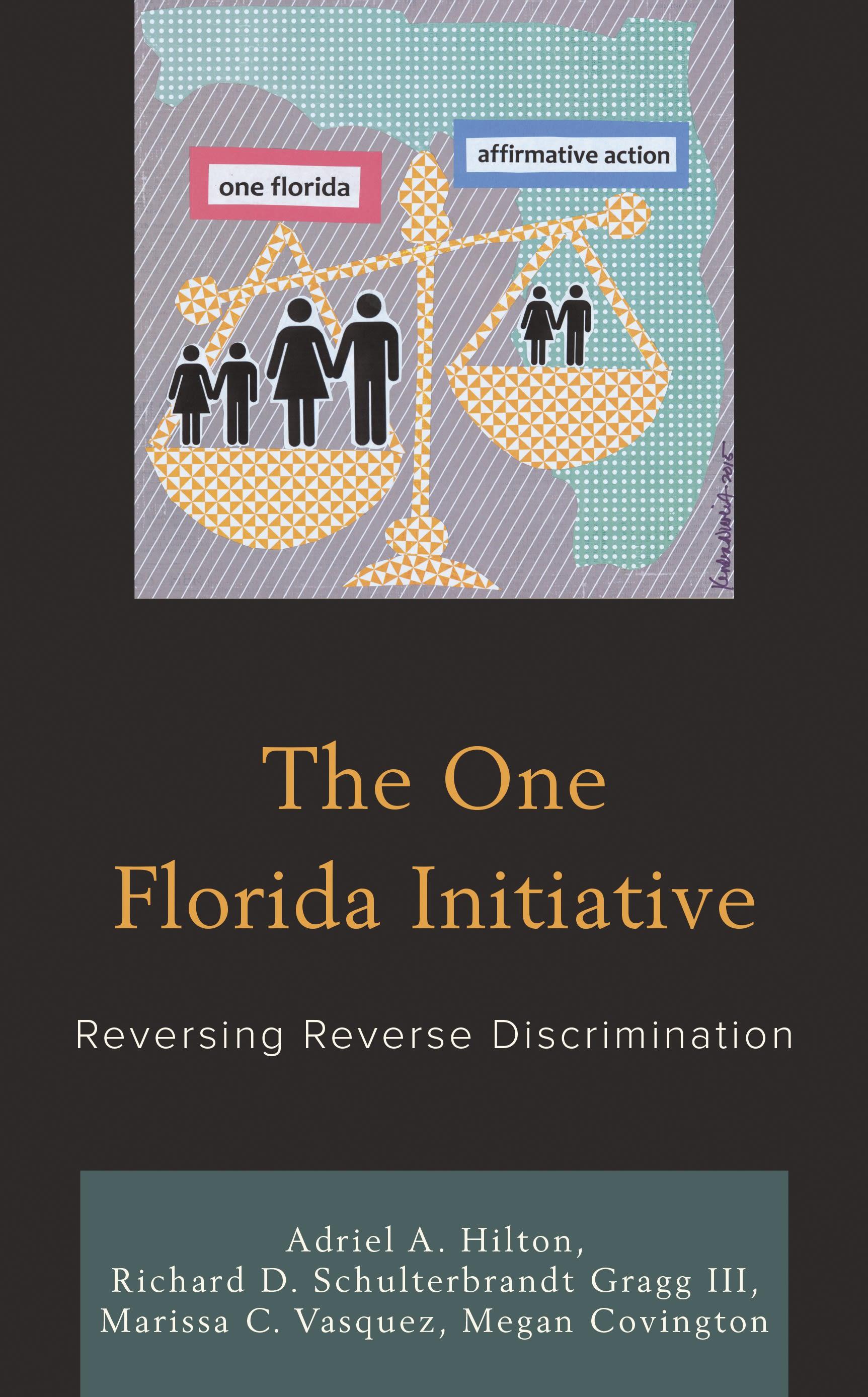
In this sixty-seventh anniversary year of the groundbreaking Supreme Court decision in the Brown v. Board of Education case that outlawed segregation in the nation’s public schools, research reveals that schools have undergone significant re-segregation. The anguish that many of us feel about this incredible failure of public policy underscores the layered aspect of achieving racial equality in America. In Florida, and across the nation, the steps that have been taken to implement affirmative action in higher education have been under constant attack by conservatives, and a series of actions by various state and federal courts have resulted in reduced access and enrollment of students of color in several states. In 1999, Governor Jeb Bush used his authority to redefine affirmative action in his state by issuing an executive order that established the One Florida Initiative (OFI). Bush’s claim that the OFI was intended to increase diversity and opportunities for people of color in Florida’s state university system appears to be contradicted by findings that minority representation actually decreased in most of the state universities after the policy was implemented.
Hilton and colleagues provide a cogent analysis of the effects of the OFI on enrollment patterns in the state’s public law schools to help us understand how changes in public policy can have detrimental effects on particular communities. The research is both enriched and complicated by the inclusion of the two law schools: Florida A&M and Florida International Universities, both of which are minority-serving institutions (MSIs). These schools were developed independently of the OFI but had a potential effect on the level of diversity that can be calculated across the system. The use of critical race theory offers an approach that will prove unnerving to some readers, but is one that provided insights that may not have been revealed through a different framework.
Hilton and colleagues provide a cogent analysis of the effects of the OFI on enrollment patterns in the state’s public law schools to help us understand how changes in public policy can have detrimental effects on particular communities. The research is both enriched and complicated by the inclusion of the two law schools: Florida A&M and Florida International Universities, both of which are minority-serving institutions (MSIs). These schools were developed independently of the OFI but had a potential effect on the level of diversity that can be calculated across the system. The use of critical race theory offers an approach that will prove unnerving to some readers, but is one that provided insights that may not have been revealed through a different framework.
Betal nemt med kort, Klarna, Apple Pay eller Google Pay. Ikke tilfreds? Du har altid 14 dages fortrydelsesret. Læs mere i vores vilkår. Har du spørgsmål, så send os en mail på hello@memmo.org.
Memmo gør det nemmere at studere – uanset hvor du er i verden. Hos os samler du dine kursusbøger og smarte studieværktøjer ét sted: resuméer, quizzer, podcasts og flashcards. Og så er der Ted, din studieven, der svarer på alt, du undrer dig over. Over 50 000 studerende studerer allerede her – bygget til at hjælpe dig med at lære hurtigere og stresse mindre.