
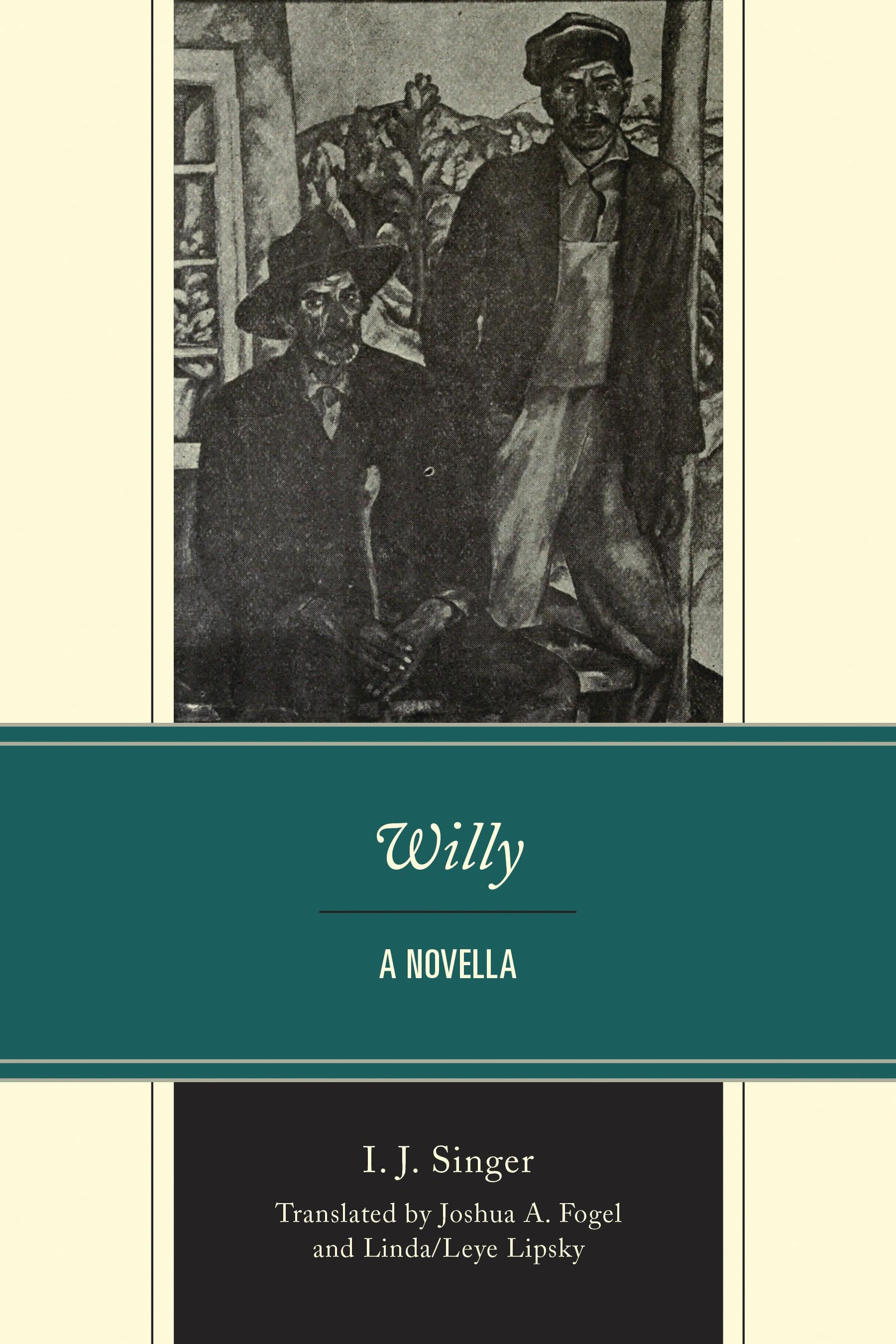
While Willy has neither the multi-generational sweep nor the moral gravitas of I. J. Singer’s family sagas, its themes are nonetheless timeless, its struggles archetypal. A father and son quarrel, and, in the process, a richly compact narrative emerges. Their respective stories define what is lost and what is gained in immigrant passage to the new world. The eponymous hero, Volf Rubin—Willy (Vili) Robin in America—is the rare agon who shares center stage with his antagonist, that is, his more voluble paterfamilias. The sententious Hirsh—modeled on the chief rabbi of Nyesheve and Singer's own painful childhood encounters with his savage brutality—tenaciously holds on to some of the more merciless pronouncements derived from a literalist reading and application of Jewish law. Such is the heavy baggage which, according to Volf, should have been left behind in steerage.
Volf's lapsed Judaism is his father’s dystopian nightmare: a collection of Halakhic transgressions, and worse, his renunciation of study. Volf’s school is the meadow, the farm, and the stable: all comprise an idyllic revision of the scene of instruction. He is a devotee of nature, its flora and especially its fauna. Volf’s love for his horses is steadfast and “unbridled”: he holds on to their manes without the mediation of man-made straps of leather. Through an unforeseen turn of events and peripety, Hirsh finds undeserved recompense. Volf, on the other hand, has subverted his own life-long effort to spurn his father's spiritual patrimony. Hence the dual narrative of father and son, deriving from orthodox observance and heterodox dissent respectively, has been lifted wholesale from Europe to America and obtains with equal force on both sides of the Atlantic.
Volf's lapsed Judaism is his father’s dystopian nightmare: a collection of Halakhic transgressions, and worse, his renunciation of study. Volf’s school is the meadow, the farm, and the stable: all comprise an idyllic revision of the scene of instruction. He is a devotee of nature, its flora and especially its fauna. Volf’s love for his horses is steadfast and “unbridled”: he holds on to their manes without the mediation of man-made straps of leather. Through an unforeseen turn of events and peripety, Hirsh finds undeserved recompense. Volf, on the other hand, has subverted his own life-long effort to spurn his father's spiritual patrimony. Hence the dual narrative of father and son, deriving from orthodox observance and heterodox dissent respectively, has been lifted wholesale from Europe to America and obtains with equal force on both sides of the Atlantic.
Betal nemt med kort, Klarna, Apple Pay eller Google Pay. Ikke tilfreds? Du har altid 14 dages fortrydelsesret. Læs mere i vores vilkår. Har du spørgsmål, så send os en mail på hello@memmo.org.
Memmo gør det nemmere at studere – uanset hvor du er i verden. Hos os samler du dine kursusbøger og smarte studieværktøjer ét sted: resuméer, quizzer, podcasts og flashcards. Og så er der Ted, din studieven, der svarer på alt, du undrer dig over. Over 50 000 studerende studerer allerede her – bygget til at hjælpe dig med at lære hurtigere og stresse mindre.