
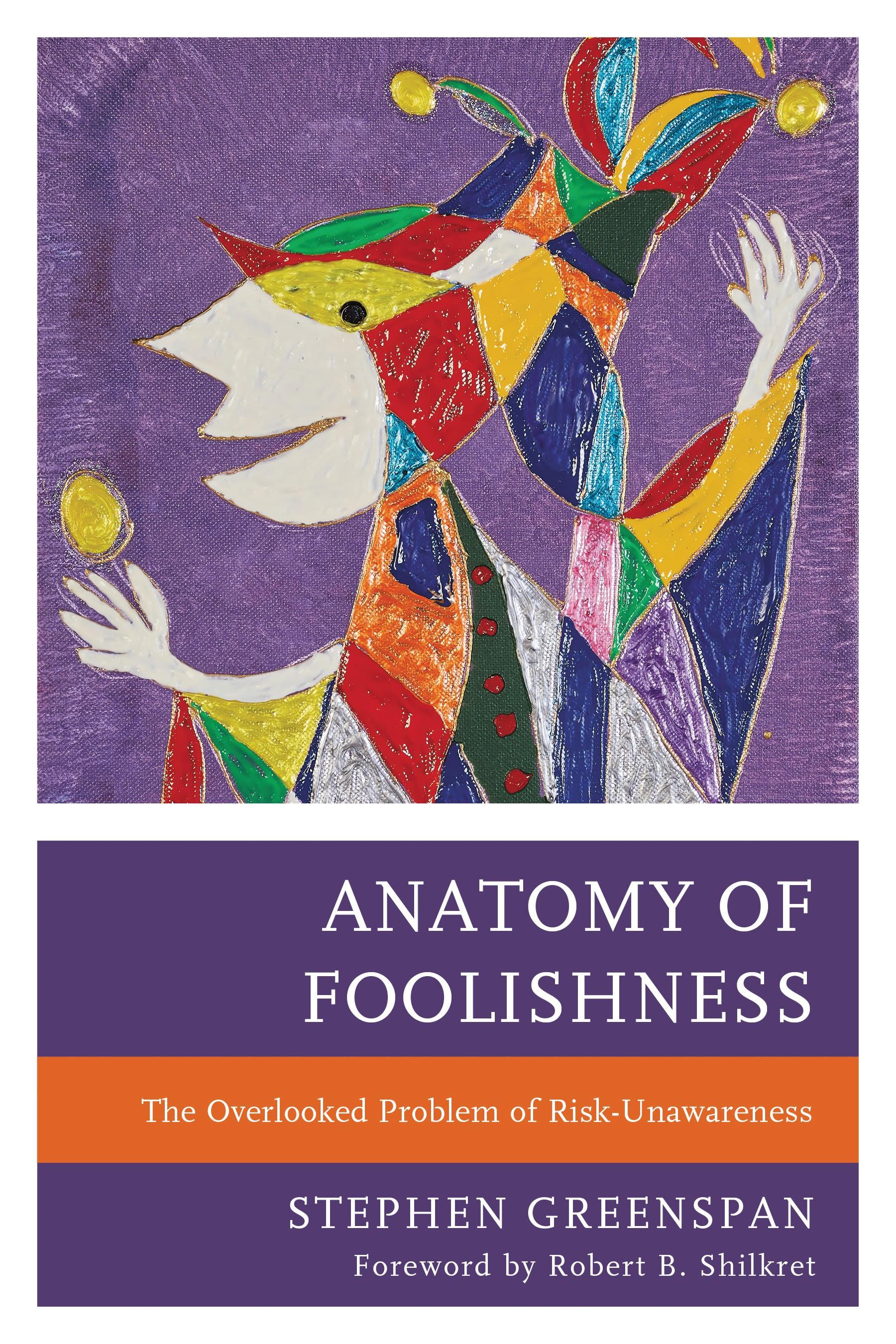
Just days after publishing his first book on the theory of foolishness, Stephen Greenspan learned that he had been hoodwinked by Bernard Madoff’s Ponzi scheme, or more accurately the Madoff “feeder” fund he invested in. Greenspan published a featured essay on the topic in the Wall Street Journal a few weeks later, and that essay was widely cited and attracted great interest for Greenspan’s ideas about gullibility and in the United States and many other countries. Greenspan’s new book, The Anatomy of Foolishness, explains why and how individuals (of all ages and levels of intelligence) and organizations act in ways that undermine their interests and even their continued existence. He examines three types of foolishness, using vivid examples to illustrate each, including the many foolish actions of US President Donald Trump. Greenspan presents a multidimensional theory of foolishness that contributes to the literature on human competence, and this book is likely to attract broad interest in the fields of psychology, sociology, economics, political science, and psychiatry as well as among those members of the general public (basically everyone) who have acted foolishly or know someone who has acted in a way that went against their own interests.
Betal nemt med kort, Klarna, Apple Pay eller Google Pay. Ikke tilfreds? Du har altid 14 dages fortrydelsesret. Læs mere i vores vilkår. Har du spørgsmål, så send os en mail på hello@memmo.org.
Memmo gør det nemmere at studere – uanset hvor du er i verden. Hos os samler du dine kursusbøger og smarte studieværktøjer ét sted: resuméer, quizzer, podcasts og flashcards. Og så er der Ted, din studieven, der svarer på alt, du undrer dig over. Over 50 000 studerende studerer allerede her – bygget til at hjælpe dig med at lære hurtigere og stresse mindre.