
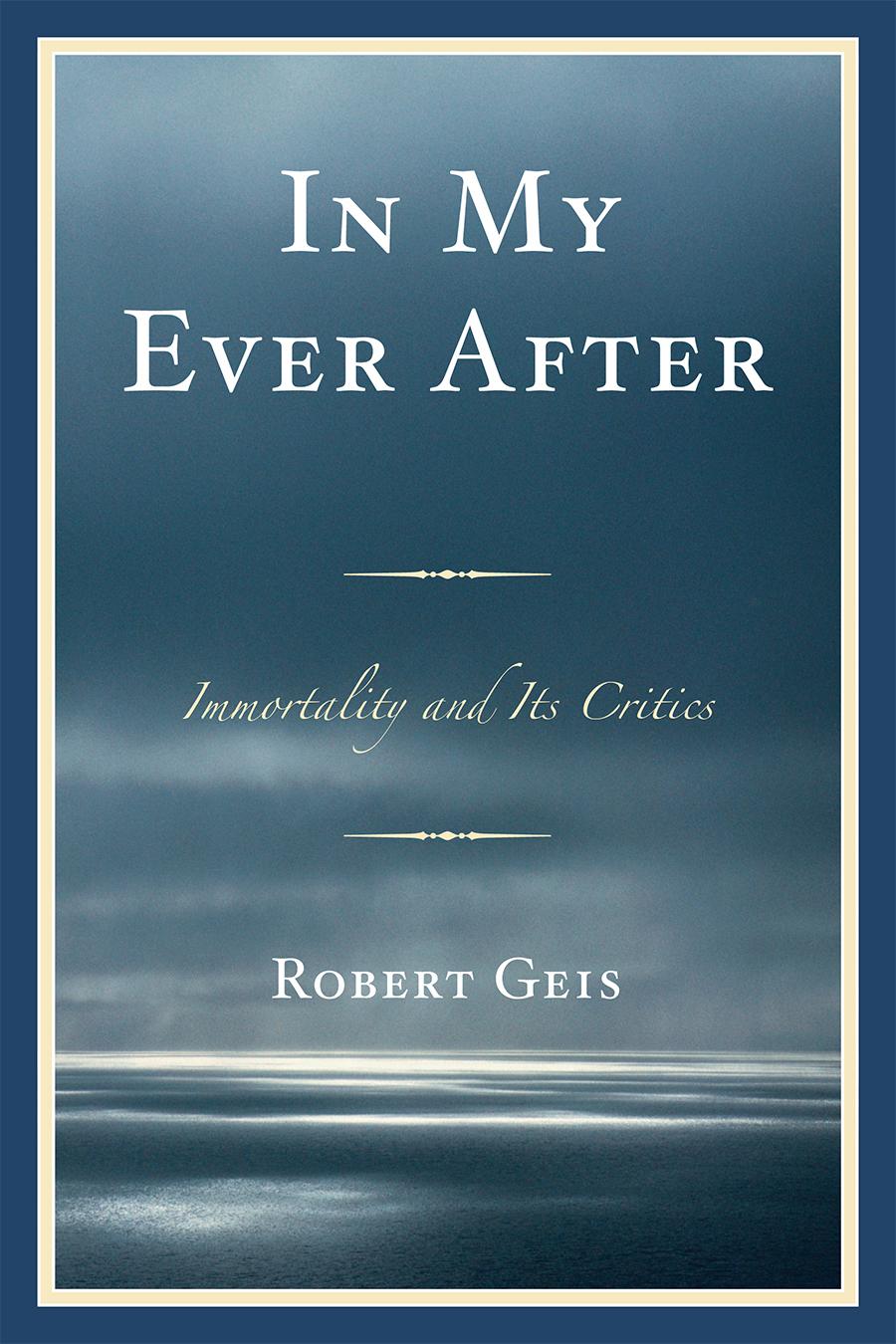
In My Ever After is not a mass media style "general readership" book on immortality; rather, it is an argument against a current school -- neurophilosophy's virtual equation of consciousness and the world. Without exposing the equation's weaknesses, the question of immortality, Geis argues, is moot. Part I identifies many epistemic and scientific grounds for a real world outside consciousness and self-refutational flaws in quantum physics. It employs the phenomenological method to situate "consciousness" and "other" in their relations. Part II sets forth why consciousness cannot be electrical in origin, and then how partibility and subjectivity, in tandem with the power of conceptualization, evince reasons for accepting immortal consciousness as a condition of all human awareness. A discussion of why pharmacologic explanations for the OBE and NDE are wanting, plus neurologic arguments for memory's non-localizability, and how animal sentience adds to philosophic conviction coordinate with Scripture on animal existence beyond the grave, concludes the argument.
Betal nemt med kort, Klarna, Apple Pay eller Google Pay. Ikke tilfreds? Du har altid 14 dages fortrydelsesret. Læs mere i vores vilkår. Har du spørgsmål, så send os en mail på hello@memmo.org.
Memmo gør det nemmere at studere – uanset hvor du er i verden. Hos os samler du dine kursusbøger og smarte studieværktøjer ét sted: resuméer, quizzer, podcasts og flashcards. Og så er der Ted, din studieven, der svarer på alt, du undrer dig over. Over 50 000 studerende studerer allerede her – bygget til at hjælpe dig med at lære hurtigere og stresse mindre.