
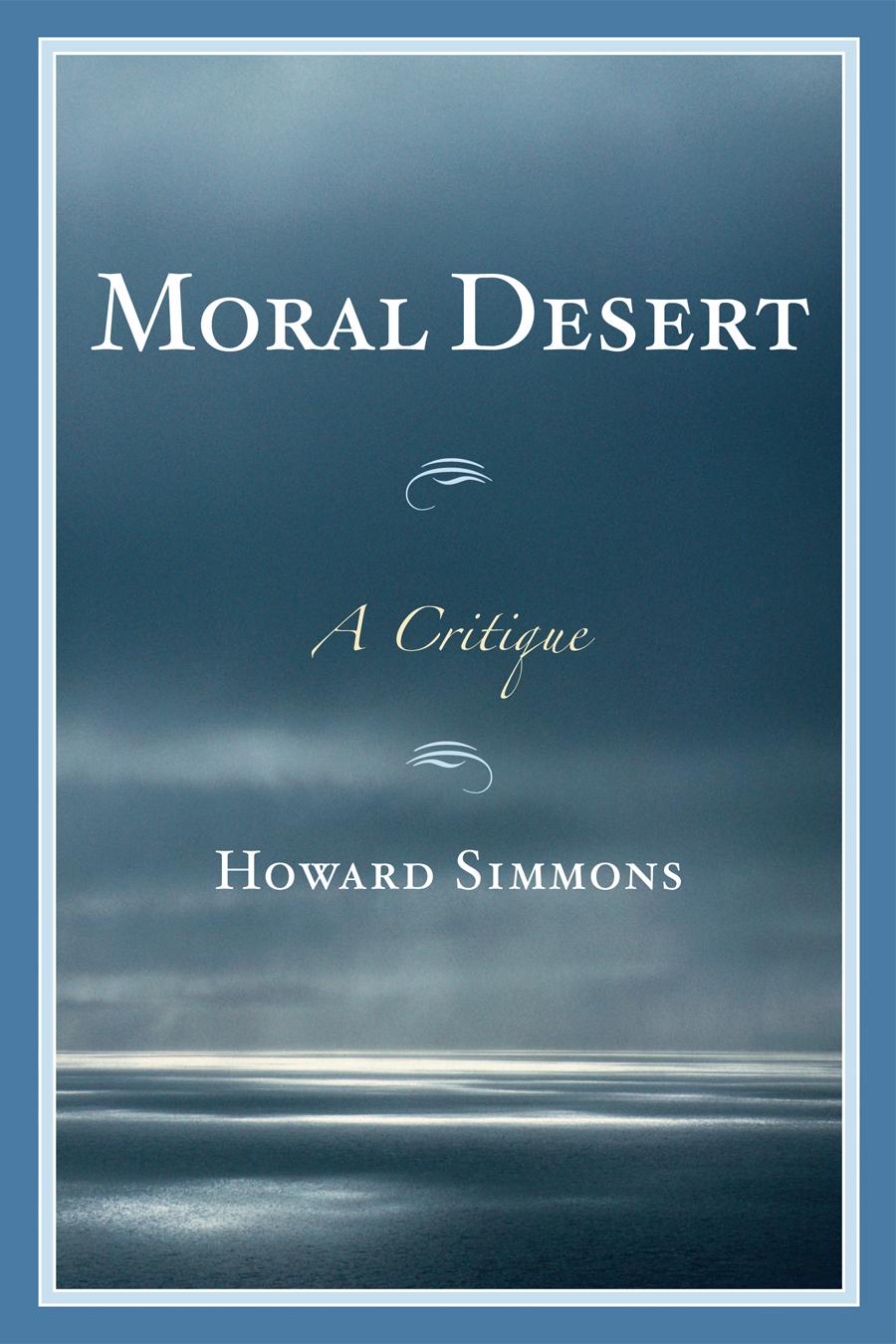
In Moral Desert, Howard Simmons notes that the idea that we deserve to be praised or rewarded for good behavior and blamed or punished when we act badly seems central to everyone's moral deliberation and practices. Simmons subjects this assumption to critical scrutiny. He argues that in a wide range of cases it is almost impossible to know the extent of people's moral responsibility, and indeed that it may be a complete delusion. He attacks the still-popular theory of retributive punishment, with special reference to the views of Peter French and J. Angelo Corlett. Simmons does not conclude that punishment is always unjustified, but insists that any justification should relate to its real world consequences. State punishment should be inflicted according to strict consequentialist precepts, and the author provides systematic principles for determining an appropriate sentence and for deciding when offenders should be excused. He also considers the implications of his views for distributive justice and personal morality.
Betal nemt med kort, Klarna, Apple Pay eller Google Pay. Ikke tilfreds? Du har altid 14 dages fortrydelsesret. Læs mere i vores vilkår. Har du spørgsmål, så send os en mail på hello@memmo.org.
Memmo gør det nemmere at studere – uanset hvor du er i verden. Hos os samler du dine kursusbøger og smarte studieværktøjer ét sted: resuméer, quizzer, podcasts og flashcards. Og så er der Ted, din studieven, der svarer på alt, du undrer dig over. Over 50 000 studerende studerer allerede her – bygget til at hjælpe dig med at lære hurtigere og stresse mindre.