
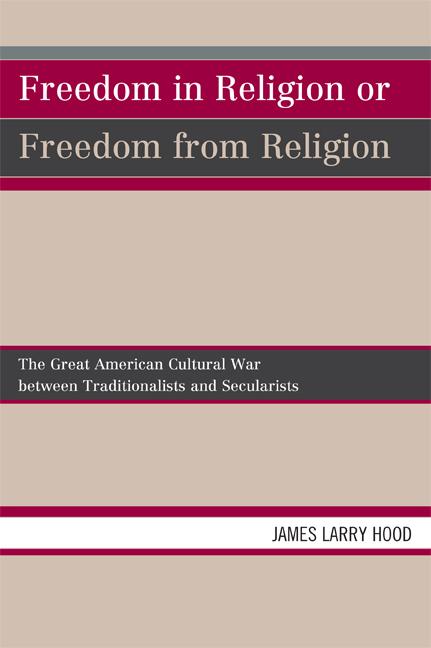
The first decade of the twenty-first century finds the American people divided along a great, half-century-old fault line. On one side stand Traditionalists who understand human existence and glory (joys and sorrows) as defined by a western religious heritage, an existence circumscribed by tragedy. On the other side stand Secularists who reject the western tradition and its moral absolutes (even though they continue to espouse values that arose out of the West) and look forward to a world of ever-expanding personal freedom from societal restraints and old human weaknesses, a world wherein mankind will finally achieve total well-being
For fifty years, Traditionalists and Secularists have been arguing over religion and their very different understandings of the meaning of freedom. Does the old religion, the western tradition as manifested in the United States, sustain and strengthen freedom or does it circumscribe freedom so much that religion destroys freedom?
For fifty years, Traditionalists and Secularists have been arguing over religion and their very different understandings of the meaning of freedom. Does the old religion, the western tradition as manifested in the United States, sustain and strengthen freedom or does it circumscribe freedom so much that religion destroys freedom?
Betal nemt med kort, Klarna, Apple Pay eller Google Pay. Ikke tilfreds? Du har altid 14 dages fortrydelsesret. Læs mere i vores vilkår. Har du spørgsmål, så send os en mail på hello@memmo.org.
Memmo gør det nemmere at studere – uanset hvor du er i verden. Hos os samler du dine kursusbøger og smarte studieværktøjer ét sted: resuméer, quizzer, podcasts og flashcards. Og så er der Ted, din studieven, der svarer på alt, du undrer dig over. Over 50 000 studerende studerer allerede her – bygget til at hjælpe dig med at lære hurtigere og stresse mindre.