
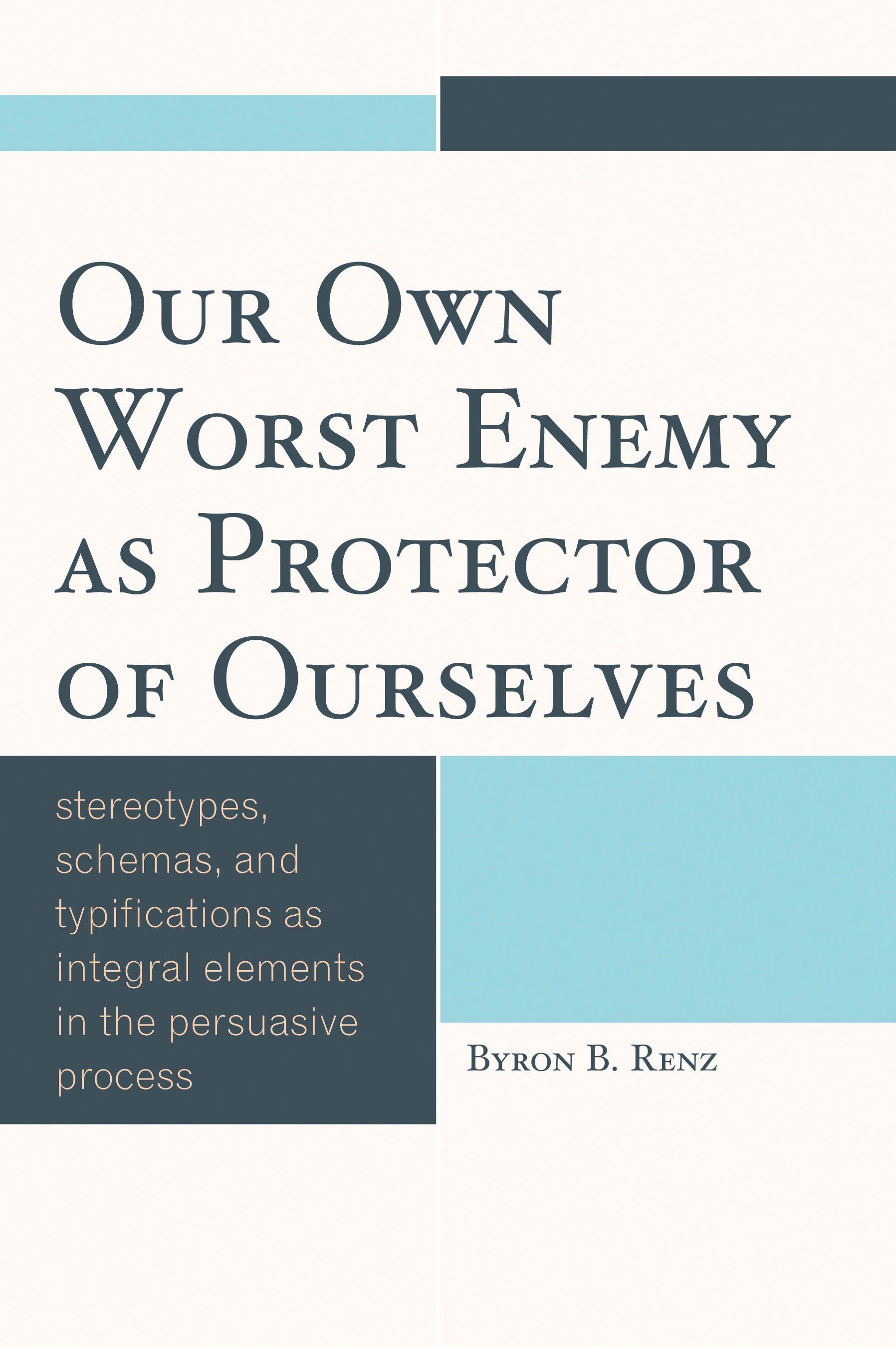
Much communication today argues a point. An argument, by definition, involves an attack and a counterattack not only using logic, but also incorporating non-logical feelings, attitudes, beliefs, and values. Much of the non-logical element in our argument taps the reservoir of unconscious understandings, feelings, expectations, and values that we have coded and stored in our unconscious minds in the form of stereotypes, schemas, and typifications.
Our internal packets of stored values and beliefs may constitute our own worst enemy as they militate against creative thought and forward-looking change. At the same time, they may provide solace for our inner being and provide a framework for developing persuasive campaigns to further our interests.
The book takes us through the persuasive process, particularly as it is used in terrorist persuasive settings and as it has been used in some of the major propaganda battles of the twentieth and twenty-first centuries.
Our internal packets of stored values and beliefs may constitute our own worst enemy as they militate against creative thought and forward-looking change. At the same time, they may provide solace for our inner being and provide a framework for developing persuasive campaigns to further our interests.
The book takes us through the persuasive process, particularly as it is used in terrorist persuasive settings and as it has been used in some of the major propaganda battles of the twentieth and twenty-first centuries.
Betal nemt med kort, Klarna, Apple Pay eller Google Pay. Ikke tilfreds? Du har altid 14 dages fortrydelsesret. Læs mere i vores vilkår. Har du spørgsmål, så send os en mail på hello@memmo.org.
Memmo gør det nemmere at studere – uanset hvor du er i verden. Hos os samler du dine kursusbøger og smarte studieværktøjer ét sted: resuméer, quizzer, podcasts og flashcards. Og så er der Ted, din studieven, der svarer på alt, du undrer dig over. Over 50 000 studerende studerer allerede her – bygget til at hjælpe dig med at lære hurtigere og stresse mindre.