
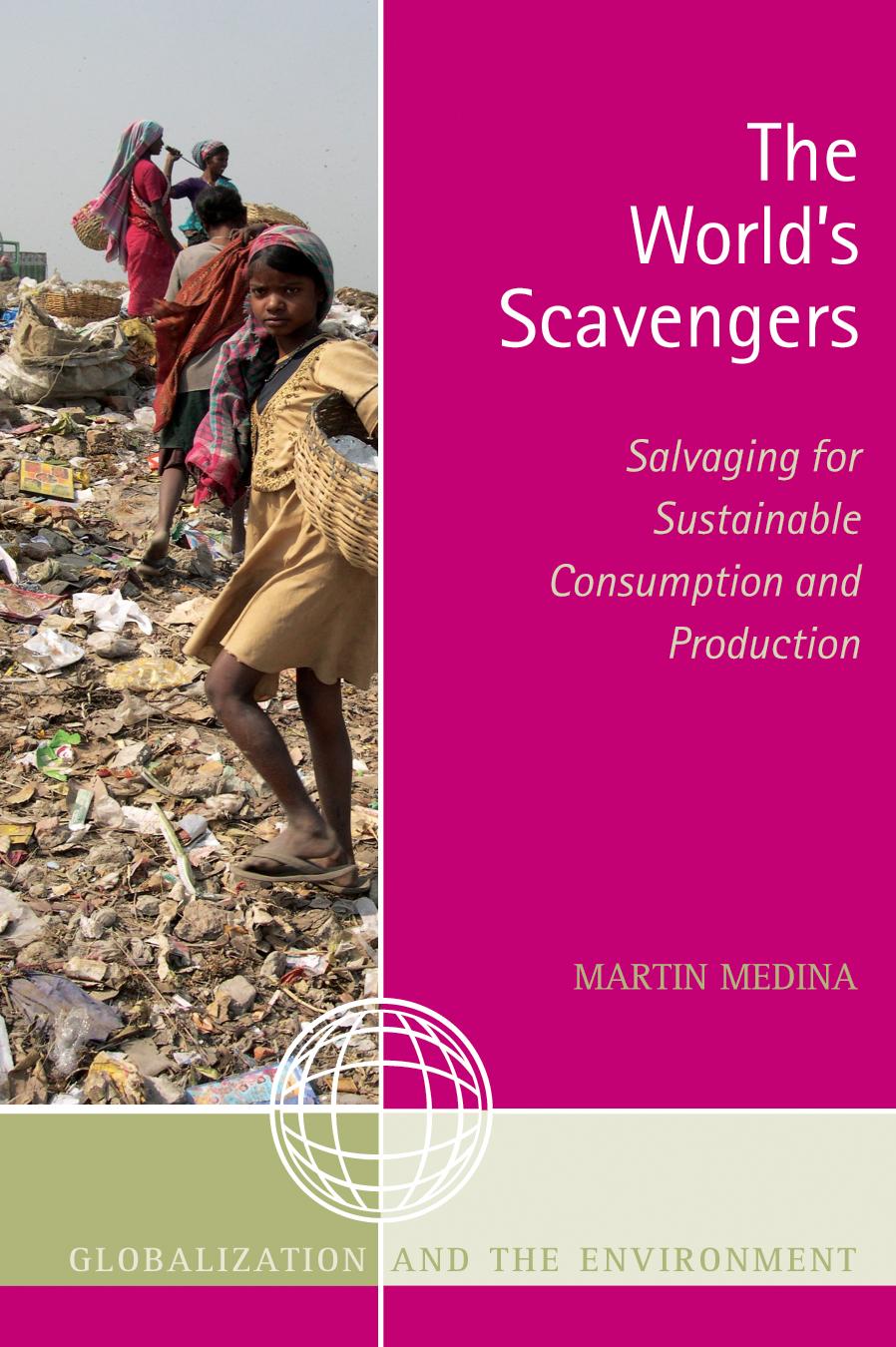
Medina tells us that up to 2% of the urban population in developing countries survives by salvaging materials from waste for recycling, which represents up to 64 million scavengers in the world today. Despite these numbers, we know little about the impact of scavenging on global capitalism development. The author examines its historical evolution and its linkages with formal and informal sector productive activities in capitalist and non-capitalist societies, in case studies from Mexico, Brazil, Colombia, Argentina, Egypt, the Philippines, and India. His new book radically alters popular perceptions on scavenging, demonstrating that many widely-held beliefs are wrong: scavenging is not primarily the activity of the poor nor is it a strictly marginal activity; the economic impact of scavenging is significant and can increase industrial competitiveness; and scavenging can be compatible with a sustainable waste management system. Scavenging represents an adaptive response to poverty, yet at the same time it can be a resource to cities, whose contributions should be recognized and understood.
Sider: 318
Kategori: Ekonomi & Utveckling
e-ISBN: 9780759113800
Forsendelsesvægt: 1.2 kg
Sendes inden for: 1-2 dage
Betal nemt med kort, Klarna, Apple Pay eller Google Pay. Ikke tilfreds? Du har altid 14 dages fortrydelsesret. Læs mere i vores vilkår. Har du spørgsmål, så send os en mail på hello@memmo.org.
Memmo gør det nemmere at studere – uanset hvor du er i verden. Hos os samler du dine kursusbøger og smarte studieværktøjer ét sted: resuméer, quizzer, podcasts og flashcards. Og så er der Ted, din studieven, der svarer på alt, du undrer dig over. Over 50 000 studerende studerer allerede her – bygget til at hjælpe dig med at lære hurtigere og stresse mindre.