
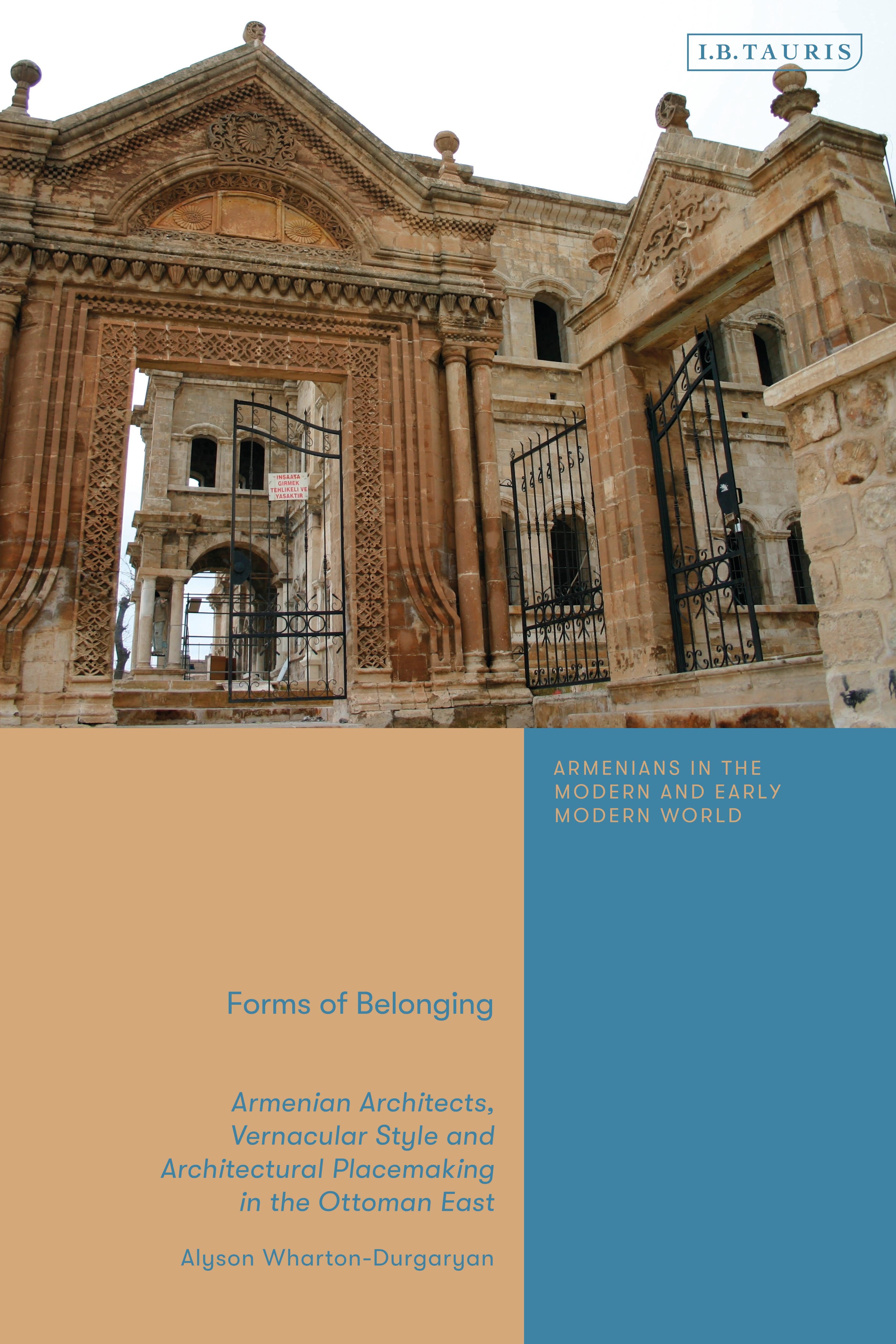
Contrary to the historical record, which views the architecture of the eastern Ottoman cities as unchanging remnants of a medieval and proto-Turkish golden age, this richly illustrated book highlights the wide-ranging transformations that Mardin, Diyarbakir, Urfa, Antep, Bitlis and Erzurum, saw at the hands of Armenian architects of the nineteenth and twentieth centuries.
Case studies reflect the agency of Armenian architects in constructing these buildings- whether churches, mansions, government offices, schools, or commercial structures. Each chapter looks to one of these cities and the participation of Armenians in shaping these places, not just through architecture but through city institutions, patronage, and benevolence. It argues that Armenians used the urban environment, and a uniquely Armenian reinvention of vernacular architecture, which reflected their religious, educational, intellectual, and political networks, to partake in the revival of these cities in an era marked by reforms to the Ottoman polity, political culture, and local governance. This was a show of popular belonging, and pride in local traditions, but it was also, merged with symbols of Ottoman authority, a reflection of the formation of Ottoman local elites, which included these Armenians - thus representing complex localization and Ottomanization processes at work. This book shows that there was not 'one' Armenian culture or identity, but many competing visions across Ottoman cities.
Case studies reflect the agency of Armenian architects in constructing these buildings- whether churches, mansions, government offices, schools, or commercial structures. Each chapter looks to one of these cities and the participation of Armenians in shaping these places, not just through architecture but through city institutions, patronage, and benevolence. It argues that Armenians used the urban environment, and a uniquely Armenian reinvention of vernacular architecture, which reflected their religious, educational, intellectual, and political networks, to partake in the revival of these cities in an era marked by reforms to the Ottoman polity, political culture, and local governance. This was a show of popular belonging, and pride in local traditions, but it was also, merged with symbols of Ottoman authority, a reflection of the formation of Ottoman local elites, which included these Armenians - thus representing complex localization and Ottomanization processes at work. This book shows that there was not 'one' Armenian culture or identity, but many competing visions across Ottoman cities.
Betal nemt med kort, Klarna, Apple Pay eller Google Pay. Ikke tilfreds? Du har altid 14 dages fortrydelsesret. Læs mere i vores vilkår. Har du spørgsmål, så send os en mail på hello@memmo.org.
Memmo gør det nemmere at studere – uanset hvor du er i verden. Hos os samler du dine kursusbøger og smarte studieværktøjer ét sted: resuméer, quizzer, podcasts og flashcards. Og så er der Ted, din studieven, der svarer på alt, du undrer dig over. Over 50 000 studerende studerer allerede her – bygget til at hjælpe dig med at lære hurtigere og stresse mindre.