
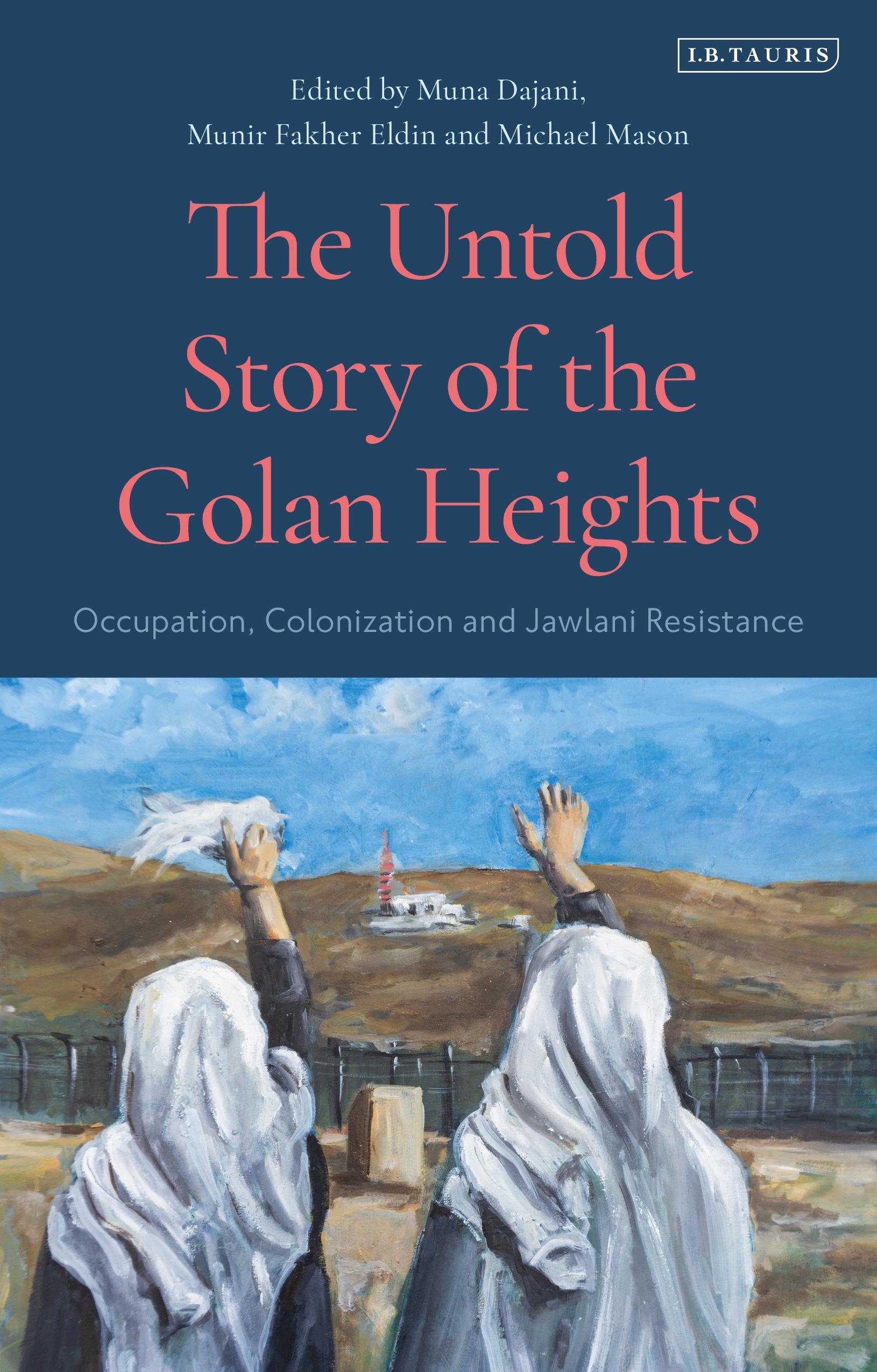
In 1967 Israel occupied the western section of Syria's Golan Heights, expelling 130,000 residents and leaving only a few thousand Arab inhabitants clustered in several villages. Sometimes characterised as the 'forgotten occupation', the western Golan Heights have been transformed by Israeli colonisation, including the appropriation of land and water resources, economic development and extensive military use.
This landmark volume is the first academic study in English of Arab politics and culture in the occupied Golan Heights. It focuses on an indigenous community, known as the Jawlanis, and their experience of everyday colonisation and resistance to settler colonisation. Chapters cover how governance is carried out in the Golan, from Israel's use of the education system and collective memory, to its development of large-scale wind turbines which are now a symbol of Israeli encroachment. To illustrate the ways in which the current regime of Israeli rule has been contested, there are chapters on the six-month strike of 1982, youth mobilisation in the occupied Golan, Palestinian solidarity movements, and the creation of Jawlani art and writing as an act of resistance.
Rich in ethnographic detail and with chapters from diverse disciplines, the book is unique in bringing together Jawlani, Palestinian and UK researchers. The innovative format - with shorter 'reflections' from young Arab researchers, activists and lawyers that respond to more traditional academic chapters - establishes a bold new 'de-colonial' approach.
This landmark volume is the first academic study in English of Arab politics and culture in the occupied Golan Heights. It focuses on an indigenous community, known as the Jawlanis, and their experience of everyday colonisation and resistance to settler colonisation. Chapters cover how governance is carried out in the Golan, from Israel's use of the education system and collective memory, to its development of large-scale wind turbines which are now a symbol of Israeli encroachment. To illustrate the ways in which the current regime of Israeli rule has been contested, there are chapters on the six-month strike of 1982, youth mobilisation in the occupied Golan, Palestinian solidarity movements, and the creation of Jawlani art and writing as an act of resistance.
Rich in ethnographic detail and with chapters from diverse disciplines, the book is unique in bringing together Jawlani, Palestinian and UK researchers. The innovative format - with shorter 'reflections' from young Arab researchers, activists and lawyers that respond to more traditional academic chapters - establishes a bold new 'de-colonial' approach.
Betal nemt med kort, Klarna, Apple Pay eller Google Pay. Ikke tilfreds? Du har altid 14 dages fortrydelsesret. Læs mere i vores vilkår. Har du spørgsmål, så send os en mail på hello@memmo.org.
Memmo gør det nemmere at studere – uanset hvor du er i verden. Hos os samler du dine kursusbøger og smarte studieværktøjer ét sted: resuméer, quizzer, podcasts og flashcards. Og så er der Ted, din studieven, der svarer på alt, du undrer dig over. Over 50 000 studerende studerer allerede her – bygget til at hjælpe dig med at lære hurtigere og stresse mindre.