
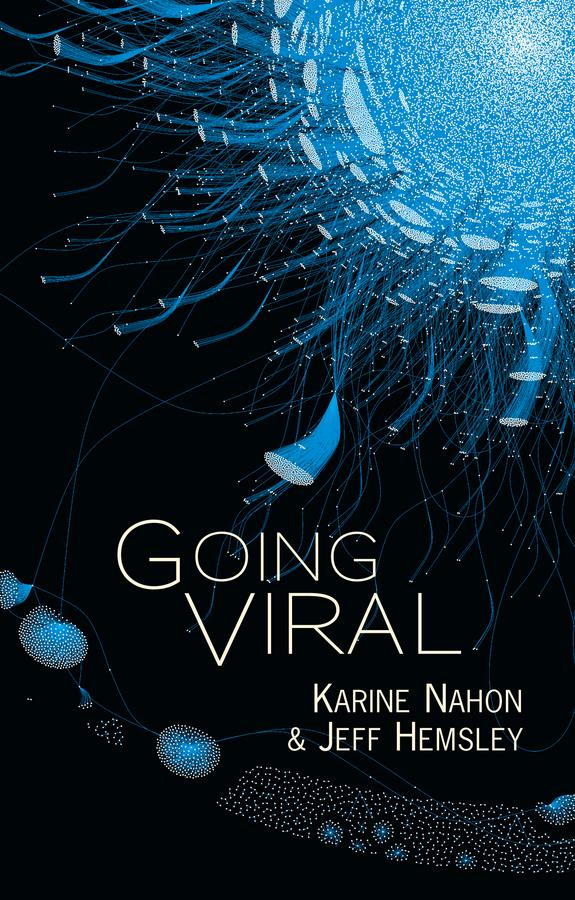
We live in a world where a tweet can be instantly retweeted and read by millions around the world in minutes, where a video forwarded to friends can destroy a political career in hours, and where an unknown man or woman can become an international celebrity overnight. Virality: individuals create it, governments fear it, companies would die for it.
So what is virality and how does it work? Why does one particular video get millions of views while hundreds of thousands of others get only a handful? In Going Viral, Nahon and Hemsley uncover the factors that make things go viral online. They analyze the characteristics of networks that shape virality, including the crucial role of gatekeepers who control the flow of information and connect networks to one another. They also explore the role of human attention, showing how phenomena like word of mouth, bandwagon effects, homophily and interest networks help to explain the patterns of individual behavior that make viral events.
Drawing on a wide range of examples, from the Joseph Kony video to the tweet that spread the news that Osama Bin Laden was dead, from the video of Homer Simpson voting in the US elections to the photo of a police officer pepper-spraying students at the University of California Davis, this path-breaking account of viral events will be essential reading for students, scholars, politicians, policymakers, executives, artists, musicians and anyone who wants to understand how our world today is being shaped by the flow of information online.
So what is virality and how does it work? Why does one particular video get millions of views while hundreds of thousands of others get only a handful? In Going Viral, Nahon and Hemsley uncover the factors that make things go viral online. They analyze the characteristics of networks that shape virality, including the crucial role of gatekeepers who control the flow of information and connect networks to one another. They also explore the role of human attention, showing how phenomena like word of mouth, bandwagon effects, homophily and interest networks help to explain the patterns of individual behavior that make viral events.
Drawing on a wide range of examples, from the Joseph Kony video to the tweet that spread the news that Osama Bin Laden was dead, from the video of Homer Simpson voting in the US elections to the photo of a police officer pepper-spraying students at the University of California Davis, this path-breaking account of viral events will be essential reading for students, scholars, politicians, policymakers, executives, artists, musicians and anyone who wants to understand how our world today is being shaped by the flow of information online.
Betal nemt med kort, Klarna, Apple Pay eller Google Pay. Ikke tilfreds? Du har altid 14 dages fortrydelsesret. Læs mere i vores vilkår. Har du spørgsmål, så send os en mail på hello@memmo.org.
Memmo gør det nemmere at studere – uanset hvor du er i verden. Hos os samler du dine kursusbøger og smarte studieværktøjer ét sted: resuméer, quizzer, podcasts og flashcards. Og så er der Ted, din studieven, der svarer på alt, du undrer dig over. Over 50 000 studerende studerer allerede her – bygget til at hjælpe dig med at lære hurtigere og stresse mindre.
Du kan måske også lide
Køb bogen0