
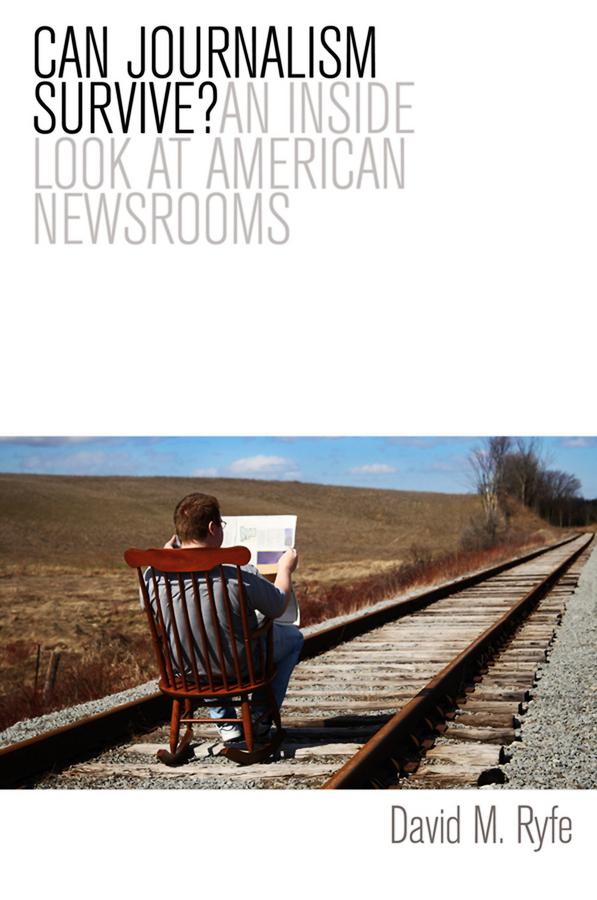
Journalists have failed to respond adequately to the challenge of the Internet, with far-reaching consequences for the future of journalism and democracy. This is the compelling argument set forth in this timely new text, drawing on the most extensive ethnographic fieldwork in American newsrooms since the 1970s.
David Ryfe argues that journalists are unable or unwilling to innovate for a variety of reasons: in part because habits are sticky and difficult to dislodge; in part because of their strategic calculation that the cost of change far exceeds its benefit; and in part because basic definitions of what journalism is, and what it is for, anchor journalism to tradition even when journalists prefer to change. The result is that journalism is unraveling as an integrated social field; it may never again be a separate and separable activity from the broader practice of producing news. One thing is certain: whatever happens next, it will have dramatic consequences for the role journalism plays in democratic society and perhaps will transform its basic meaning and purpose.
Can Journalism Survive? is essential and provocative reading for all concerned with the future of journalism and society.
Betal nemt med kort, Klarna, Apple Pay eller Google Pay. Ikke tilfreds? Du har altid 14 dages fortrydelsesret. Læs mere i vores vilkår. Har du spørgsmål, så send os en mail på hello@memmo.org.
Memmo gør det nemmere at studere – uanset hvor du er i verden. Hos os samler du dine kursusbøger og smarte studieværktøjer ét sted: resuméer, quizzer, podcasts og flashcards. Og så er der Ted, din studieven, der svarer på alt, du undrer dig over. Over 50 000 studerende studerer allerede her – bygget til at hjælpe dig med at lære hurtigere og stresse mindre.